
A Tower Built for Wind, Symbol, and Capital
Taipei 101 in Taipei is not simply a tall building with a famous skyline profile. It is a highly calculated supertall in which cultural symbolism, structural engineering, seismic resistance, vertical transportation, and financial ambition were compressed into one of the defining skyscraper projects of the early twenty-first century. Few towers make their technical logic so visible.
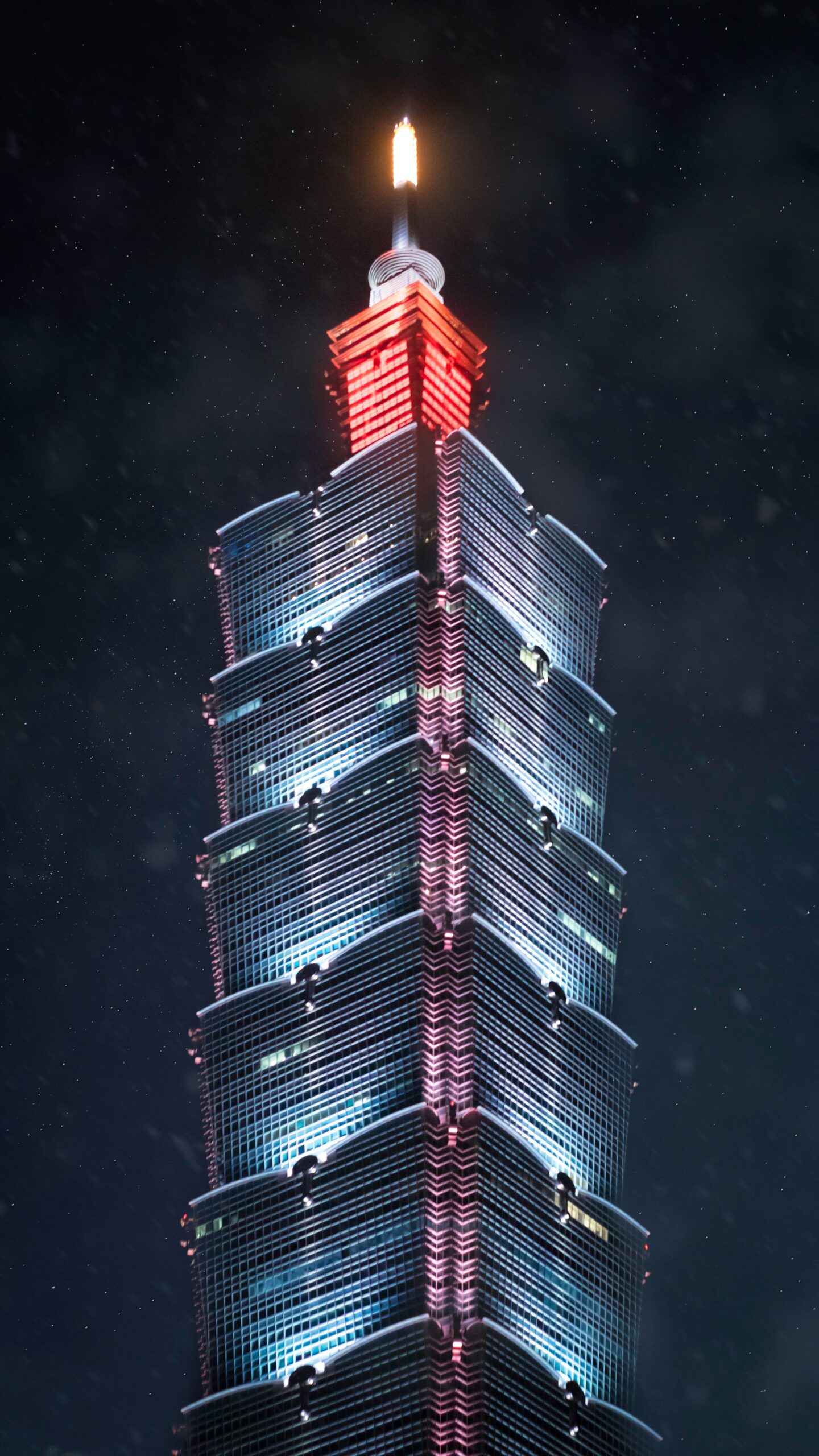
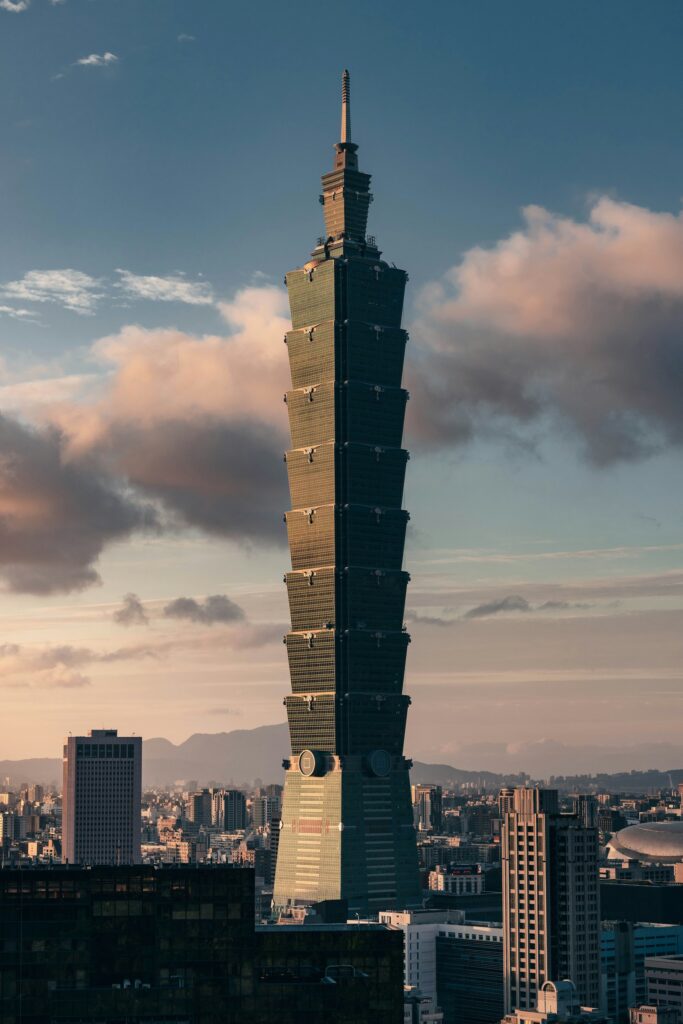
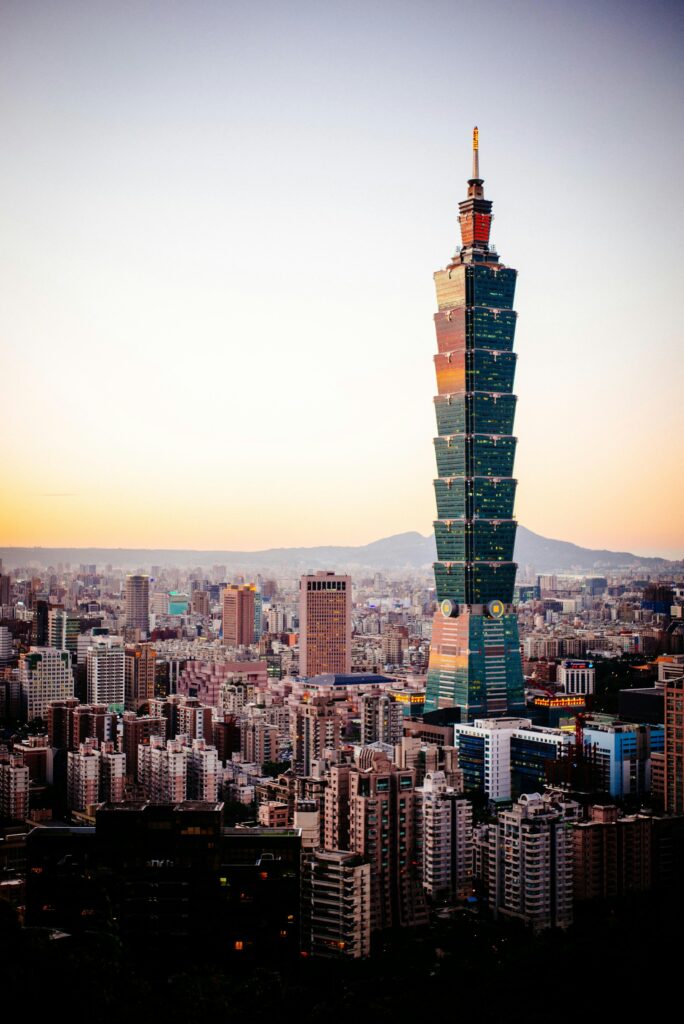
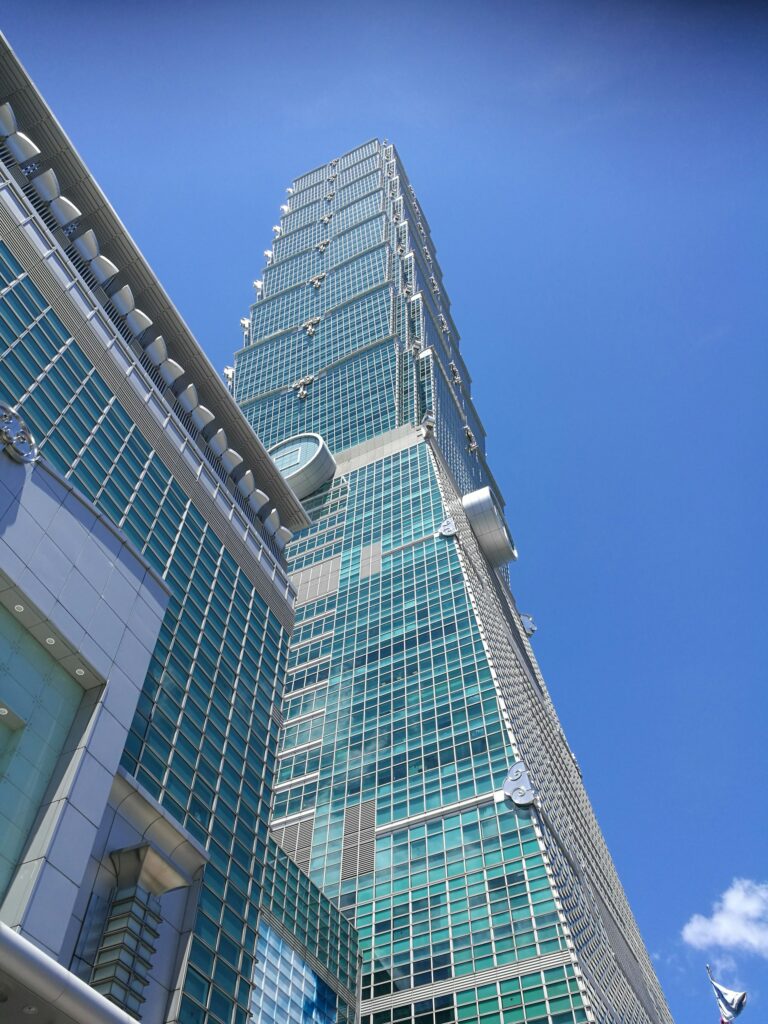
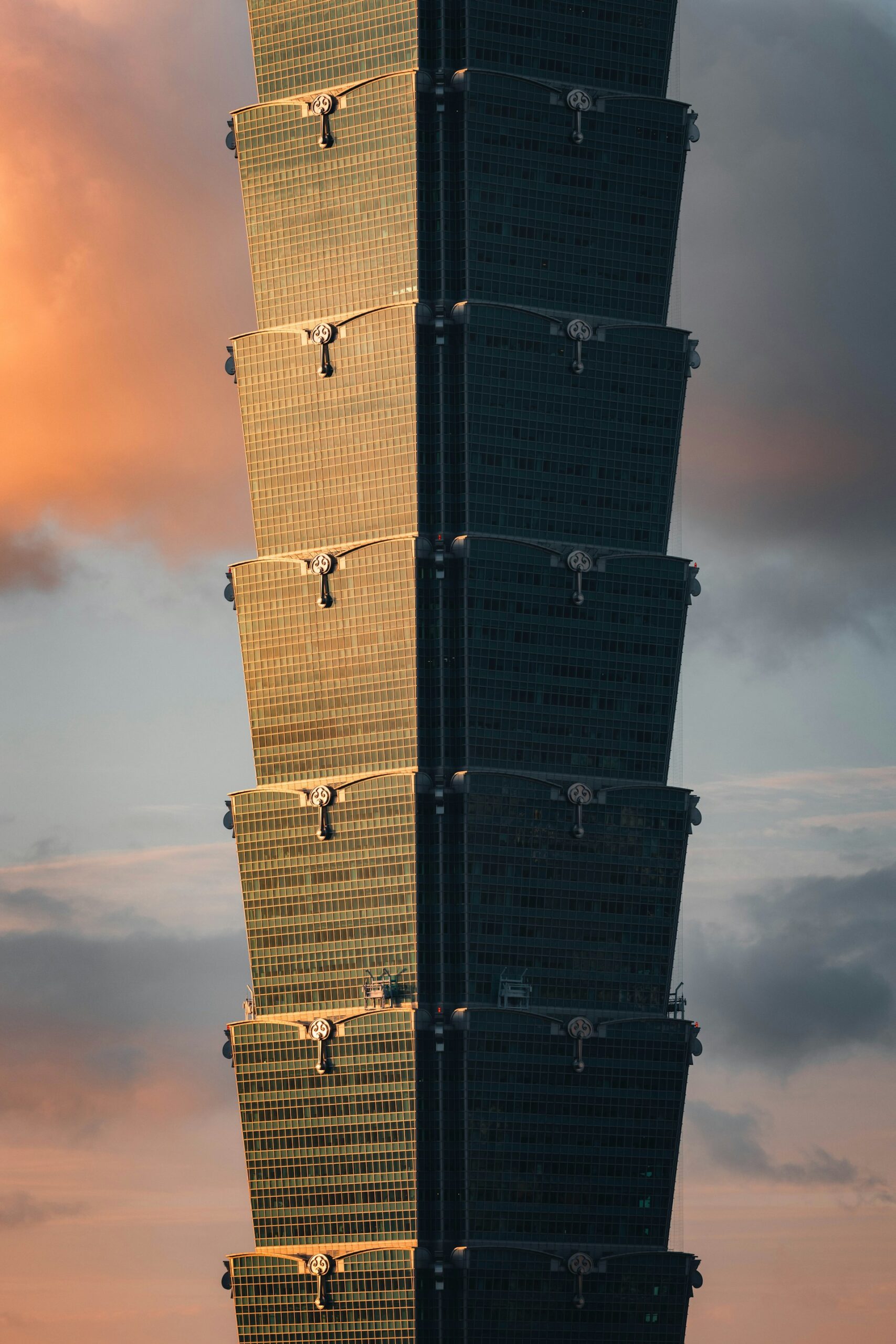
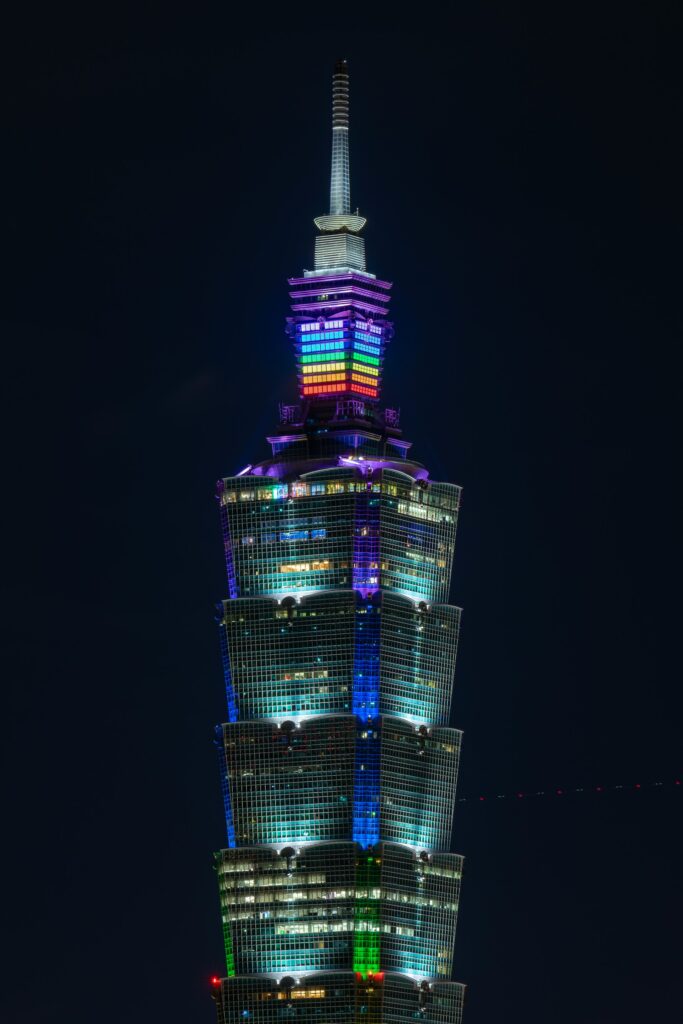
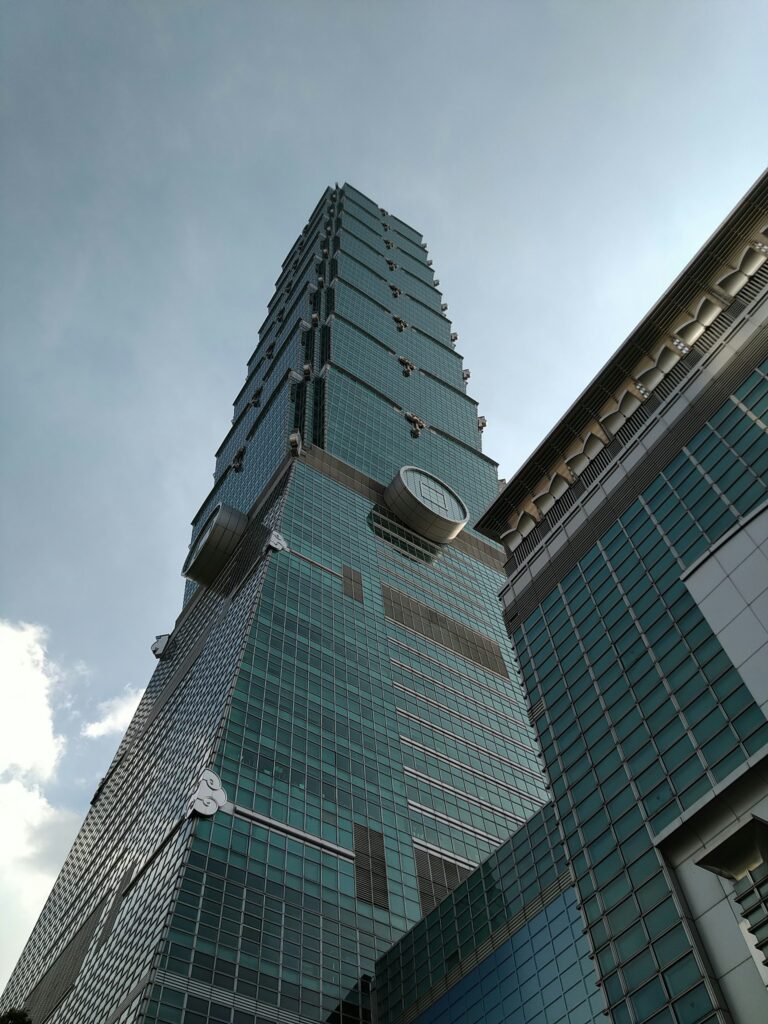
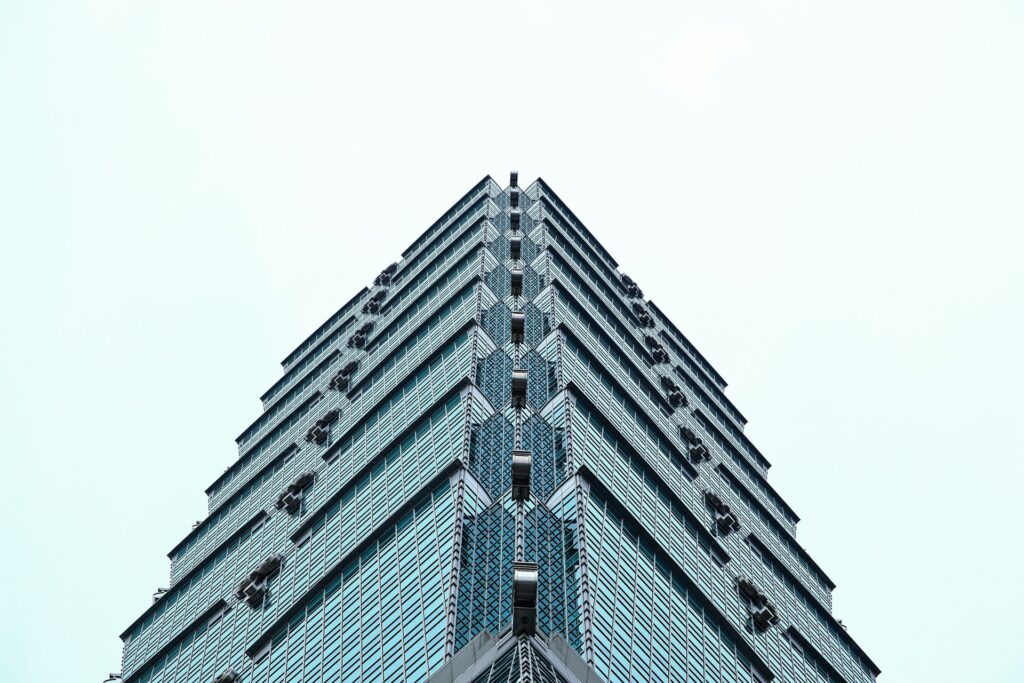
Its silhouette is immediately legible: a tapering base, stacked modules, flared corners, and a spired crown rising to 508 meters. That composition is not decorative in any superficial sense. The segmented form helped organize structure, wind behavior, and identity at once, allowing the tower to operate as both a national landmark and a high-performance office building in one of the world’s most demanding typhoon and seismic zones.
Designed by C.Y. Lee & Partners with structural engineering by Evergreen Consulting Engineering and Thornton Tomasetti, Taipei 101 was conceived at a moment when height still carried immense symbolic force. Yet the project’s real sophistication lies in how it refused to chase altitude alone. Its profile, composite megacolumns, outrigger system, deep foundations, and tuned mass damping strategy were all developed to make extreme height economically and physically workable.
Inside, the tower behaves as a vertical machine. High-speed elevators, observation decks, mechanical transfer zones, large office plates, and a retail podium turn it into a mixed urban section rather than a single-use shaft. Even the famous damper ball is not hidden away as infrastructure. It is exposed to visitors, making structural performance part of the building’s public identity.
Economically, Taipei 101 was built as a prestige development in Xinyi District, anchoring Taipei’s emergence as a finance, retail, and corporate center. It concentrated premium office space, high-end shopping, tourism revenue, and city branding in one address. The tower’s importance therefore lies not only in being tall, but in how it translated vertical scale into metropolitan value.
What makes Taipei 101 compelling is the precision with which seemingly different ambitions were aligned. Bamboo symbolism, wind-tunnel refinement, pile foundations, tuned mass damping, fast elevators, green retrofits, and observation tourism all operate together. The result is a building that feels at once iconic and rigorously engineered—a skyscraper where cultural image and structural necessity are inseparable.
Taipei 101 in Numbers
508 m
The architectural height that made Taipei 101 the first completed skyscraper to pass the half-kilometer mark
101
The number of floors above ground, turning the tower’s name into both address and structural count
5 basement levels
The subterranean depth that supports parking, services, retail integration, and the tower’s heavy foundation system
438 m
The occupied height to the highest regularly used floor, showing how much of the tower is usable vertical city
391.8 m
The official observatory height, converting the upper tower into one of the world’s great public vantage points
460 m
The height of Skyline 460, the outdoor platform near the top that turns the spire zone into an exposed experience
660 metric tons
The weight of the tuned mass damper that became the tower’s most famous piece of visible engineering
5.5 m
The diameter of the damper sphere, large enough to read as architecture rather than hidden equipment
61 elevators
The vertical transportation inventory required to make a 101-story mixed-use tower operate efficiently every day
16.83 m/s
The top elevator speed recorded for the tower, a crucial performance figure in making height commercially usable
37 seconds
The travel time from the 5th floor to the 89th-floor observatory in the building’s signature high-speed lifts
380 piles
The bored-pile foundation field used beneath the tower mat to transfer enormous vertical loads into the ground
1,839
The number of parking spaces, a reminder that the tower is also a large logistical machine beneath its symbolic crown
198,347 m²
The tower gross floor area, indicating how much rentable and service space had to be organized inside the vertical frame
1999 / 2004
Construction began in 1999 and the tower was completed in 2004, compressing national ambition into a short and intense building cycle
LEED Platinum
Taipei 101 turned from a former world-tallest into one of the best-known high-rise sustainability retrofit stories through its major green recertification program
What is most intriguing about Taipei 101 is that its seemingly symbolic form—a bamboo-like stack of flared modules crowned by a spire—was never merely an image: it is a carefully tuned response to typhoon wind, earthquake risk, structural drift, elevator economics, and national self-representation, making the tower one of the rare supertalls in which cultural meaning and engineering discipline are locked together at every scale.
Engineering and Construction of Taipei 101
The engineering of Taipei 101 begins with a problem that is more complex than simple height. A supertall in Taipei had to remain stable under typhoon winds, remain safe in a serious seismic environment, function economically as an office tower, and preserve occupant comfort at elevations where motion can become a psychological issue long before structure fails. The project therefore demanded a structural system that was strong, stiff, buildable, and marketable at the same time.
Wind / seismic environment
That challenge shaped the building from its earliest formal decisions. Wind-tunnel refinement influenced the profile, while the tower’s segmented geometry helped reduce the severity of lateral effects. In engineering terms, Taipei 101 is not tall first and stabilized later; its very shape is part of the stabilization strategy.
The structure combines a braced core, outriggers, perimeter framing, and major composite columns in which steel boxes are filled with high-strength concrete. That mix gave the tower enough axial stiffness and lateral resistance without surrendering too much rentable area. For a commercial supertall, that balance is everything: too flexible and the tower is uncomfortable, too heavy and it becomes economically punitive.
Foundation / subgrade logic
The site introduced another layer of difficulty. The ground conditions required deep basement work, slurry walls, a thick reinforced concrete mat, and hundreds of bored piles to transfer immense loads into competent strata below softer soils. In other words, Taipei 101 starts not with the spire but with a highly engineered ground interface.
That deep substructure is easy to overlook because the tower’s image is so dominated by its crown. Yet supertall architecture is always as much about hidden load paths as visible skyline effect. Here, the subgrade system made the entire vertical ambition credible.
Damper / motion control
The most celebrated engineering component is the tuned mass damper suspended high in the tower. Weighing 660 metric tons and measuring 5.5 meters in diameter, it reduces motion under wind loading and has become part of the building’s public mythology. What matters technically is not spectacle but performance: the damper helped push a difficult motion problem into a range acceptable for tenants and visitors.
Its exposure to public view is unusually smart. Most buildings hide this kind of equipment, but Taipei 101 turned structural reassurance into an attraction. The tower teaches visitors, almost accidentally, that comfort in a supertall is an engineered achievement rather than a natural fact.
Construction / vertical systems
Construction also had to reconcile heavy structure with the demands of speed, sequencing, and vertical logistics. Elevators, mechanical zones, transfer systems, and observatory access all had to fit within a very tall and symbolically loaded form. The result was a building that worked not only as a static object but as a daily transportation system for workers, tourists, service staff, and maintenance crews.
The famous high-speed elevators are part of that same logic. At extreme height, vertical circulation becomes a core economic variable because slow travel erodes the practicality of upper floors. Taipei 101’s lift performance was therefore not just a headline feature but a business necessity wrapped in technical theater.
Symbol as structure
What ultimately defines the project is that its symbolic language and engineering system reinforce one another. The stacked modules, pagoda echoes, bamboo references, and flared profile are not arbitrary image-making layered over a neutral frame. They are part of how the building manages wind, distributes mass, and establishes its distinctive structural rhythm.
That integration is what keeps Taipei 101 from feeling like a mere height contest relic. It remains a serious case study in how supertall construction can synthesize deep foundations, composite framing, motion control, wind engineering, and cultural representation into one coherent vertical system.
Ecomonics of Taipei 101
Taipei 101 was never only a technical project. It was also an economic instrument designed to concentrate prestige, office demand, luxury retail, tourism, and international recognition in one address. In Xinyi District, the tower helped formalize a new center of gravity for Taipei’s corporate and commercial life, functioning as both real estate product and city-scale branding device.
That helps explain why the tower’s value cannot be measured by rent rolls alone. The project brought together premium office floors, a major podium mall, observation revenue, event visibility, and symbolic capital that radiates beyond the building envelope. A tower of this type earns not just from occupancy, but from becoming an indispensable urban image.
The economics of height are especially visible here. Every additional story in a supertall increases structural demand, vertical transportation complexity, servicing requirements, and construction cost. Taipei 101 only makes sense because those costs were justified by landmark status, top-tier tenants, and the premium attached to operating inside Taiwan’s signature tower.
Its later sustainability retrofits added a second economic life to the building. LEED recertifications, more recent LEED v5 Platinum achievement, and WELL-related performance upgrades show that Taipei 101 has not relied solely on the prestige of its 2004 completion. It has been repositioned as a contemporary environmental and wellness asset, extending the commercial value of an aging supertall rather than allowing it to harden into nostalgia.
In that sense, Taipei 101 is not only a skyscraper but a long-duration platform for urban revenue, corporate prestige, tourism, and national identity. Its importance lies in how clearly it shows the business logic of iconic high-rise development: extraordinary upfront complexity, then decades of compounded value through location, image, occupancy, and reinvention.
Trivia
Half a Kilometer, First
Taipei 101 was the first completed skyscraper to exceed 500 meters. That gave it a clean threshold-crossing status that many “tallest building” claims do not have. It did not just beat a rival; it redrew the psychological scale of office towers.
The Bamboo Is Doing Real Work
The building is famous for looking like a stalk of bamboo. But the segmented form is more than metaphor. Those stacked modules helped structure the tower’s profile, wind behavior, and identity all at once.
The Damper Became a Celebrity
Most structural damping devices are invisible. Taipei 101 put its giant steel pendulum on public display. That turned a technical solution into one of the tower’s most memorable attractions.
Eight Means Business
The tower’s main shaft is organized around eight stacked segments of eight floors each. In Chinese-speaking cultures, eight is strongly associated with prosperity and good fortune. Taipei 101 literally builds numerology into skyline form.
Fast Elevators Weren’t a Luxury
The famous observatory elevators were headline-making because they were fast. But speed was also a necessity. In a 101-story tower, slow vertical transport would have made premium upper floors much less attractive.
The Observatory Sells Engineering
Visitors go up for the view, but they also end up meeting the structure. The damper, the elevator ride, and the exposed height all make engineering part of the tourist product. That is unusually direct for a commercial office tower.
It Outlived the Height Race
Taipei 101 lost the global height title in 2010. It did not lose relevance. The tower remains the tallest in Taiwan and one of the most instantly recognizable skyscrapers ever built.
Green Retrofits Changed the Story
Many icons age into inefficiency. Taipei 101 moved the other way. Its sustainability upgrades turned a former world-tallest into a continuing benchmark for large existing-building performance.
The Spire Is Part of the Argument
At many towers, the crown feels detachable. At Taipei 101, the spire is central to the image of ascension. It completes the building’s transition from rentable tower to symbolic monument.
Typhoon Territory Was the Real Judge
Plenty of towers look stable in renderings. Taipei 101 had to prove itself in a place where strong storms are routine. Its fame comes partly from surviving not abstract tests, but a very real climate.
It Became Taiwan’s Shortcut Image
Some buildings symbolize a district. Taipei 101 ended up symbolizing a country in global media. That is why its New Year’s fireworks and skyline silhouette carry weight far beyond real estate.
Its Fireworks Became Architecture
Taipei 101 is one of the few skyscrapers whose New Year’s fireworks became part of its global identity. For many viewers, the tower is not just a skyline object but an annual performance machine. That recurring spectacle helped turn a commercial building into a piece of international media culture.
Sources and References
This article draws on official Taipei 101 materials, Council on Tall Buildings and Urban Habitat data, structural engineering papers, sustainability certification records, and widely cited technical and institutional sources related to the tower’s design, construction, and operation.
Referenced source groups include:
- TAIPEI 101 official corporate and observatory information
- CTBUH / Skyscraper Center building data
- Thornton Tomasetti and Evergreen structural engineering documentation
- U.S. Green Building Council certification records
- institutional and technical publications on wind, seismic design, and damping
- reputable architectural and industry reporting on supertall development
The article references data related to:
- architectural, occupied, and observatory height
- floor counts above and below ground
- tuned mass damper size and role
- foundation piles, basement depth, and structural system logic
- elevator quantity, speed, and observatory travel time
- gross floor area, parking capacity, and office-development scale
- completion history and world-tallest status
- LEED and WELL sustainability milestones
Some figures in major skyscraper documentation differ slightly between source sets, especially where tower-only area, podium area, certification dates, or rounded engineering values are presented in different formats. Where that occurs, the article uses the most widely supported figures or careful approximate phrasing.