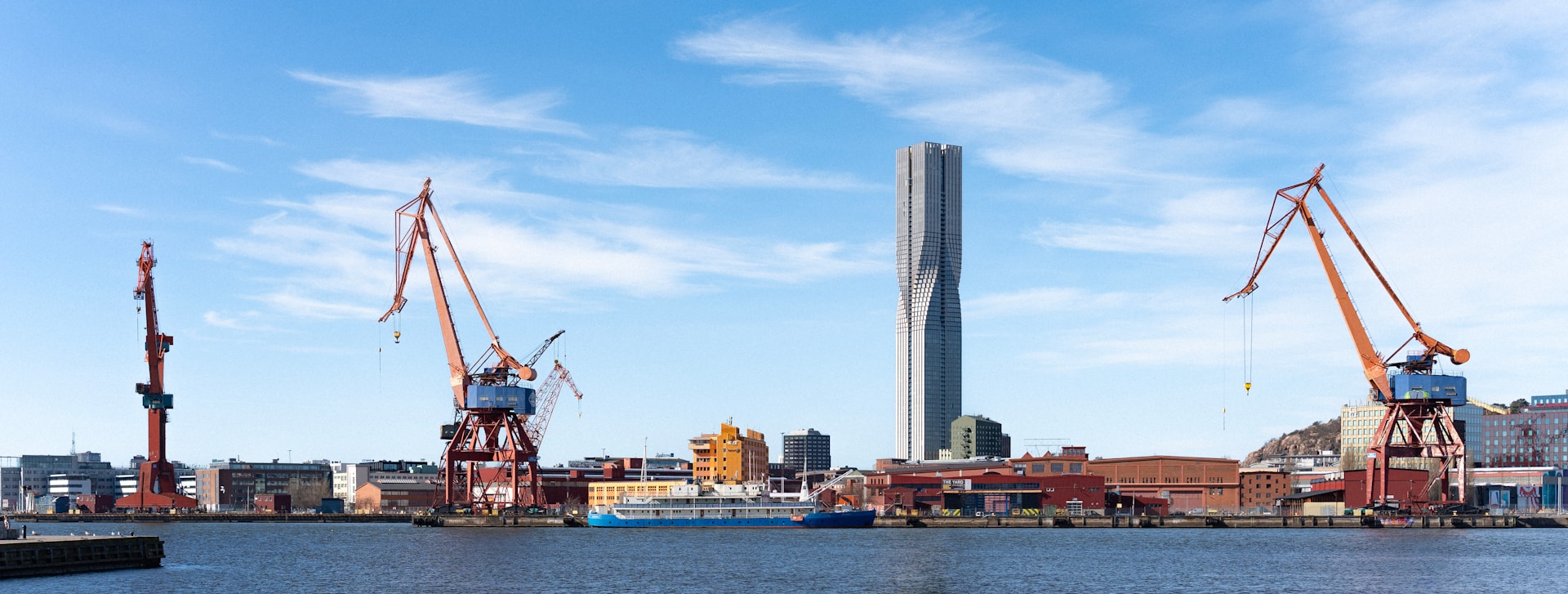

A 246-metre residential skyscraper that signals a new era of Nordic high-rise architecture
For decades, Scandinavian cities were known for restrained skylines. Strict urban planning, historical preservation, and a cultural preference for mid-rise development meant that true skyscrapers were rare across the Nordic region. That changed dramatically with the completion of Karlatornet, a project that has fundamentally altered the architectural identity of Gothenburg.
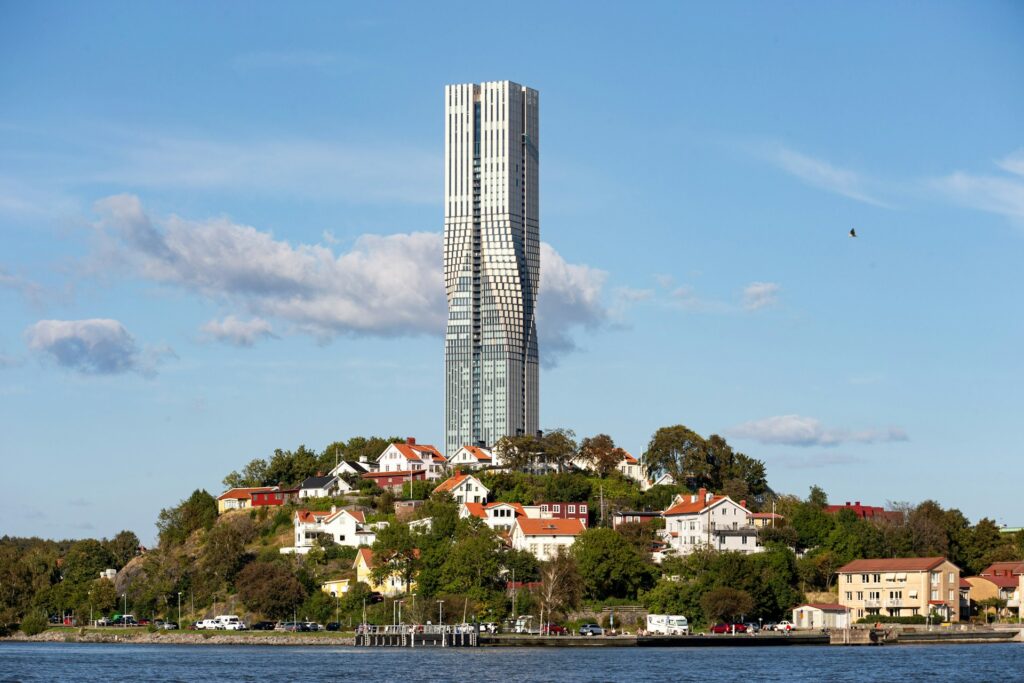
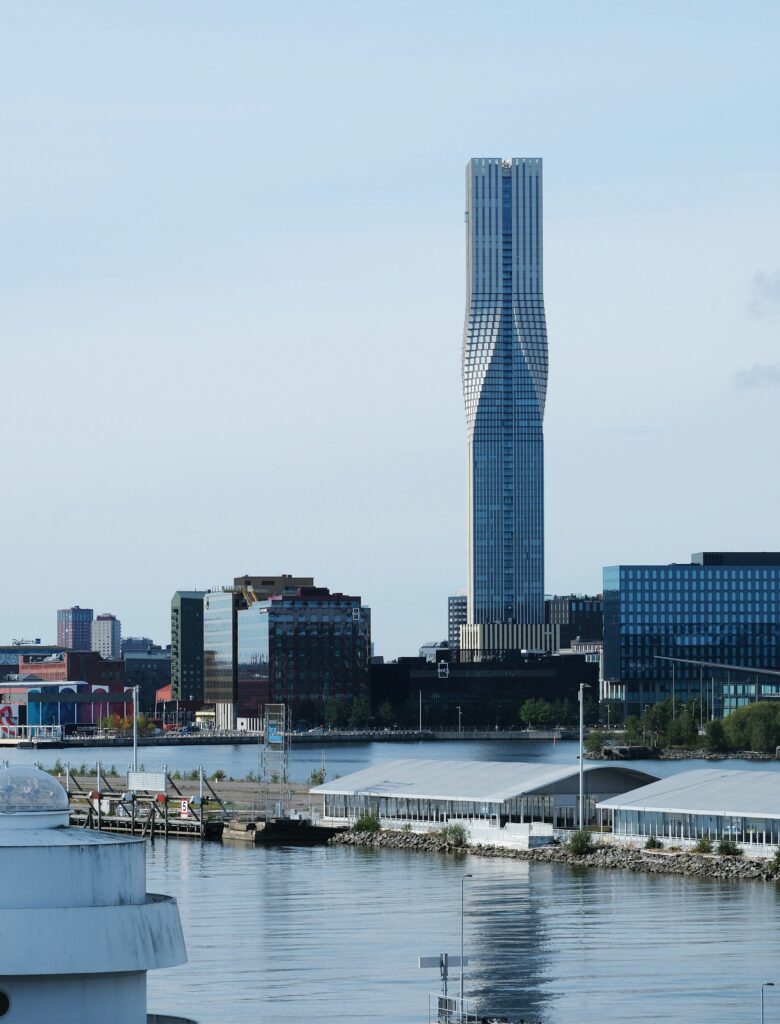
Rising 246 metres above the Lindholmen district, Karlatornet is not only the tallest building in Sweden, but also one of the tallest residential towers in Northern Europe. Designed by the internationally renowned architecture firm Skidmore, Owings & Merrill (SOM)—the same studio behind icons like Burj Khalifa—the tower introduces a new vertical scale to a country historically dominated by horizontal urbanism.
More than just a height record, Karlatornet represents a broader transformation of Gothenburg’s waterfront. The tower forms the centerpiece of the ambitious Karlastaden development, a mixed-use district designed to turn the former industrial harbor area into a dense urban neighborhood of housing, retail, and public spaces. With its slender profile and faceted façade, the building acts as a landmark visible from kilometers away, marking the city’s transition from industrial port to contemporary metropolitan hub.
At street level, Karlatornet integrates residential living with hospitality and public amenities, including restaurants, terraces, and viewing areas that open the building to the city around it. Above, hundreds of apartments occupy the tower, offering panoramic views over the Göta River, the archipelago, and the expanding skyline of Gothenburg.
In a country where skyscrapers were once considered incompatible with the urban landscape, Karlatornet stands as a bold experiment in vertical living—demonstrating how high-rise architecture can coexist with Nordic planning traditions while reshaping the perception of what Scandinavian cities can look like in the 21st century.
Karlatornet in Numbers
246 m
The official total height, making it the tallest building in Scandinavia
74
The number of levels above ground
70 m
How deep the 58 concrete piles are driven into the Gothenburg clay to reach bedrock
2 m
The diameter of each of those massive foundation piles
270 000 m²
The gross area of the entire Karlastaden district, of which the tower is the centerpiece
611
Total residential units, ranging from studios to massive penthouses
300
Number of rooms of the Clarion Hotel Karlatornet, which occupies the first 15 floors and the 58th floor
69
The level of the public observation deck, known as Gothenburg View
220 m
The height of the observation deck and the highest restaurant in the Nordics
40 cm
The maximum calculated sway at the top during extreme „100-year storms.”
8 m/s
The top speed of the high-speed elevators, among the fastest in Europe
3.7 m
The thickness of the massive concrete foundation slab
56 m
The height difference by which Karlatornet beats the previous record-holder, Malmö’s Turning Torso (190m)
13 billion SEK
The estimated total investment for the entire Karlastaden project
5.8 billion SEK
The specific construction cost of the Karlatornet tower itself
64 million SEK
The record-breaking price for the most expensive penthouse (located on the 71st floor)
What’s most intriguing about Karlatornet isn’t simply its height, but the structural strategy that allows a 246-metre residential tower to rise within a city historically defined by low-rise urbanism and challenging ground conditions along Gothenburg’s waterfront. Its slender concrete core, reinforced by a carefully engineered load-bearing frame and deep foundation system, stabilizes the tower against strong coastal winds while supporting hundreds of residential units stacked vertically. Karlatornet introduces a new vertical logic to Scandinavian city planning, demonstrating how high-rise living can integrate into Nordic urban environments while reshaping the skyline of Gothenburg.
Architecture and Engineering
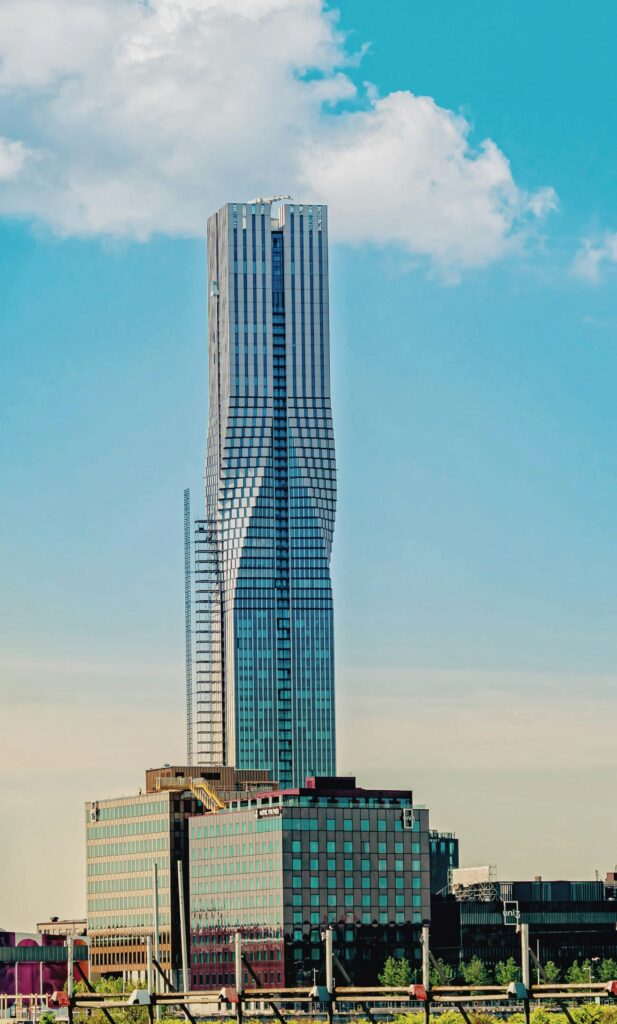
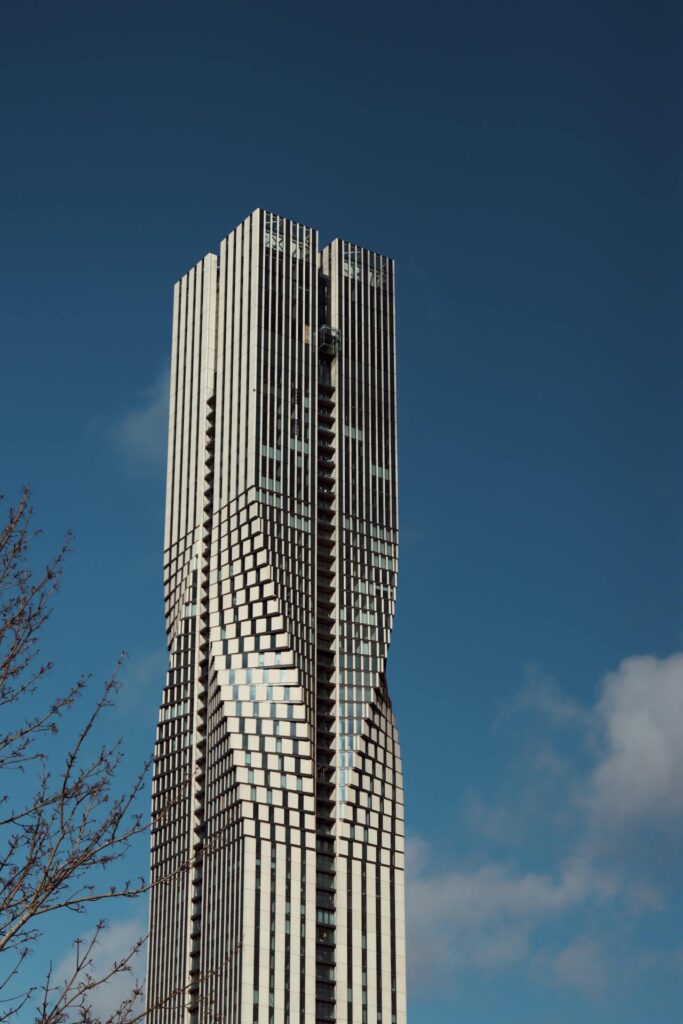
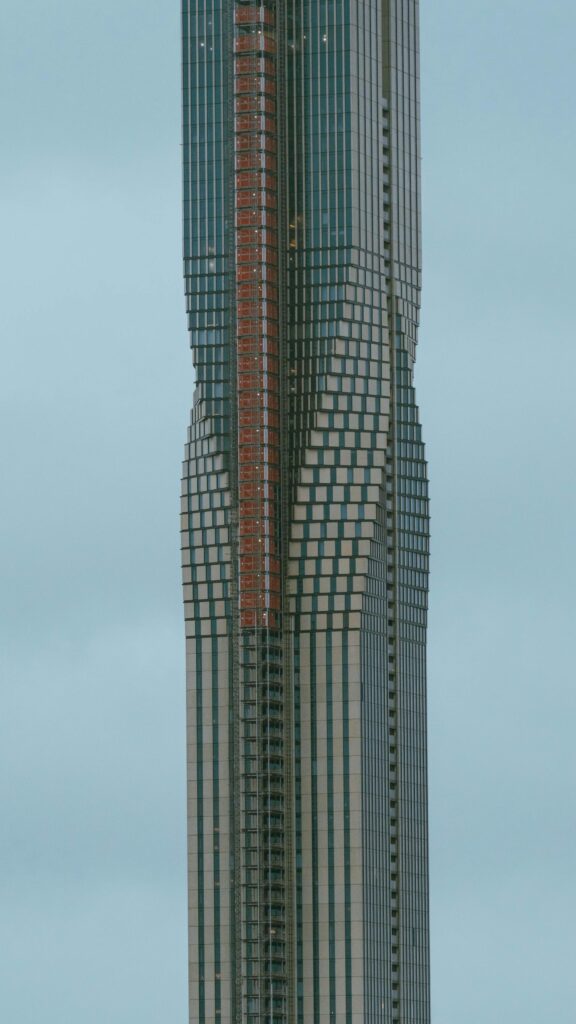
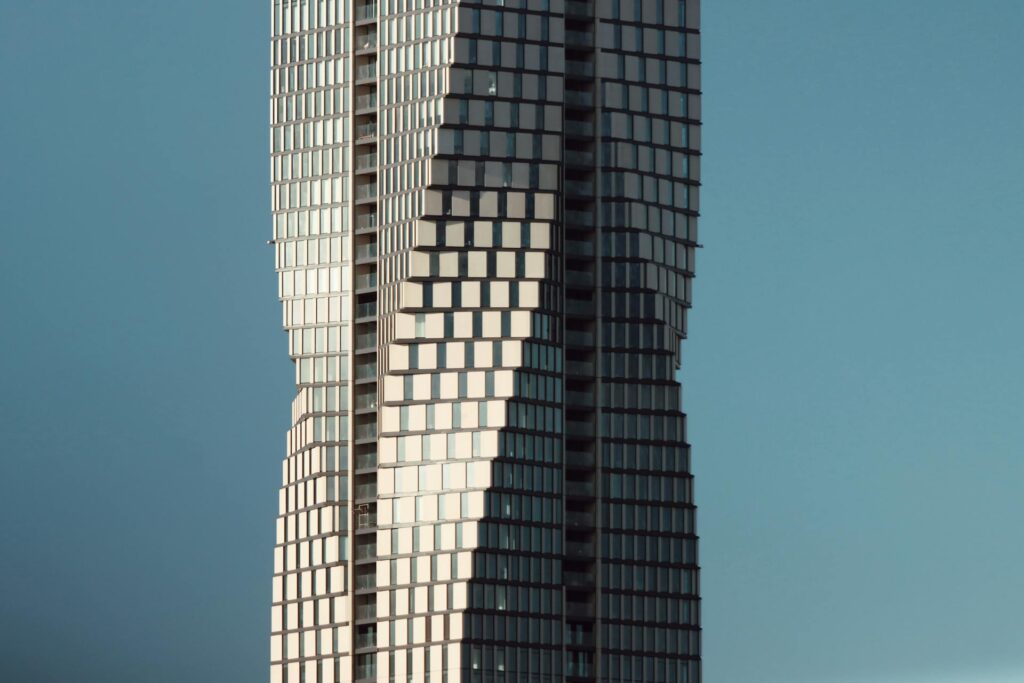
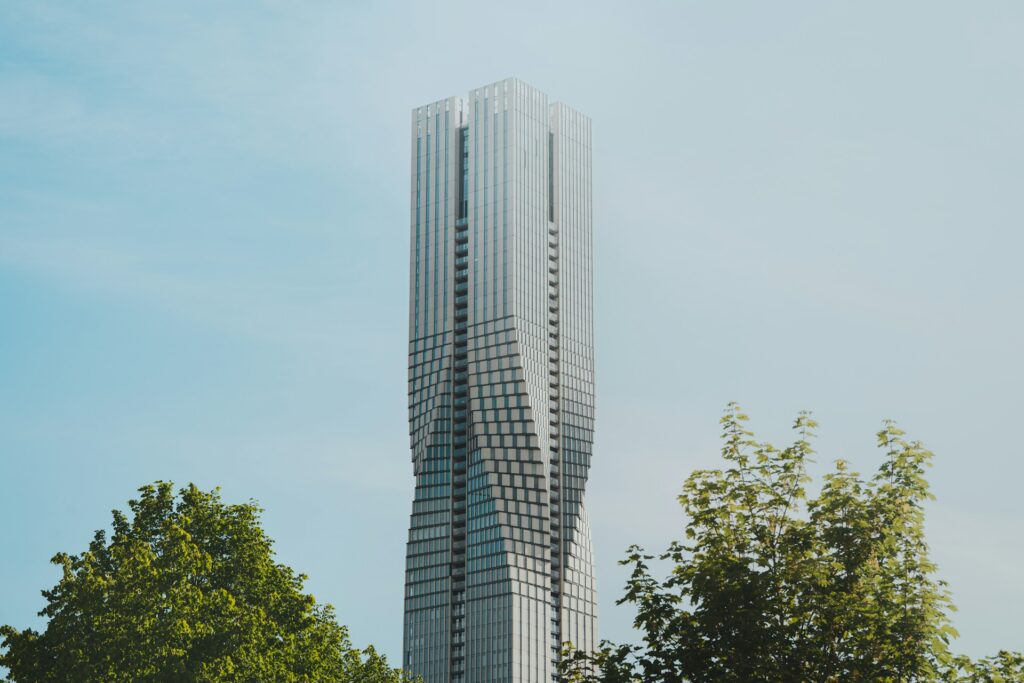
Karlatornet’s architecture is defined by its slender vertical form and faceted façade, which subtly shifts as the tower rises. The building was designed by Skidmore, Owings & Merrill (SOM) with the intention of creating a landmark that would be visible across Gothenburg while still maintaining an elegant and balanced silhouette. The tower’s geometry narrows slightly toward the top, emphasizing its verticality and reducing wind loads. Large floor-to-ceiling windows and articulated façade panels create a rhythm across the exterior while maximizing natural light and panoramic views of the Göta River and the surrounding archipelago.
From an engineering perspective, Karlatornet relies on a reinforced concrete structural system built around a massive central core. This core acts as the primary stabilizing element of the tower, resisting lateral forces generated by strong winds coming from the North Sea. Surrounding the core is a network of load-bearing columns and slabs that distribute the weight of the building’s 70+ floors efficiently down to the foundation. Because the tower rises to 246 metres, engineers had to carefully design the structure to control sway and vibration, ensuring both stability and residential comfort at high elevations.
The foundation system was another major engineering challenge. Karlatornet is built on the former industrial harbor area of Lindholmen, where soil conditions consist largely of deep clay layers. To support the tower’s immense weight, engineers installed deep piles driven into bedrock, creating a stable base capable of carrying the vertical loads of the skyscraper. Combined with the tower’s rigid core and high-strength concrete structure, this system allows Karlatornet to stand as the tallest building in Sweden while meeting strict Nordic safety and durability standards.
Economics and Urban Impact
Karlatornet is not only an architectural milestone but also one of the most ambitious real estate investments ever undertaken in Gothenburg. The tower forms the centerpiece of the broader Karlastaden development, a large-scale urban regeneration project designed to transform a former industrial harbor district into a dense mixed-use neighborhood. The total investment in the tower itself is estimated at several billion Swedish kronor, reflecting the high costs associated with constructing a 246-metre skyscraper in a city with limited experience in high-rise construction.
Economically, the project is driven primarily by the residential market. Karlatornet contains hundreds of apartments, many of which were marketed as premium units offering panoramic views of Gothenburg, the Göta River, and the surrounding coastline. High-rise living at this scale is relatively new for Sweden, which means the tower introduced a new housing product to the local market: luxury vertical living in a city traditionally dominated by mid-rise buildings. This positioning allowed developers to command higher prices per square meter compared with conventional residential projects.
Beyond apartment sales, Karlatornet also generates long-term economic value through hospitality, services, and increased land value in the surrounding district. The tower includes hotel spaces, restaurants, and commercial functions, attracting visitors and creating activity within Karlastaden. As the tallest building in Sweden, Karlatornet also functions as a powerful branding tool for Gothenburg, strengthening the city’s international visibility and helping position the waterfront district as one of the most dynamic urban development zones in Scandinavia.
Trivia
The Anchoring Achievement
The tower sits on some of the deepest foundations in Europe to combat Gothenburg’s famous soft clay. Engineers had to drive 58 massive concrete piles nearly 70 meters down to reach solid bedrock. This ensures the 246-meter giant remains perfectly stable regardless of the soil conditions.
A Sky-High Residential Record
Karlatornet is officially the tallest residential building in the European Union, surpassing all others in height. While many skyscrapers are office-based, this tower is designed primarily for living high above the clouds. It offers 611 apartments that redefine the concept of „home” in Scandinavia.
The Twist in the Design
The architectural firm SOM, who also designed the Burj Khalifa, gave the tower a unique „waist” where the facade twists. This elegant structural curve isn’t just for looks; it helps reduce wind loads on the building. The design allows the tower to maintain its slender profile while standing firm against North Sea gales.
High-Speed Vertical Travel
The building features some of the fastest elevators in the Nordic region, reaching speeds of 8 meters per second. Residents can travel from the ground floor to the very top in under a minute. This advanced lift system is essential for managing the flow of people across 74 floors.
The Highest Dining Experience
Located on the 69th floor, the restaurant EXO offers the highest dining experience in Northern Europe. Guests can enjoy world-class cuisine while looking down at the clouds from over 220 meters up. It has quickly become the most sought-after reservation in the city for special occasions.
Dancing in the Wind
Like all supertall structures, Karlatornet is designed to „sway” slightly during intense storms to absorb energy. At its peak, the building can move up to 40 centimeters, though this is barely perceptible to human senses. Sophisticated damping systems ensure that residents feel complete comfort even when the wind is howling outside.
A Vertical Hotel Experience
The Clarion Hotel Karlatornet isn’t just at the base; it is integrated directly into the tower’s ecosystem. It features 300 rooms and a spectacular „Skybar” that bridges the gap between hotel guests and residents. This integration provides homeowners with access to hotel-style services like room service and cleaning.
The Disappearing Turning Torso
For nearly two decades, Malmö’s Turning Torso was the undisputed king of the Swedish skyline at 190 meters. Karlatornet claimed the crown by a massive margin of 56 meters, effectively ending a 20-year record. It has shifted the architectural gravity of Sweden from the south to the west coast.
Incredible Visibility Range
On a perfectly clear day, the view from the observation deck extends for approximately 200 kilometers. You can see the entire Gothenburg archipelago and even catch a glimpse of the Danish coastline across the sea. This makes it the premier spot for photographers and tourists visiting the region.
A City Within a City
Karlatornet is the centerpiece of the new Karlastaden district, which will eventually house 8,000 people. The area includes schools, health centers, and parks, all built around the shadow of the tower. It represents a massive urban shift toward high-density, sustainable living in Sweden.
The Most Expensive View
The top-tier penthouses in the tower have set new records for the Swedish real estate market. One of the 71st-floor units sold for roughly 64 million SEK, making it one of the most expensive apartments ever sold in the country. These luxury homes feature floor-to-ceiling windows and private terraces above the clouds.
Built with Millions of Hours
The construction of this monolith required over one million hours of manual labor and engineering expertise. Work continued through freezing Swedish winters and high-altitude winds to meet the 2024 completion goal. It stands today as a monument to modern Swedish engineering and international collaboration.