
What exactly is a scale-shaped facade?
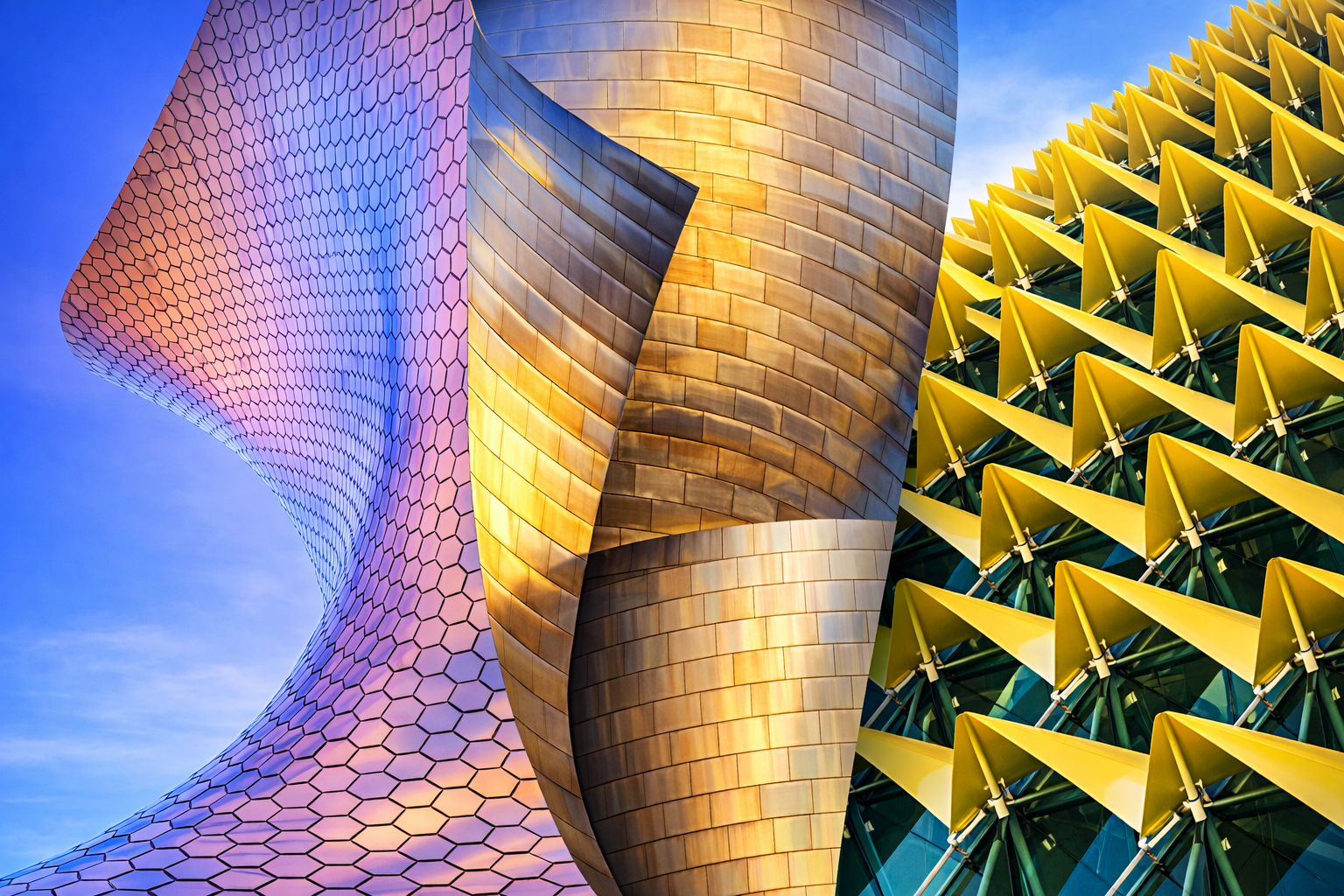
At first glance, the facades of these buildings appear to be decorative—rhythmic patterns, repetitive elements, and striking textures.
In reality, they are much more than that. The so-called scale-shaped facade is a design method in which the facade is not a single smooth surface, but a system composed of thousands of smaller elements.
A scale-shaped facade works much like skin or armor—it’s composed of many small parts that, together, create a single, cohesive surface.
Each element is separate, but only together do they allow the building to respond to the shape, light, climate, or scale of the entire structure.
Why do architects use such facades at all?
This type of facade is sometimes perceived as a purely aesthetic solution. In practice, architects resort to this solution when a traditional, smooth facade no longer serves its purpose.
In modern architecture, buildings are increasingly rarely characterized by simple, box-like forms. Curves, twists, slopes, and smooth transitions between walls and roofs are emerging. In such cases, a single large facade panel becomes a problem—it is difficult to adjust, expensive to manufacture, and inflexible.
A scale-shaped facade solves this problem by dividing the entire surface into smaller elements. Instead of struggling with the building’s geometry, the facade begins to imitate it. Each section can be slightly shifted, rotated, or reshaped, maintaining cohesion throughout.
Importantly, it’s not just about form. This system allows architects to control the building’s behavior over time—how it reflects light, how it reacts to sunlight, wind, and temperature. The facade ceases to be a passive „skin” and begins to act as an active interface between the interior and the exterior.
GEOMETRY
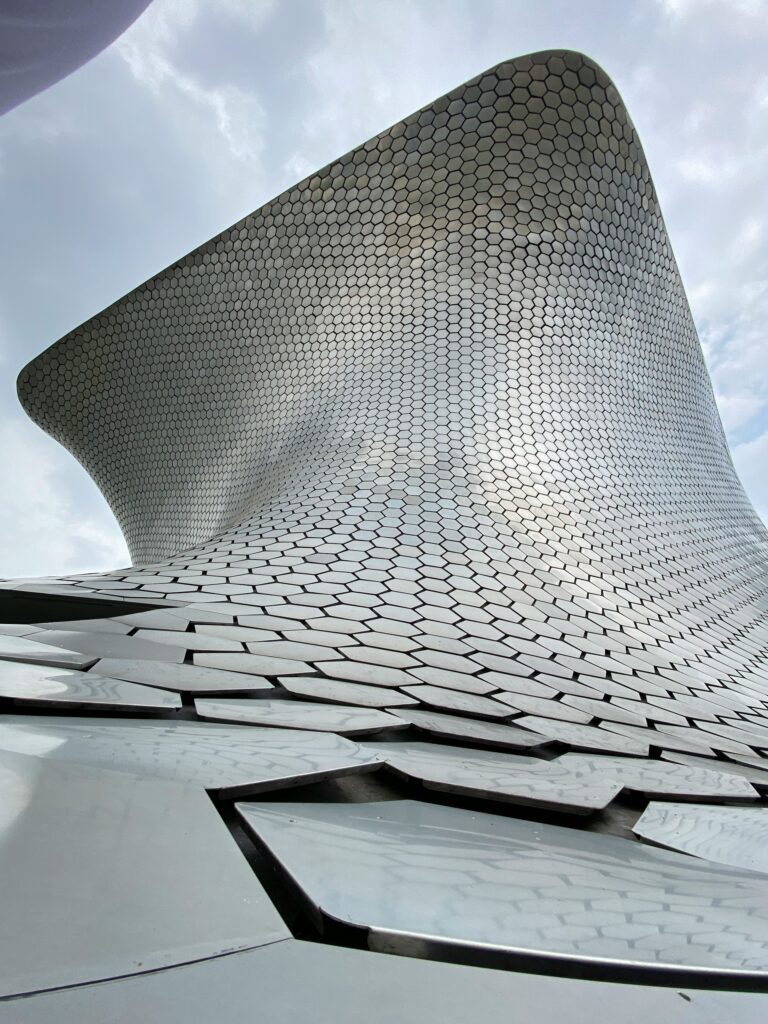
For buildings with flowing, curved forms, traditional facades quickly lose their appeal. Large panels are difficult to adjust, and each curve requires custom solutions.
A scale-shaped facade solves this problem by dividing the entire surface into hundreds or thousands of smaller elements. Each can be positioned slightly differently, allowing the facade to „follow” the building’s geometry.
This is why such complex shapes can appear cohesive and light, despite their highly complex shapes.
Museo Soumaya Mexico City
LIGHT
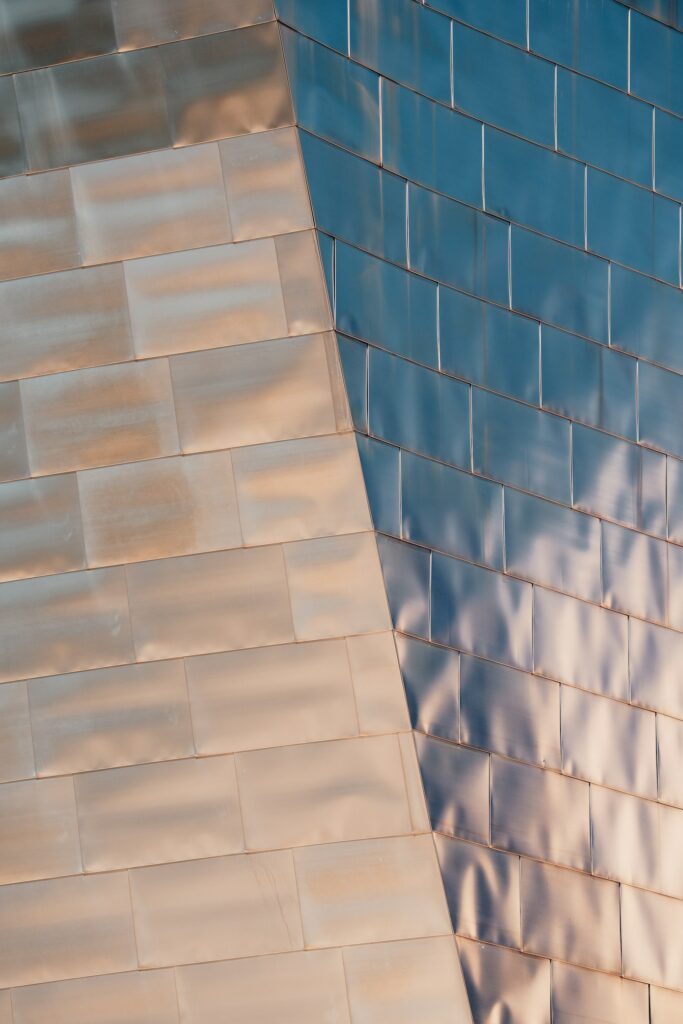
In some buildings, the scale-shaped facade serves not to shape the building’s form, but to control light and reflections. Instead of a uniform surface, thousands of small elements appear, each reflecting light at a slightly different angle.
This means the facade doesn’t look the same at different times of day or in different weather conditions. It changes with the sun’s movement, cloud cover, and humidity. The building ceases to be a static object and begins to behave like a surface in constant motion.
The facade becomes a tool of perception—it doesn’t protect or filter the atmosphere, but influences how the building is perceived over time.
Museum Guggenheim Bilbao
CLIMATE
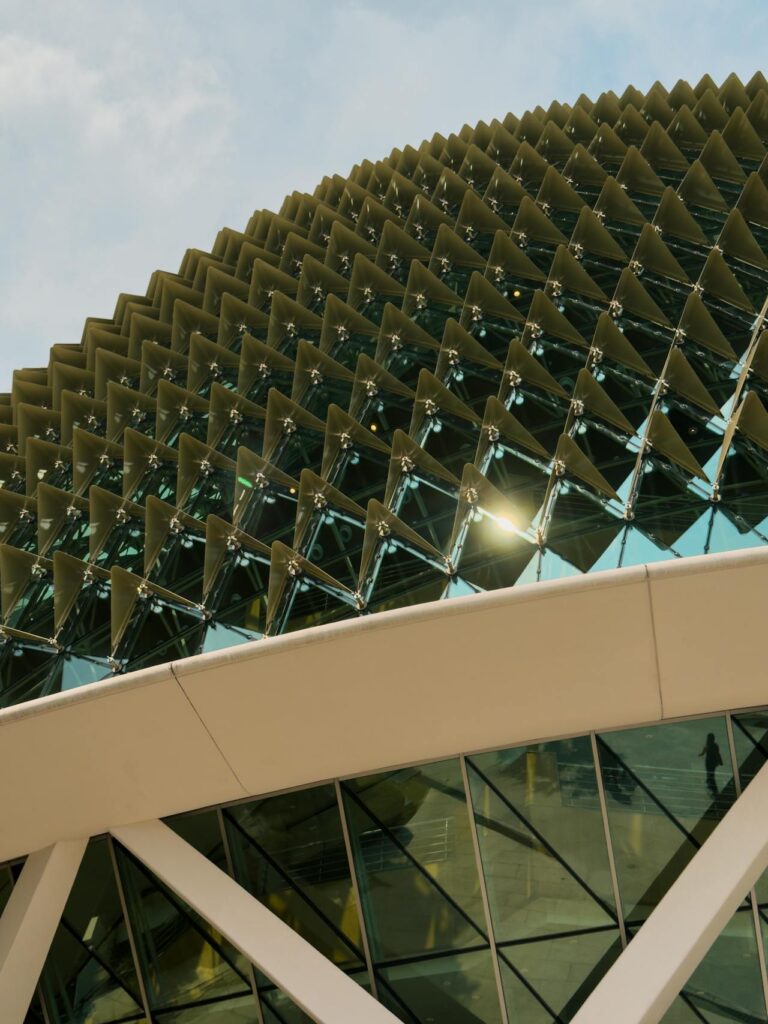
In hot and humid climates, a facade cannot be merely aesthetic. It must actively limit interior heat gain and control the amount of sunlight entering the building.
A scale-shaped facade allows the facade to be divided into hundreds or thousands of elements, each of which can be adjusted to a specific orientation relative to the sun. Some sections provide more shade, others less, creating a diverse but logical solar protection system.
In this case, the facade acts as an environmental filter, not as a wall. Its form is derived directly from climatic conditions, not from composition or symmetry.
Esplanade Singapure
ORGANIC SCALE
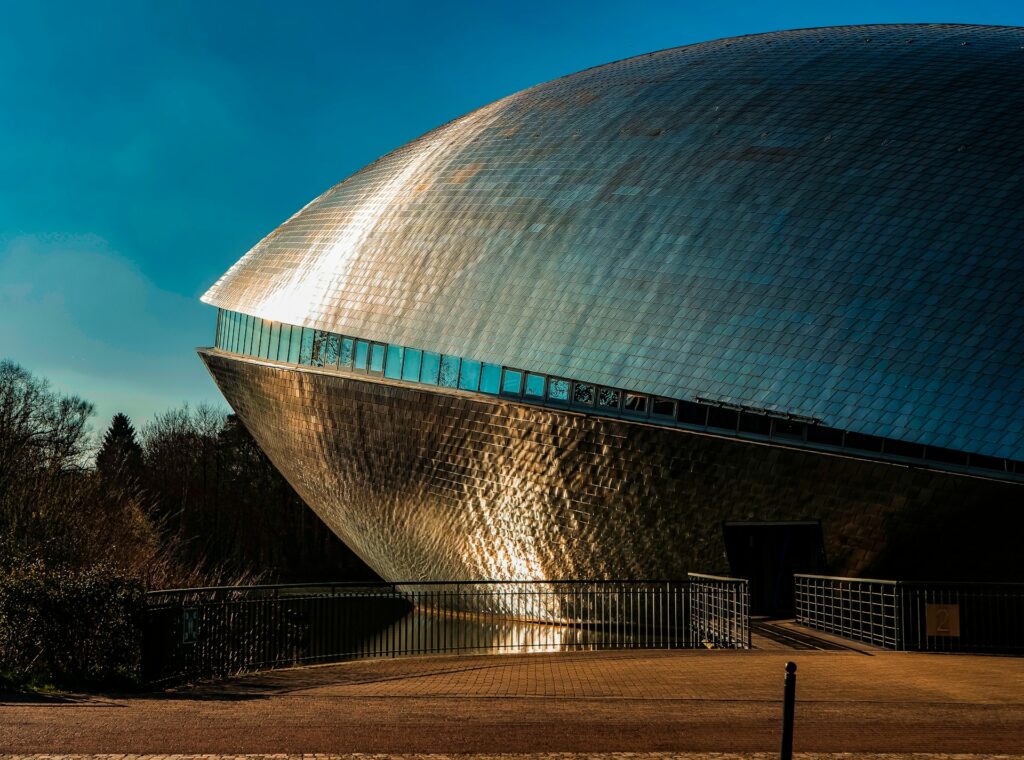
Large buildings often reveal their scale through the rhythm of floors, windows, and structural divisions. The scale-shaped facade deliberately neutralizes this rhythm.
Instead of clear storeys, a small, dense structure emerges, providing no point of reference. The eye cannot easily assess the height or size of the object, making the building appear more organic than architectural.
In this case, the facade doesn’t emphasize scale—it blurs it. The object begins to resemble a natural form, not one designed according to human dimensions.
Universum Bremen