
A Machine-Age Crown for Manhattan
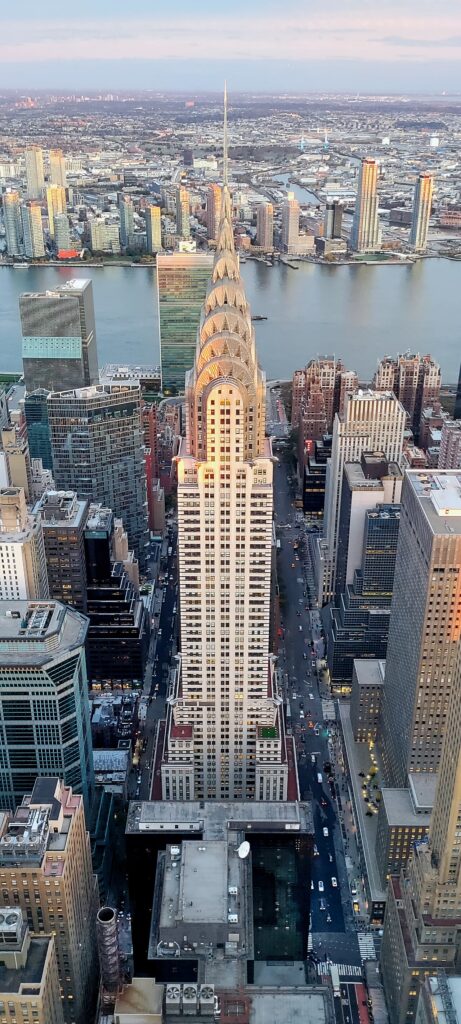
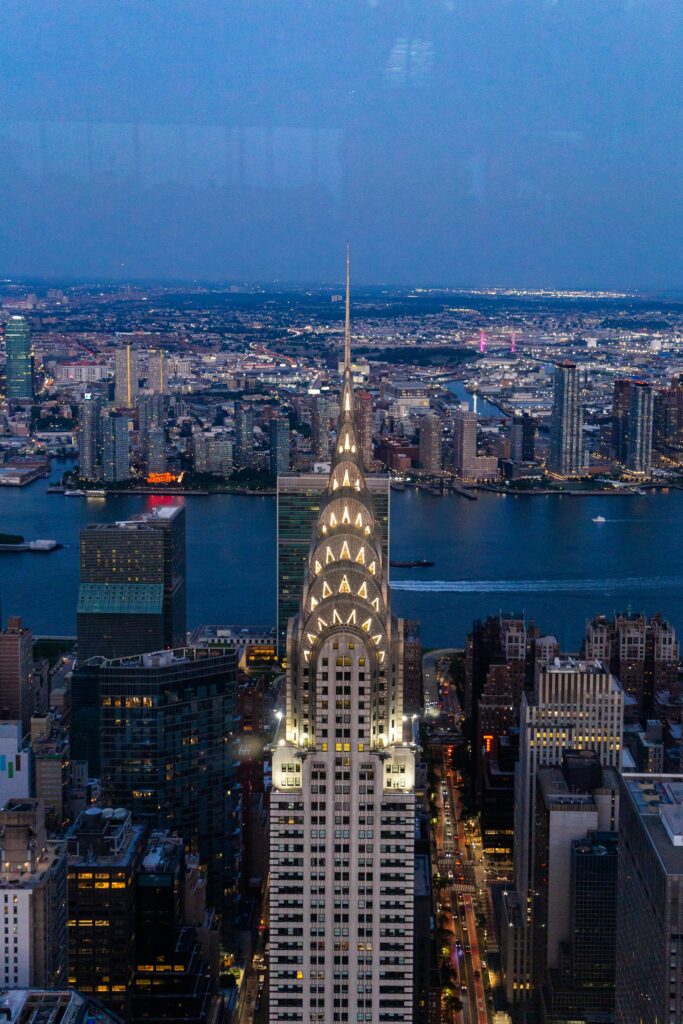
The Chrysler Building is one of the rare skyscrapers whose silhouette became more famous than its tenant roster. Rising above Lexington Avenue with its stainless-steel crown, it condenses the optimism, vanity, engineering speed, and decorative daring of late-1920s New York into a single vertical composition.
Completed in 1930, it arrived at the climax of the city’s great race for height. For a brief but unforgettable period, the tower was the tallest building in the world, surpassing both the Woolworth Building and 40 Wall Street before yielding the title to the Empire State Building less than a year later.
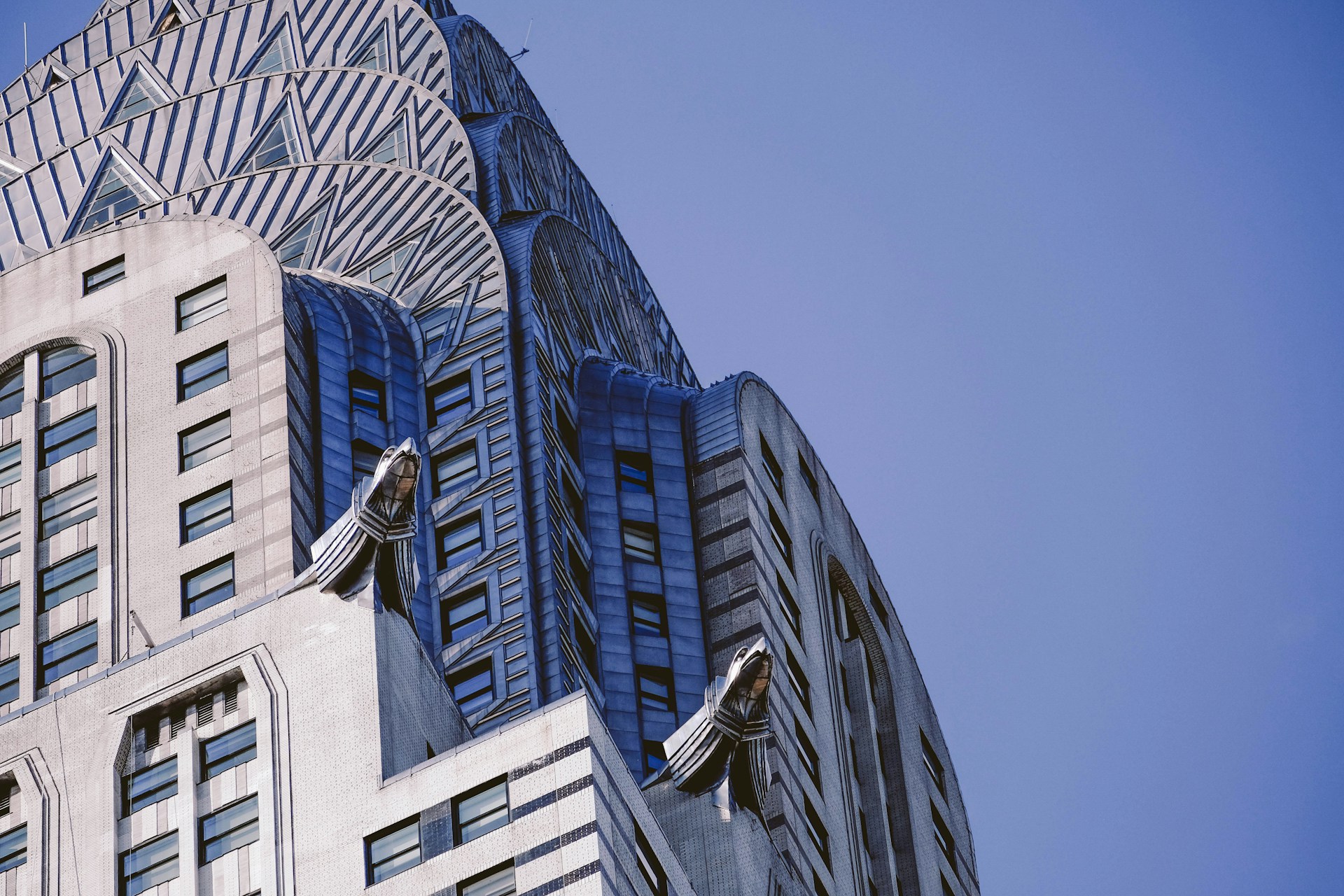
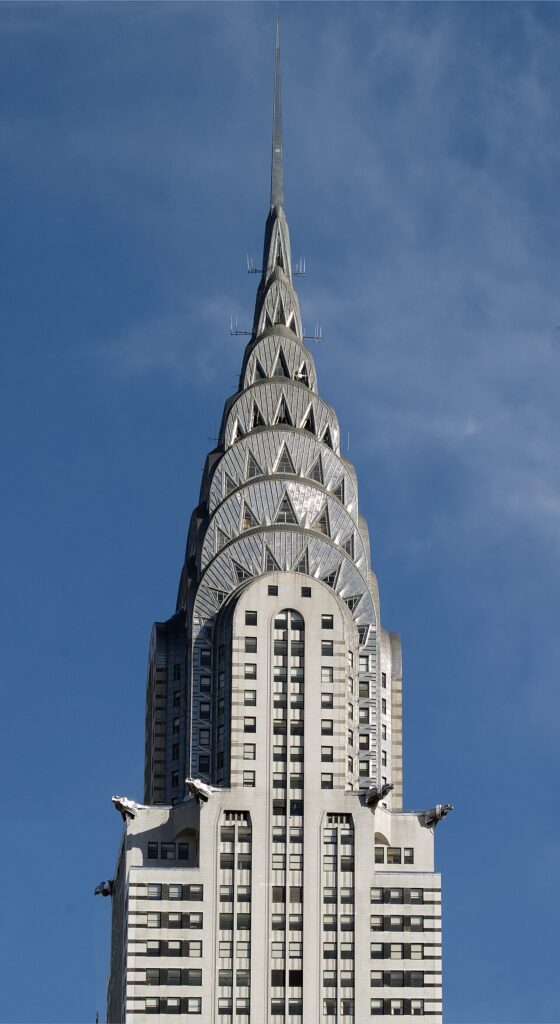
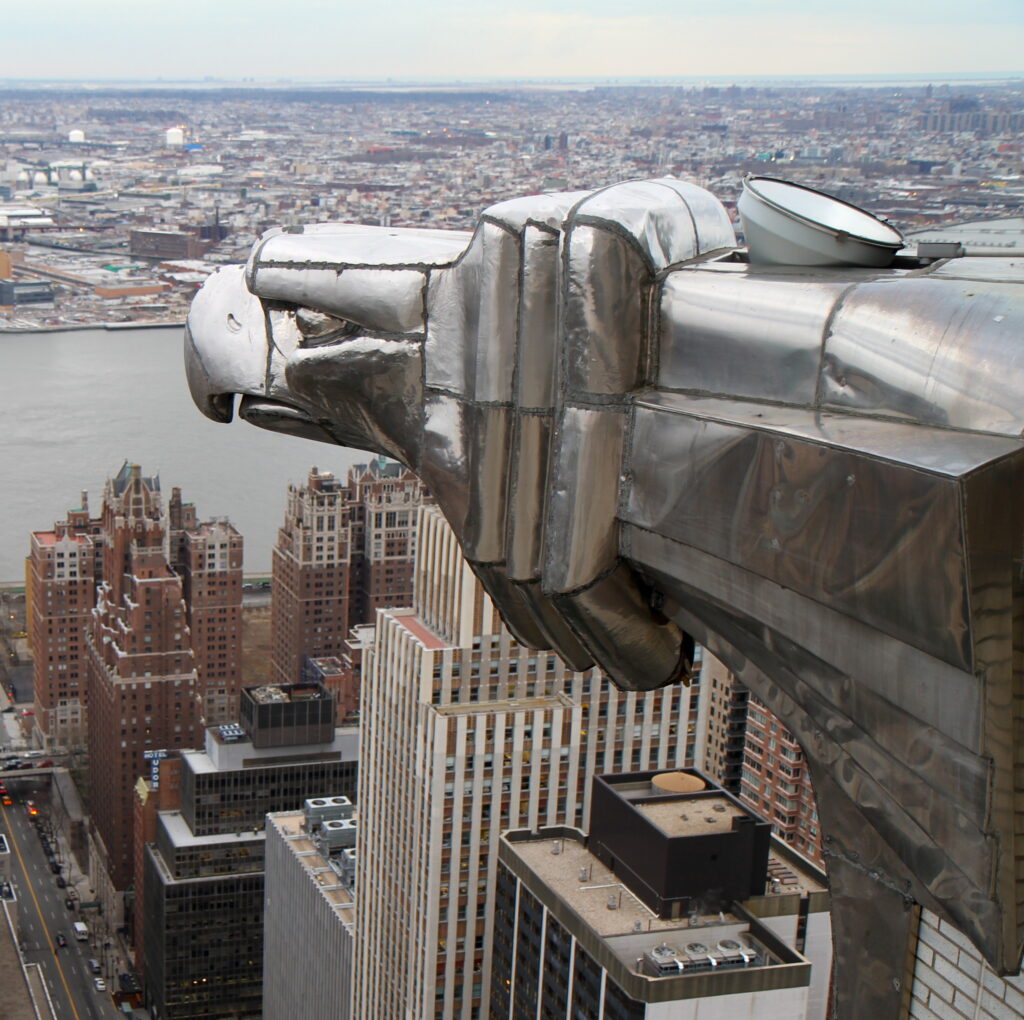
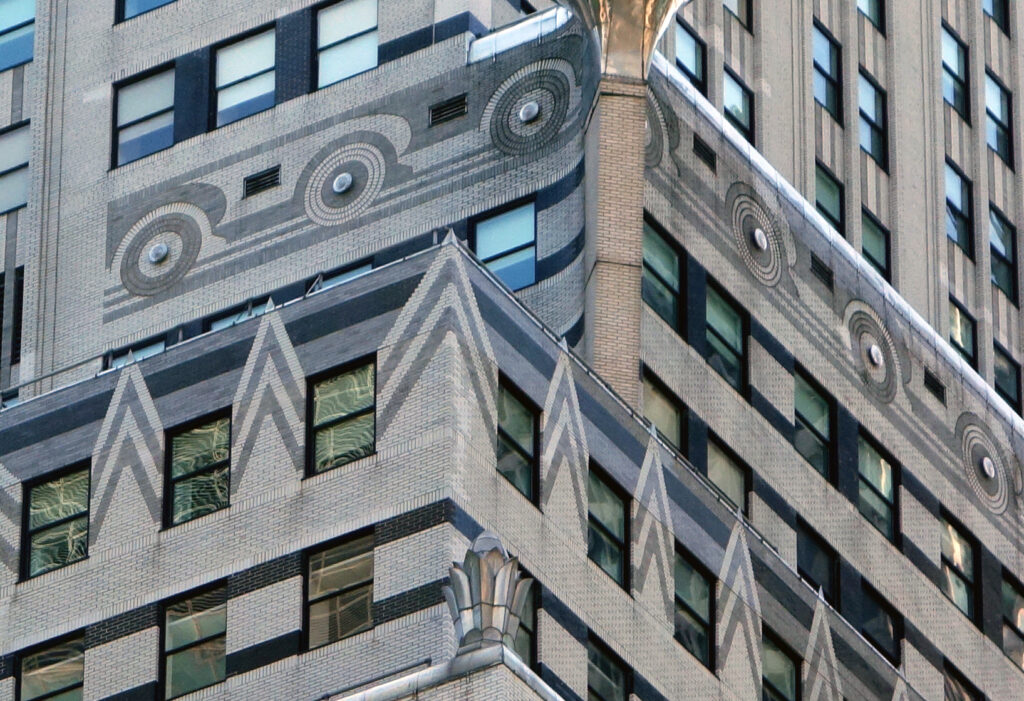
Designed by William Van Alen for Walter P. Chrysler, the building is a masterwork of Art Deco not because it is merely ornamental, but because its ornament is inseparable from its identity. The setbacks, triangular windows, radiator-cap motifs, and eagle gargoyles translate the language of the automobile age into architecture.
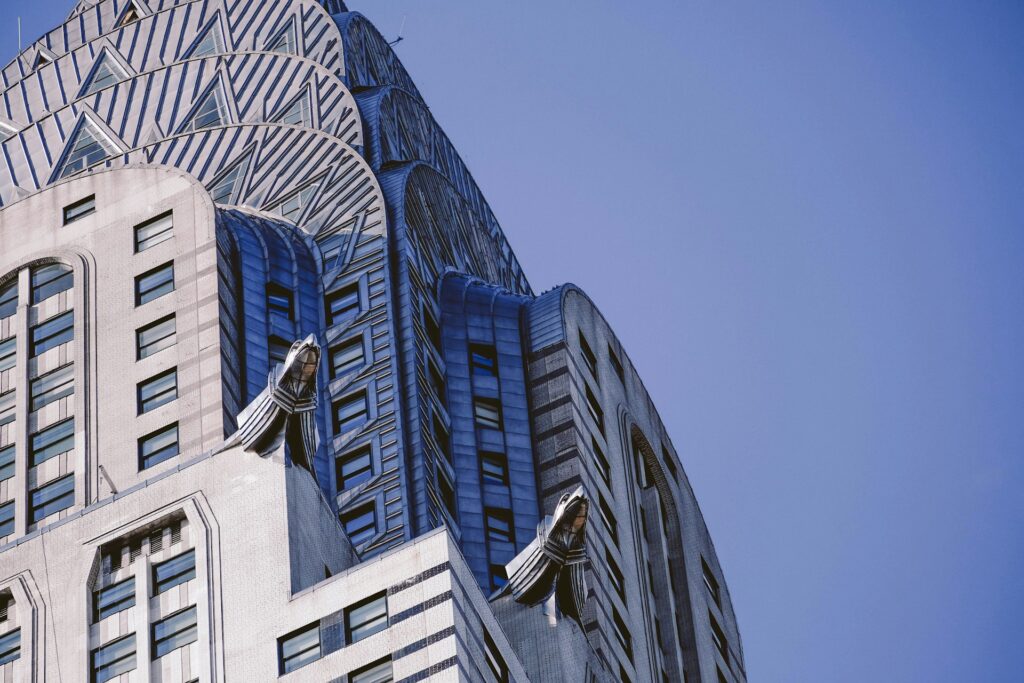
Its crown remains the most extraordinary part of the composition. Sheathed in Nirosta stainless steel, it catches daylight with a precision that makes the building appear simultaneously metallic, aerodynamic, and almost immaterial. It is less a roof than a theatrical termination of the skyline.
The Chrysler Building also matters because of where it stands. Near Grand Central Terminal and set on an awkward, slanting Manhattan parcel, it helped redefine East Midtown as a district of corporate modernity. It did not merely occupy the skyline; it helped reorganize the image of the city around speed, commerce, and vertical ambition.
What keeps the building compelling today is that it still reads as both object and story: a steel-framed office tower, a branding exercise, an engineering feat, a preservation icon, and a monument to a very specific moment when New York believed that progress could be expressed most vividly in stainless steel, brick, and height.
Chrysler Building in Numbers
1,046 ft
The architectural height that made the Chrysler Building the world’s tallest building in 1930
77
The number of floors in the completed tower, giving it one of the most efficient vertical profiles of its era
1930
The year the building opened and briefly rewrote the hierarchy of the modern skyline
11 months
The length of its reign as the tallest building on Earth before the Empire State Building overtook it
125 ft
The approximate length of the concealed spire that was secretly assembled inside the tower before its dramatic hoist
925 ft
The height of the roof below the spire, showing how much of the building’s final drama is concentrated in the crown
3,862
The number of exterior windows cut into the masonry and metal skin of the tower
32 elevators
A vertical transport system that helped make extreme height commercially usable in the early skyscraper era
20,961 tons
The quantity of structural steel that gave the tower its speed of erection and its hidden strength behind the brick skin
391,881
The number of rivets driven into the building’s steelwork during its famously rapid construction campaign
3,826,000
The approximate number of bricks laid to form the non-loadbearing enclosure around the steel frame
61st floor
The level where the great stainless-steel eagle ornaments project into the skyline like machine-age gargoyles
31st floor
The setback level where radiator-cap ornaments turn automotive branding into permanent architectural decoration
1976
The year the tower became a National Historic Landmark, confirming its place in American architectural history
1978
The year New York City designated the facade and lobby as landmarks, protecting both exterior image and interior spectacle
$20 million
The often-cited approximate construction cost, modest by current standards but immense for an ornamental skyscraper of 1930
What is most intriguing about the Chrysler Building is that its most theatrical element—the stainless-steel crown and needle that seem almost weightless above Midtown—was in fact a brutally pragmatic act of competitive engineering, turning secrecy, speed, automotive branding, and structural audacity into a single Art Deco silhouette that still defines New York’s idea of vertical glamour.
Engineering and Construction of Chrysler Building
The engineering of the Chrysler Building begins with an apparent contradiction: it is remembered as an exuberantly decorative object, yet its success depended on ruthless construction logic. Beneath the stainless-steel glamour lies one of the most disciplined examples of early twentieth-century skyscraper engineering.
Steel frame and foundation logic
The tower was built as a steel skeleton wrapped in masonry rather than as a brick-bearing wall structure. That distinction matters. It allowed the building to rise quickly, concentrate loads efficiently, and support a profile of setbacks, crown forms, and spire elements that traditional loadbearing construction would have made far heavier and less flexible.
Foundation work reached bedrock after a substantial excavation campaign, and the substructure had to absorb the concentrated loads of a rapidly rising office tower on a tight Midtown site. In structural terms, the Chrysler Building belongs to the moment when New York skyscrapers became fully industrialized vertical machines, assembled from steel, rivets, elevators, and repetitive floor plates rather than carved from mass.
Speed, sequencing, and labor
Its construction pace was extraordinary even by Manhattan standards. Steel erection advanced at roughly four floors per week, a rate made possible by precise sequencing among fabricators, erectors, riveters, and enclosure crews. The building’s legend is inseparable from this speed: it was racing not only the calendar but also rival developers competing for the title of world’s tallest building.
That speed did not mean improvisation. The Chrysler Building is a study in prefabricated coordination, where every beam, rivet line, elevator bank, and floor sequence had to align with a narrow program of offices, mechanical spaces, observation areas, and ornamental setbacks. The tower’s elegance is therefore the visible result of managerial discipline as much as design ambition.
The stainless-steel crown
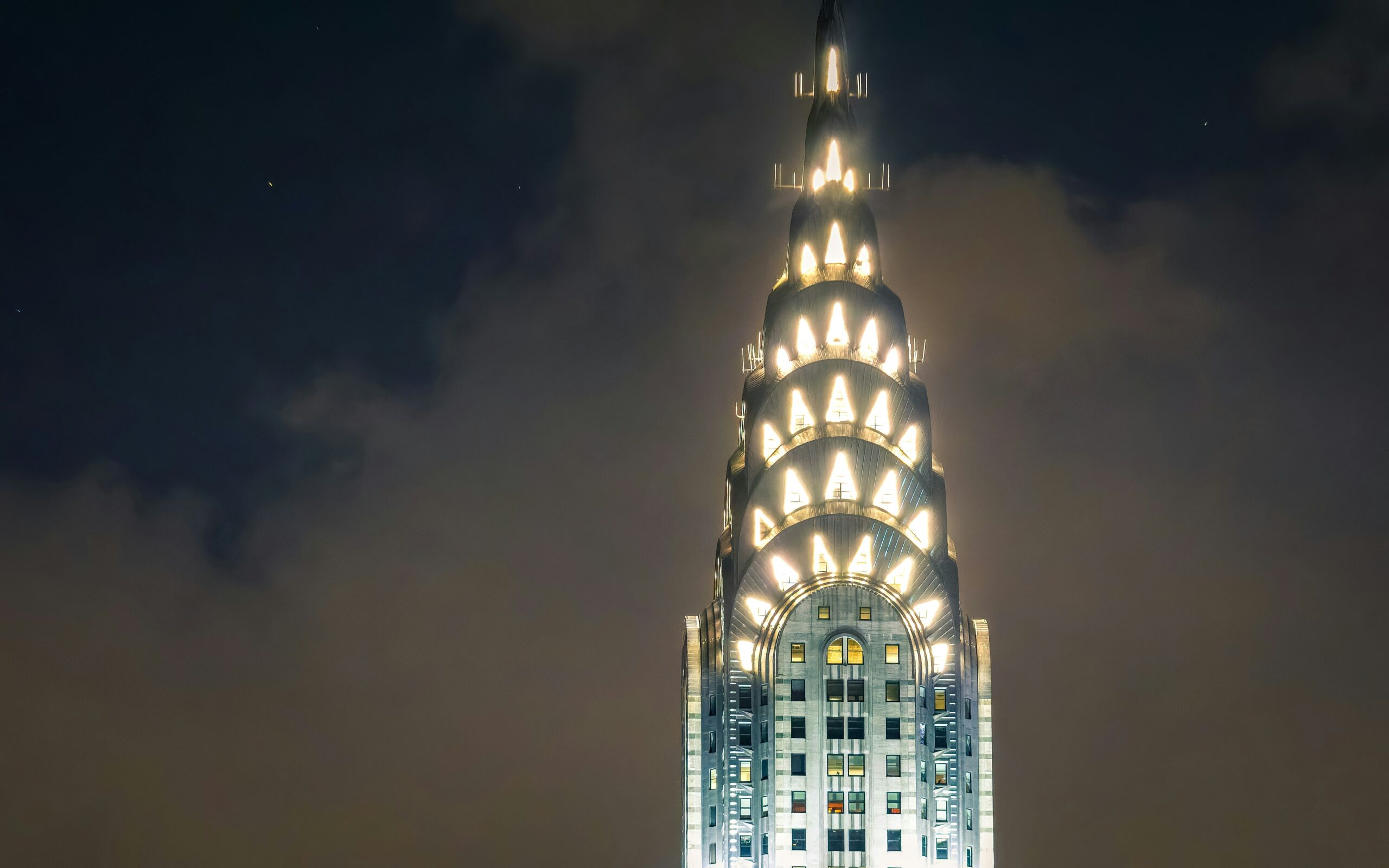
The crown is often discussed as decoration, but it is better understood as a highly specialized enclosure and finishing system. Its triangular windows, ribbed arches, and layered metal surfaces create a luminous shell that had to resolve weather protection, curvature, access, and long-term durability while still appearing almost effortless from the street.
The extensive use of Nirosta stainless steel was crucial to this effect. Unlike painted metal or conventional stone ornament, the material provided a reflective, corrosion-resistant surface suited to a building intended to represent modern industry. The crown does not simply sit on top of the tower; it changes the building’s physical behavior in light, turning atmosphere into part of the architecture.
The concealed spire as technical object
One of the most demanding technical components within this system was the spire. It was not merely appended to the finished tower but prepared as a strategic structural and symbolic device, fabricated in sections and assembled within the building before being raised into view.
That decision solved two problems at once. It protected the operation from public scrutiny during the height race, and it allowed the final lift to transform the building’s official height in a single dramatic act. The spire is therefore both a piece of engineering and a tactic of competitive urban theater.
The spire as spatial device
Its importance is not only technical but spatial. The spire converts the crown from a decorative cap into a vertical climax, extending the tower’s geometry into a needle that sharpens the entire skyline around it. Without it, the Chrysler Building would still be beautiful; with it, the building becomes unforgettable.
That is why the tower’s ornament never feels superficial. The radiator caps, eagles, setbacks, crown, and spire all participate in one continuous composition in which branding, structure, materials, and height are fused. The building does not conceal its ambition; it engineers it into form.
This level of integration is what ultimately defines the project. Early skyscraper engineering was never only about stacking rentable floors; it was about reconciling structural steel, vertical circulation, wind exposure, fireproofing, enclosure, and symbolic presence within one coherent system. The Chrysler Building does that with unusual clarity.
It is engineered less as a neutral office block than as a coordinated machine of frame, skin, ornament, and skyline effect. The result is a building whose technical intelligence remains inseparable from its image: a tower where the most memorable beauty is produced by the precision of the system beneath it.
History of the Chrysler Building
The building’s history begins before it bore Chrysler’s name. The site at Lexington Avenue and 42nd Street was first associated with developer William H. Reynolds, who commissioned William Van Alen to design an ambitious office tower. In 1928, Walter P. Chrysler took over the lease, the project, and the architect, transforming the scheme into a personal monument that he financed largely with his own money rather than as a straightforward corporate headquarters project.
That shift intensified the tower’s role in New York’s race to the sky. Van Alen repeatedly revised the design upward as competitors pushed their own projects higher, most notably 40 Wall Street by H. Craig Severance, Van Alen’s former partner and now his rival. The decisive move came with the secret spire, hoisted into place in October 1929 and giving the Chrysler Building a final architectural height of 1,046 feet. When the tower opened on May 27, 1930, it was not merely complete; it had won.
Its victory was brief but culturally immense. The building held the title of world’s tallest structure for only eleven months, until the Empire State Building surpassed it in May 1931, yet that short reign fixed the Chrysler permanently in the public imagination. The early years also included spaces that reinforced its glamour, among them the public observation area and the exclusive Cloud Club, a high-altitude social room for executives and prominent tenants.
The middle decades were more complicated. New York changed, corporations dispersed, and the economics of older office towers became less secure. Yet the Chrysler Building’s aesthetic authority only grew. Preservationists and historians increasingly recognized that it embodied not just Art Deco taste but a whole chapter of urban ambition, technological self-confidence, and American industrial symbolism. National Historic Landmark status in 1976 and New York City landmark designation for its facade and lobby in 1978 stabilized that recognition institutionally.
Later history has involved restorations, changing lease structures, and recurring debates over how a landmark skyscraper should function in a modern real-estate market. That financial story matters, but only as a footnote to a much larger arc: the Chrysler Building survives because its historical value is architectural, urban, and cultural before it is commercial. It remains the clearest reminder that some skyscrapers are remembered not for how much space they lease, but for how completely they capture the spirit of an age.
Trivia
The Spire Was Assembled in Secret
The Chrysler Building did not simply grow taller in public view. Its spire was fabricated in sections and prepared inside the tower before being hoisted into place in a surprise operation. That one move changed the building from ambitious skyscraper to world champion almost instantly.
It Beat 40 Wall Street by Surprise
The Chrysler Building’s great rival was 40 Wall Street downtown. For a moment, many thought that rival had already secured the title of world’s tallest building. Van Alen’s concealed spire proved otherwise and turned the contest into one of the most famous plot twists in architectural history.
The Crown Looks Like Machinery
The famous crown is often admired as pure ornament, but its forms were deliberately machine-age in character. The radiating arches and triangular windows echo wheels, hubs, and metallic precision rather than historical stone carving. That is why the building still feels modern even while being unmistakably Art Deco.
Radiator Caps at 31 Stories
Most skyscrapers hide their branding in plaques or lobbies. The Chrysler Building put it into the skyline itself, with radiator-cap ornaments modeled on Chrysler automobiles. It is one of the boldest fusions of industrial branding and architecture ever built at urban scale.
The Eagles Are at the 61st Floor
Those projecting eagle heads are not random decoration. They mark one of the building’s most dramatic setback levels and help scale the tower for viewers far below. From the street they feel mythic; up close they are startlingly aggressive pieces of stainless-steel sculpture.
The Brick Does Not Hold It Up
People often call it the tallest brick building in the world, which is true only with an important caveat. The brick is enclosure, not the primary loadbearing system. The real work is done by the steel frame hidden behind that elegant skin.
Walter Chrysler Paid for It Himself
Walter Chrysler treated the project as more than speculative real estate. He financed it personally so it could become a legacy asset for his family. That decision helps explain why the tower feels so intensely individual rather than like a generic corporate office block.
Van Alen and Chrysler Fell Out
For all the tower’s unity, the relationship behind it was not harmonious forever. Walter Chrysler later refused to pay William Van Alen in full, and the architect had to sue for his fee. One of New York’s happiest skylines came out of a deeply unhappy professional ending.
The Cloud Club Sat Above the City
The tower once housed the Cloud Club on its upper floors, one of Manhattan’s great vertical dining rooms. It was built for executives, power lunches, and elite business culture rather than the general public. In other words, the Chrysler was glamorous at street level and exclusive in the sky.
The Observatory Closed Early
The building once had a public observatory and observation lounge high above Manhattan. It did not last, partly because the Empire State Building soon offered even higher views and stronger tourist appeal. That makes the Chrysler one of New York’s great icons whose best-known image long outlived its public skyline experience.
The Lobby Is Landmark-Grade Theater
The Chrysler Building’s fame is not only an exterior story. Its lobby is one of New York’s most intense interiors, with rich materials, polished surfaces, and a mural that celebrates labor, flight, and modern industry. When the lobby became an interior landmark, the city acknowledged that the building’s drama begins before the elevator doors close.
Sources and References
This article draws on official building information, preservation documentation, historical records, architectural scholarship, and widely cited technical data concerning the Chrysler Building and its place in the history of New York skyscrapers.
Referenced source groups include:
- Chrysler Building official information
- New York City Landmarks Preservation Commission designation materials
- National Historic Landmark and National Park Service documentation
- Council on Tall Buildings and Urban Habitat building data
- museum, archive, and architectural history publications on Art Deco New York
- reputable public reporting on construction history, restoration, and landmark status
The article references data related to:
- architectural height, roof height, and spire dimensions
- floor count, elevator count, and office scale
- steel, brick, rivet, and window quantities
- construction chronology and opening date
- the 40 Wall Street height race and concealed spire strategy
- the stainless-steel crown and automotive ornament program
- National Historic Landmark and New York City landmark designations
- later restoration, lease, and ownership context
Some figures associated with historic skyscrapers differ slightly across public sources, especially where measurements distinguish between roof, top occupied floor, and architectural height, or where material counts are presented as rounded totals. For that reason, selected numbers in this article are described as approximate where appropriate.
::contentReference[oaicite:0]{index=0}