
A Residential Spire for the Gold Coast
Q1 Tower in Surfers Paradise is not simply a very tall apartment building. It is a hybrid of residential high-rise, tourist observatory, resort podium, and urban branding device, designed to convert verticality into both private value and public spectacle. Few Australian towers are so clearly conceived as skyline infrastructure rather than as a neutral container of apartments.
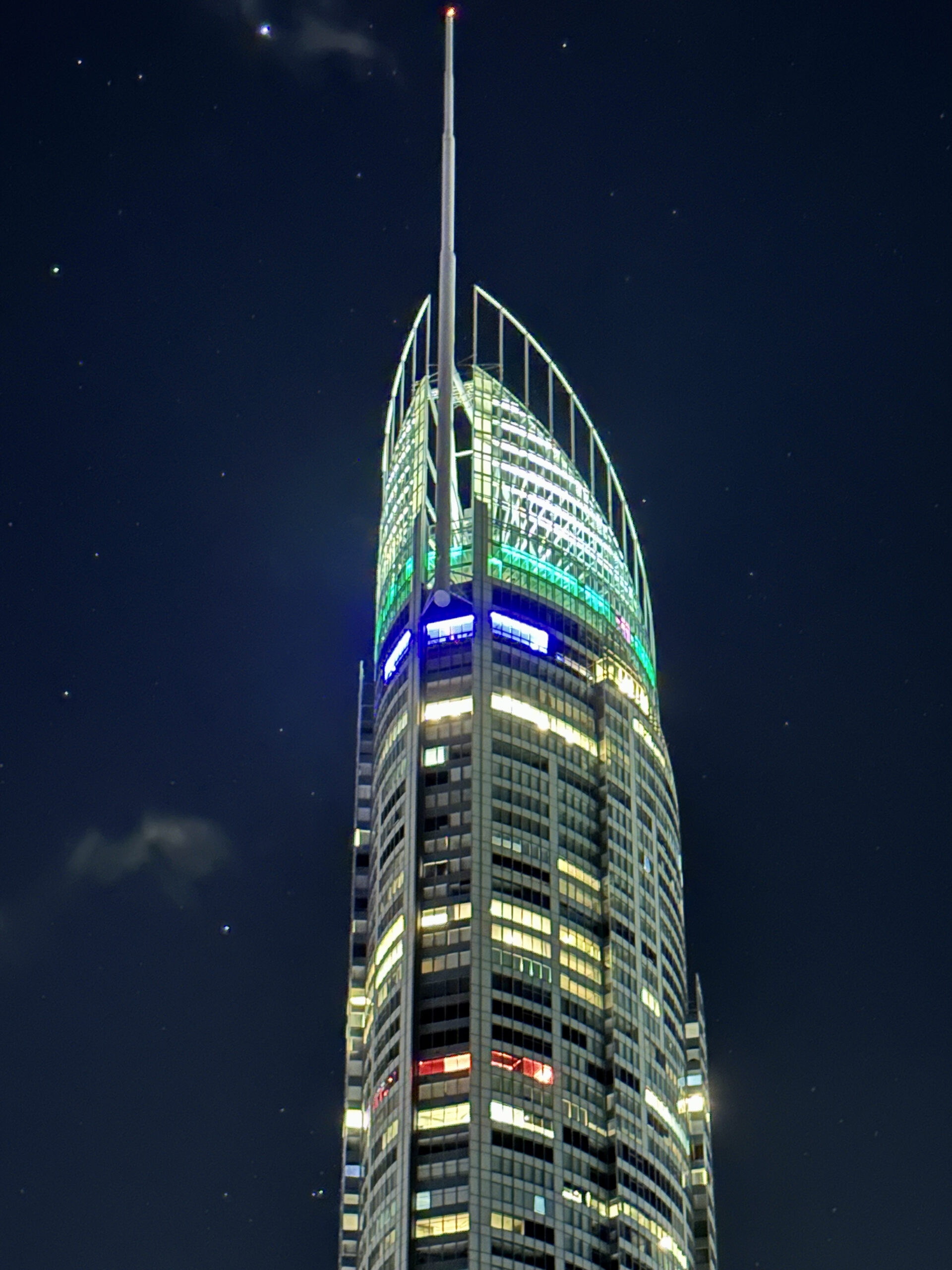
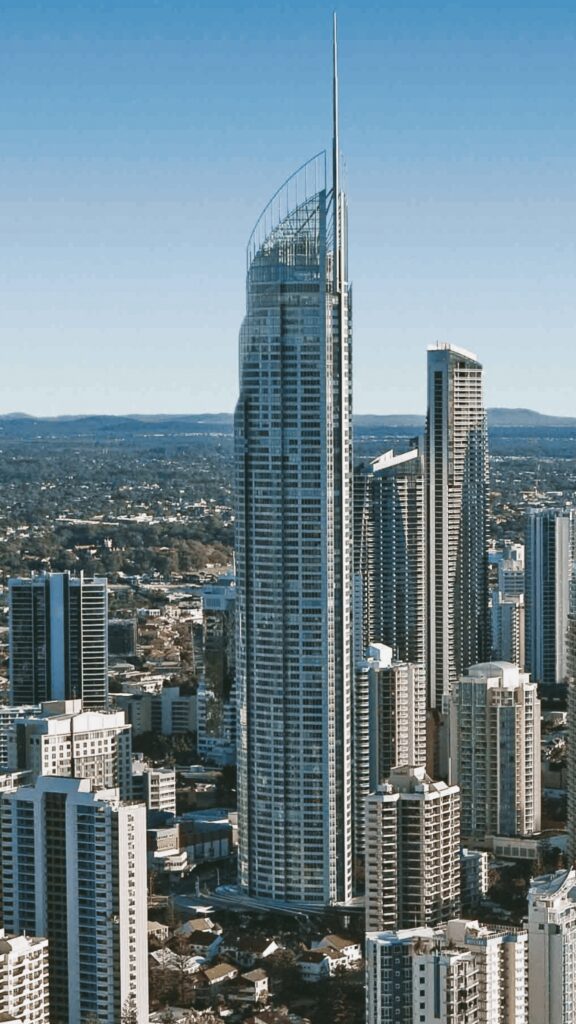
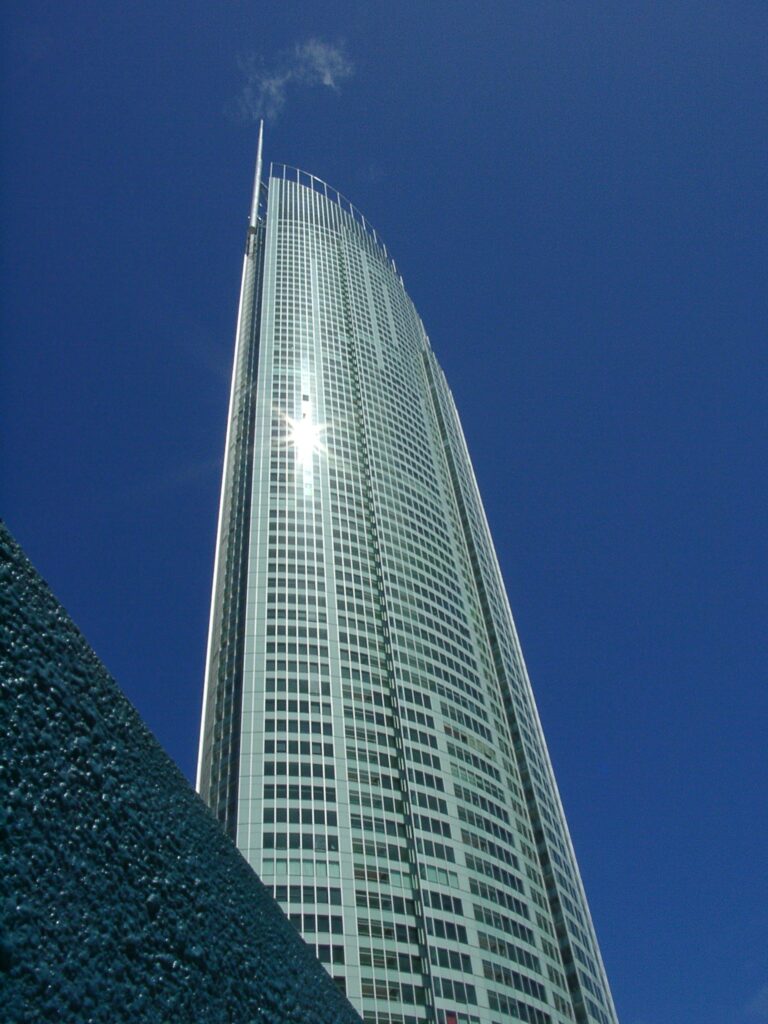
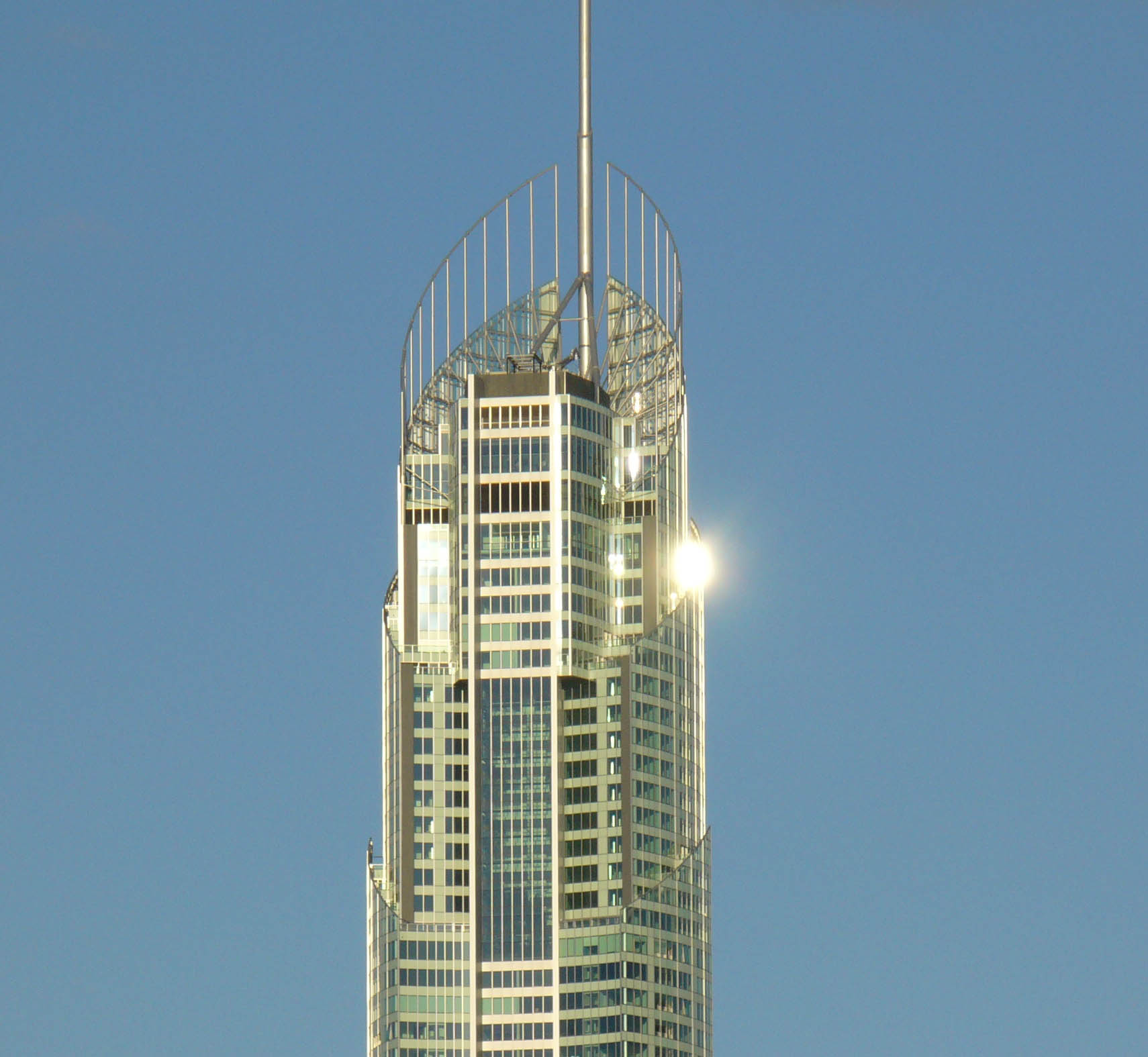
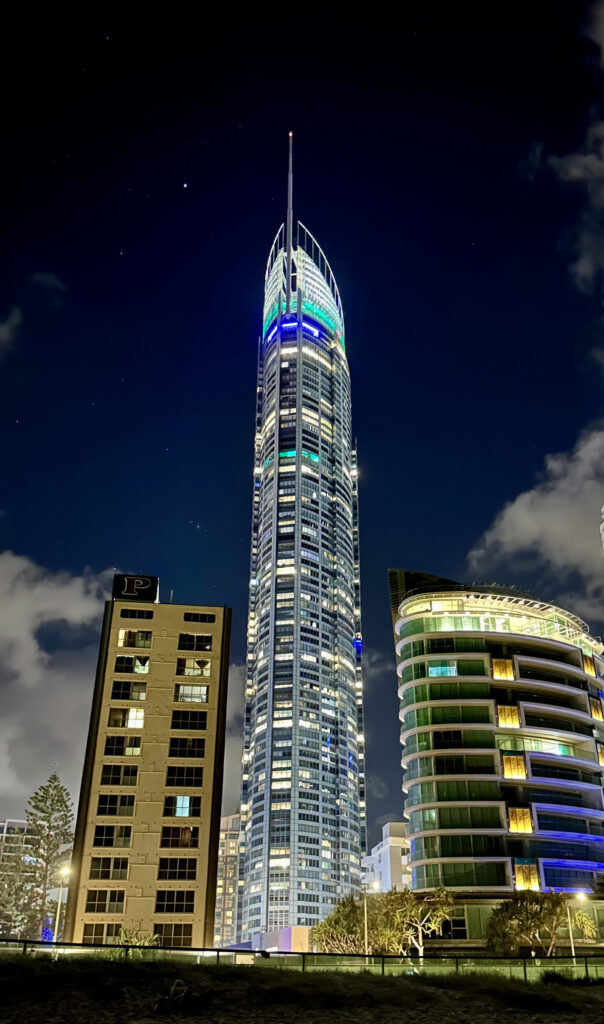
Its silhouette remains unusually legible from a distance. A glazed residential shaft rises from a broad mixed-use podium and culminates in a long steel crown and spire whose drawn, tapering profile gives the tower a monumental finish rarely attempted in apartment construction. Height matters here, but the more revealing design decision is how that height is staged and sold.
Designed by Innovarchi and Sunland Group with The Buchan Group as architect of record, and structurally engineered with input from Arup and Whaley Consulting Group, Q1 belongs to the early twenty-first-century moment when the Gold Coast sought a more globally recognizable skyline. The project used residential typology as the vehicle for that ambition, but it borrowed the representational logic of a civic tower and the revenue logic of a resort.
The strongest analytical lens is therefore not pure height competition, but the interaction of structure, image, and market positioning. The tower had to operate as a buildable reinforced-concrete residential slab, as a stable wind-resistant supertall, and as a landmark whose observation deck and crown extended its value beyond the sale of apartments alone. In that sense, Q1 is as much an economic proposition in section as it is an architectural object in elevation.
What makes Q1 especially revealing is that it turned a coastal leisure city into the setting for a supertall experiment that was neither office-led nor civic in the conventional sense. It translated resort culture, private development, and skyline symbolism into one vertical composition, making the tower a decisive marker in the evolution of the Gold Coast from beachfront strip to high-rise metropolis.
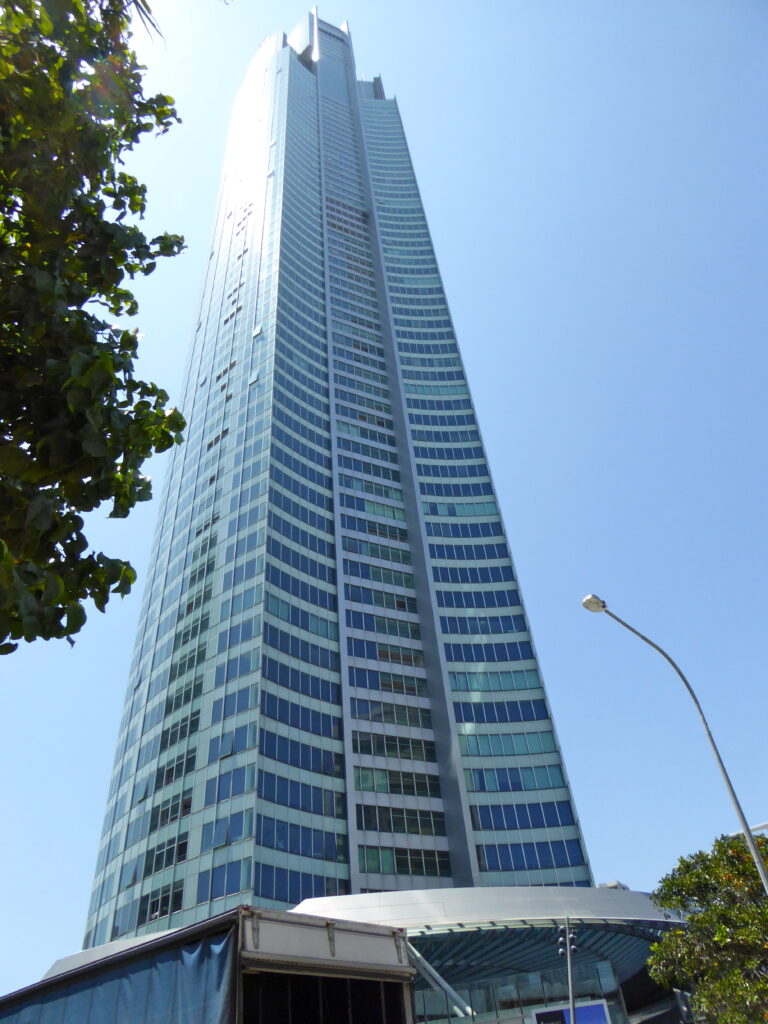
Q1 Tower in Numbers
322.5 m
The architectural height that makes Q1 the tallest completed building in Australia
245 m
The roof height, showing how much of Q1’s visual drama is carried by the crown and spire above the main occupied mass
235 m
The height of the highest occupied floor and observatory level in the CTBUH record
78 floors
The number of floors above ground in the main tower
2 basement levels
The below-ground floors that support parking and back-of-house functions
527 apartments
The residential inventory recorded for the tower, confirming its scale as a true vertical housing project
730 parking spaces
A large parking count that reflects the automobile logic of Gold Coast residential development in the early 2000s
11 elevators
The lift inventory required to make a supertall residential tower workable in daily use
9 m/s
The top elevator speed recorded for the building, a crucial figure in keeping the tower usable at supertall height
107,510 m²
The tower gross floor area, indicating the scale of Q1 as a full residential and leisure complex rather than a narrow signature object
2002
The year construction began as the Gold Coast entered its decisive supertall phase
2005
The completion year in which Q1 immediately reset the scale of the Australian skyline
230 m
The official viewing height promoted for SkyPoint above Surfers Paradise
97.5 m spire
The extraordinary length of the steel spire that extends the tower from high-rise block to skyline marker
250 tonnes
The approximate weight of the crown structure assembled at the top of the tower
3 pools
Two outdoor lagoon pools plus one indoor pool, showing how thoroughly resort programming was folded into the tower’s identity
What is most revealing about Q1 Tower is that it uses the economics of a resort apartment project to finance the urban presence of a civic-scale landmark, with a residential concrete shaft carrying a steel crown and spire whose real function is as much symbolic and territorial as it is architectural.
Engineering and Construction of Q1 Tower
The engineering of Q1 begins with an urban ambition that could not be met by imagery alone. To rise above every other structure on the Gold Coast, the tower needed a primary system capable of controlling wind-driven motion, carrying large residential floorplates efficiently, and transferring the eccentric visual demands of the crown and spire without turning the whole building into a prohibitively heavy or expensive object.
Reinforced-concrete residential supertall
Available technical descriptions and consultant records point to a reinforced-concrete residential tower in which vertical load and much of the lateral resistance are organized through a stiff core-and-wall logic rather than through an exposed steel exoskeleton. That choice was well suited to apartment planning, fire separation, acoustic performance, and repetitive floor construction, all of which matter greatly in a supertall residential program.
The point is important because Q1 is often remembered for its spire, yet the real engineering discipline lies lower down, in the regularized residential shaft that makes such height commercially buildable. The tower had to behave as a stable inhabitable structure first, and only then as a skyline sign.
Wind, movement, and the coastal environment
On the Gold Coast, wind engineering was never optional. Independent wind-consulting records for Q1 describe studies of structural loads, façade pressures, and occupant comfort, which suggests that the tower’s final form was refined not merely for appearance but for dynamic performance under coastal wind conditions. In a building of this height and slenderness, acceleration criteria become a lived issue rather than an abstract code matter.
The tower’s tapered upper composition and crown helped shape the way the building meets the sky, but they also imposed a more complex conversation between aerodynamics and architectural image. Q1 therefore belongs to the family of supertalls where skyline identity and motion control cannot be fully separated.
Crown and spire as secondary structure
The most visibly distinctive engineered element is the steel crown and spire assembled above the residential body. Here the logic changes: the tower’s concrete mass yields to a lighter steel construction that can project upward with less dead load while still producing an elongated summit visible across the coast. Technical accounts of the project emphasize the spire’s exceptional length, and specialist fabricators describe the crown as a substantial steel structure lifted and assembled at extreme height.
That transition from concrete shaft to steel top is where Q1 becomes more than a tall apartment block. The tower’s architectural message is concentrated in an upper element that contributes relatively little usable area but disproportionately shapes the building’s rank, silhouette, and memorability.
Podium, ribbons, and environmental staging
At ground and podium level, the project shifts again from repetitive tower logic to a more theatrical urban composition. The ribbon-like forms associated with the Olympic-torch inspiration frame entry, retail, and leisure space, softening the transition between tower base and tourist precinct. This is not only formal dressing. It helps the project negotiate the difference between private residential life above and commercial, public-facing activity below.
The result is a layered piece of engineering: a heavy and efficient residential concrete body, a carefully controlled wind-sensitive supertall profile, and a steel summit whose principal task is to magnify presence. Q1 is technically instructive because it shows how a commercially driven tower can allocate structural effort unevenly, investing the greatest symbolic intensity where the skyline, not the floor plan, is the primary client.
Ecomonics of Q1 Tower
Q1 is best understood as a piece of vertical market-making. It was developed by Sunland Group and built by Sunland Constructions, a combination that concentrated design intent, development risk, and construction control within a closely aligned corporate framework. For a project of this scale, that integration mattered: it reduced the distance between architectural statement and financial decision.
The project’s economic model was more diversified than that of a pure residential slab. Apartment sales were central, but the tower also embedded a resort identity, retail podium uses, and an upper-level observation attraction that could monetize the skyline itself. In that sense, Q1 did not merely sell units with views; it sold the building’s height twice, first to residents and again to visitors.
That dual logic helps explain why the spire and crown were worth the trouble. Their contribution to habitable area is negligible, but their contribution to status is immense. By securing national height leadership and producing a silhouette instantly associated with the Gold Coast, the project increased the branding power of the entire development and strengthened the premium attached to the address.
There is also a typological point here. Office towers often justify height through rent multiplication across large floor counts, while luxury apartment towers rely more heavily on scarcity, view hierarchy, and symbolic distinction. Q1 belongs firmly to the latter model. Its value creation rests less on dense corporate tenancy than on the conversion of altitude, visibility, and landmark status into residential and hospitality demand.
SkyPoint extends that financial logic beyond the apartment market. The observatory transformed the tower from a closed private asset into a continuously legible urban attraction, linking Q1 to the tourism economy of Surfers Paradise and turning the skyline into a revenue-bearing experience. Q1 therefore demonstrates that in a leisure city, supertall height can function as hospitality infrastructure as effectively as it functions as real estate.
In broader development terms, Q1 helped normalize a more ambitious scale of private high-rise investment on the Gold Coast. Once the tower proved that a residential project could carry such symbolic weight, later developers operated in a changed competitive field. Q1 did not simply occupy the skyline; it altered the economic expectations attached to it.
Q1 matters because it changed the reading of the Gold Coast skyline from accumulation to hierarchy. Before towers like Q1, the coastal strip was already dense and vertical, but its image was more horizontal in cultural terms: a chain of beachfront development rather than a city organized by singular peaks. Q1 introduced a dominant marker legible across the metropolitan coastline and inland approaches alike.
That urban role is amplified by location. Surfers Paradise is not a central business district in the orthodox sense, yet it functions as the symbolic heart of the tourist city. A tower placed there inevitably performs beyond its property boundary, becoming part advertisement, part orientation device, part claim that the Gold Coast can produce monuments through private development rather than state patronage.
The building’s imagery also reveals a distinctly Australian mode of symbolic borrowing. The officially stated references to the Sydney Opera House and the 2000 Olympic torch translate national motifs into speculative coastal real estate. The result is not subtle, but it is strategic: Q1 aligns local property development with a broader national vocabulary of aspiration, spectacle, and recognizability.
Seen from this perspective, Q1 is less a stand-alone masterpiece than a threshold project. It captures the moment when Surfers Paradise began to present itself not merely as a resort strip with towers, but as a tower city whose identity could be condensed into one overwhelmingly recognizable form. That is why Q1 remains so influential even after taller projects have been proposed elsewhere. Its significance lies in what it taught the skyline to mean.
Trivia
A Tower That Sold the Skyline
Many apartment towers promise views. Q1 made the view itself part of the business model by adding SkyPoint high above the residential floors. That means the same vertical spectacle could be monetized by owners, hotel guests, and day visitors.
The Roof Is Not the Top
Q1’s roof sits far below its full architectural height. The long crown and spire stretch the tower far beyond the last major occupied level. That is precisely why the building feels taller than its residential floor count alone might suggest.
It Is a Resort as Well as a Tower
The official resort materials do not present Q1 as a pure skyscraper trophy. They emphasize pools, spa, gym, and serviced accommodation. That hospitality layer is central to understanding the building’s business logic and public identity.
SkyPoint Is Beachside, Not CBD
Many famous observation decks belong to financial districts. Q1’s belongs to a beachfront leisure city. That difference gives the experience a very different urban character: less corporate panorama, more coast, surf, and hinterland.
The Crown Was a Separate Drama
The top of Q1 was not just a decorative cap installed casually at the end. Specialist steelwork contractors describe a heavy crown structure detailed, fabricated, and assembled high above the city. That makes the summit a construction story in its own right.
Wind Shaped More Than Comfort
Wind studies are usually invisible to visitors. At Q1 they are one reason the tower looks the way it does and performs as it does. The coastal skyline image and the comfort criteria were part of the same technical problem.
A National Motif in a Private Project
The official design story invokes the Olympic torch and the Sydney Opera House. That is an unusually public symbolic register for a privately developed apartment tower. Q1 therefore borrows part of its authority from national imagery as much as from real-estate marketing.
Three Pools, One Tower
Official Q1 resort material highlights three separate pools, including lagoon pools and an indoor pool. That is a lot of aquatic programming for a supertall residential tower. It reminds visitors that Q1 belongs to the Gold Coast’s leisure economy as much as to its high-rise economy.
Its Awards Arrived Fast
Sunland’s published award lists show Q1 receiving major architectural recognition in 2006, almost immediately after completion. That quick acclaim matters because it suggests the project was read not just as a commercial success but as a design event. Few speculative residential towers achieve that double status so quickly.
Parking Reveals the Era
Seven hundred and thirty parking spaces is a striking number in a tower of this kind. It reflects a pre-transit-oriented development culture in which high-rise luxury still assumed heavy car ownership. Q1 is therefore a record not only of height, but also of how the Gold Coast expected vertical living to function.
The Observation Deck Reinforces the Name
The tower is called Q1, but the public often remembers it through SkyPoint. That split identity is telling. One name belongs to the building as property, the other to the building as experience.
Sources and References
This article draws on tall-building data, official resort and observation-deck information, consultant and contractor project material, and published documentation relating to Q1 Tower’s design, construction, and urban role on the Gold Coast.
Referenced source groups include:
-
- CTBUH / Skyscraper Center building data
-
- Q1 Resort & Spa official information
-
- SkyPoint official attraction information
-
- Sunland Group development and awards material
-
- specialist contractor and engineering project publications
-
- technical reporting on wind engineering, concrete placement, and crown construction
The article references data related to:
-
- architectural, roof, and occupied height
-
- floor count, apartments, parking, and elevators
-
- gross floor area and observatory height
-
- construction chronology and crown structure
-
- spire length and skyline ranking
-
- resort facilities and tourism programming
-
- design authorship and structural consultancy
-
- the tower’s urban and economic role within Surfers Paradise
Some figures associated with Q1 vary slightly across public sources, especially where the distinction between roof height, architectural height, occupied height, or marketing descriptions of the observatory is not kept consistent. For that reason, selected numbers in this article are framed carefully according to the source context in which they are most commonly used.