
A Building Designed to Disappear by Reflection
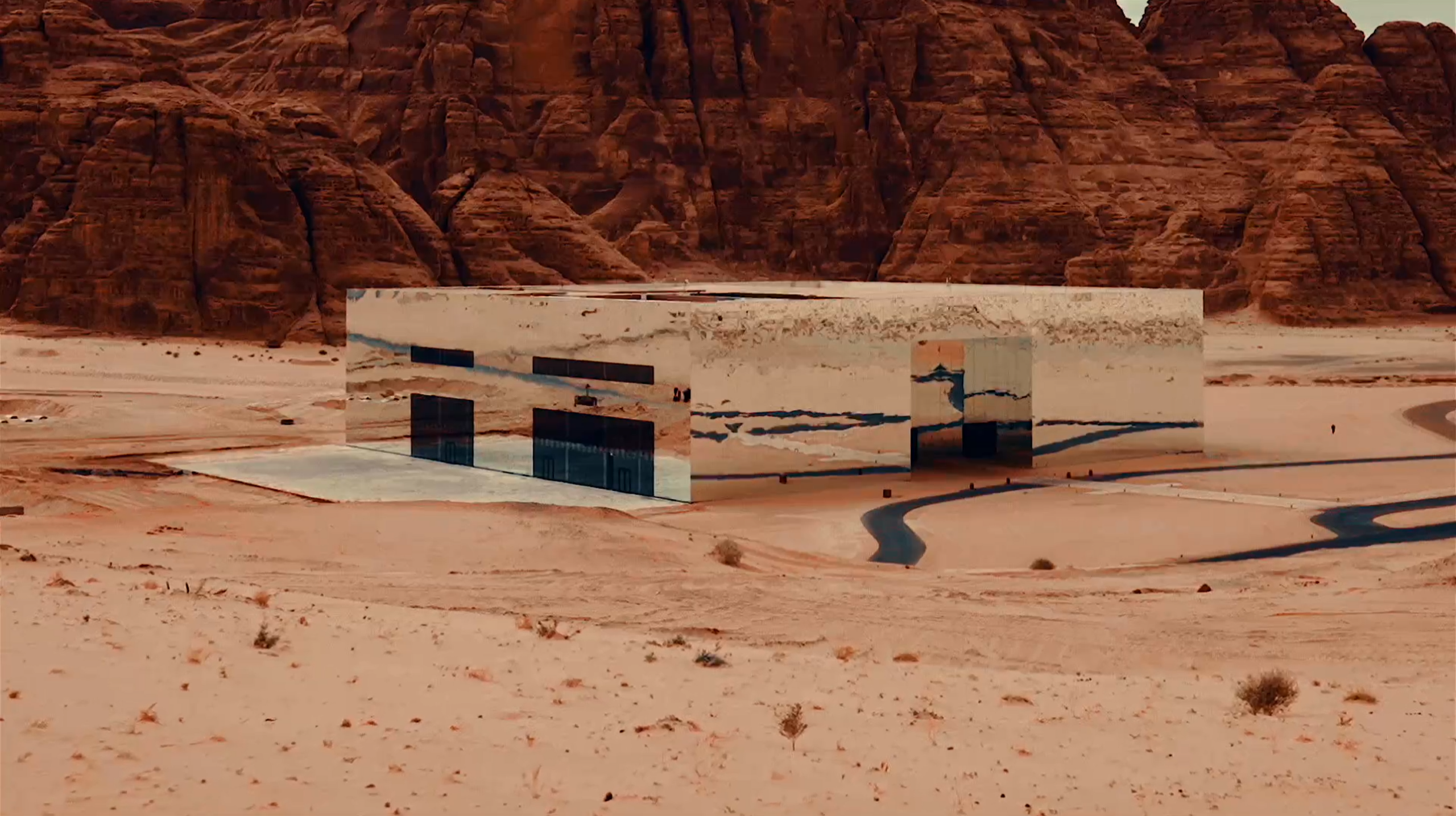
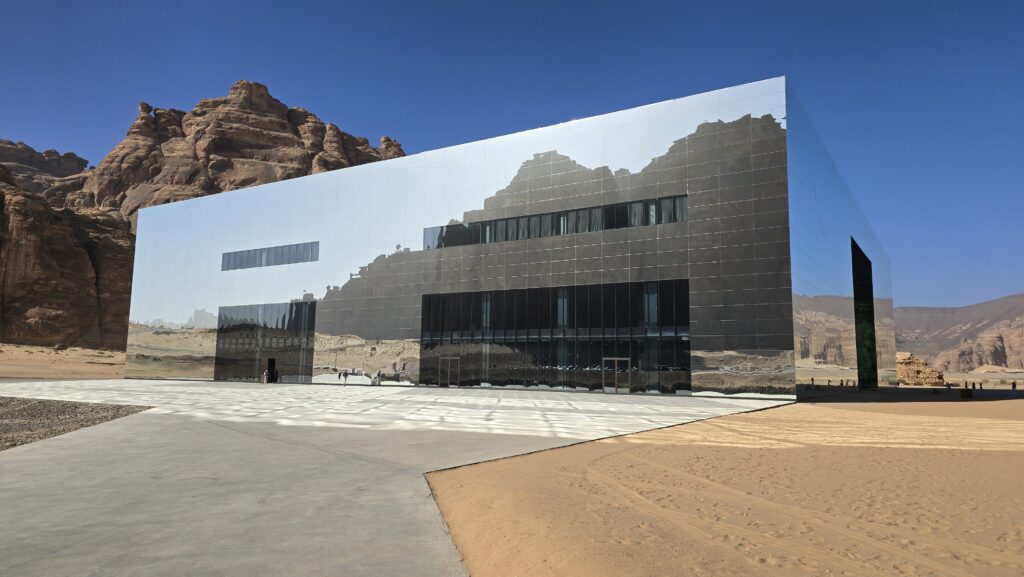
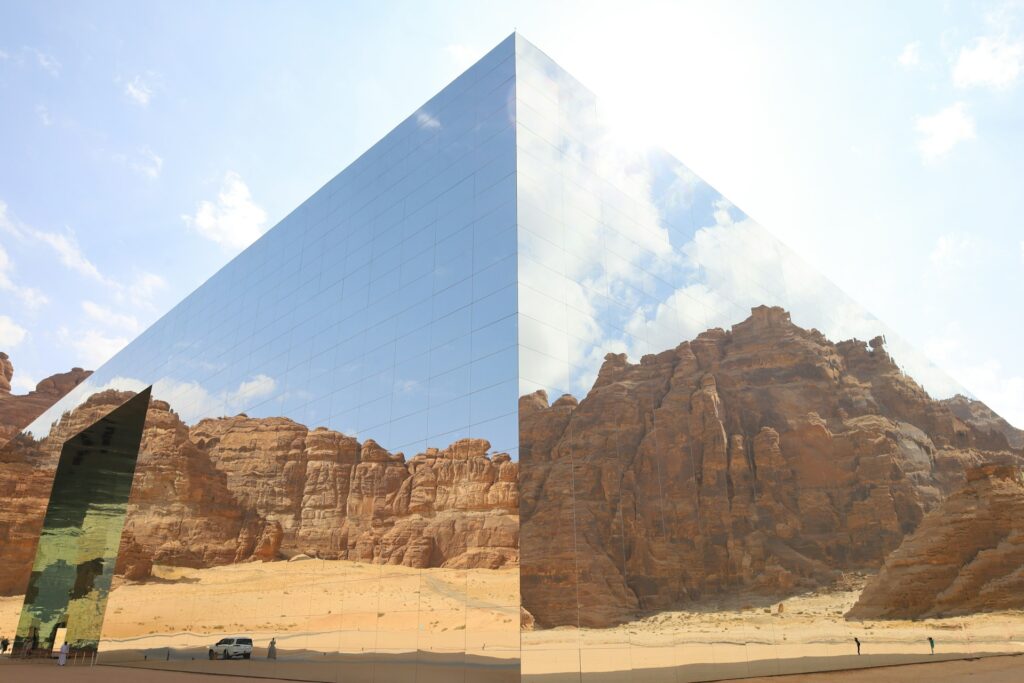
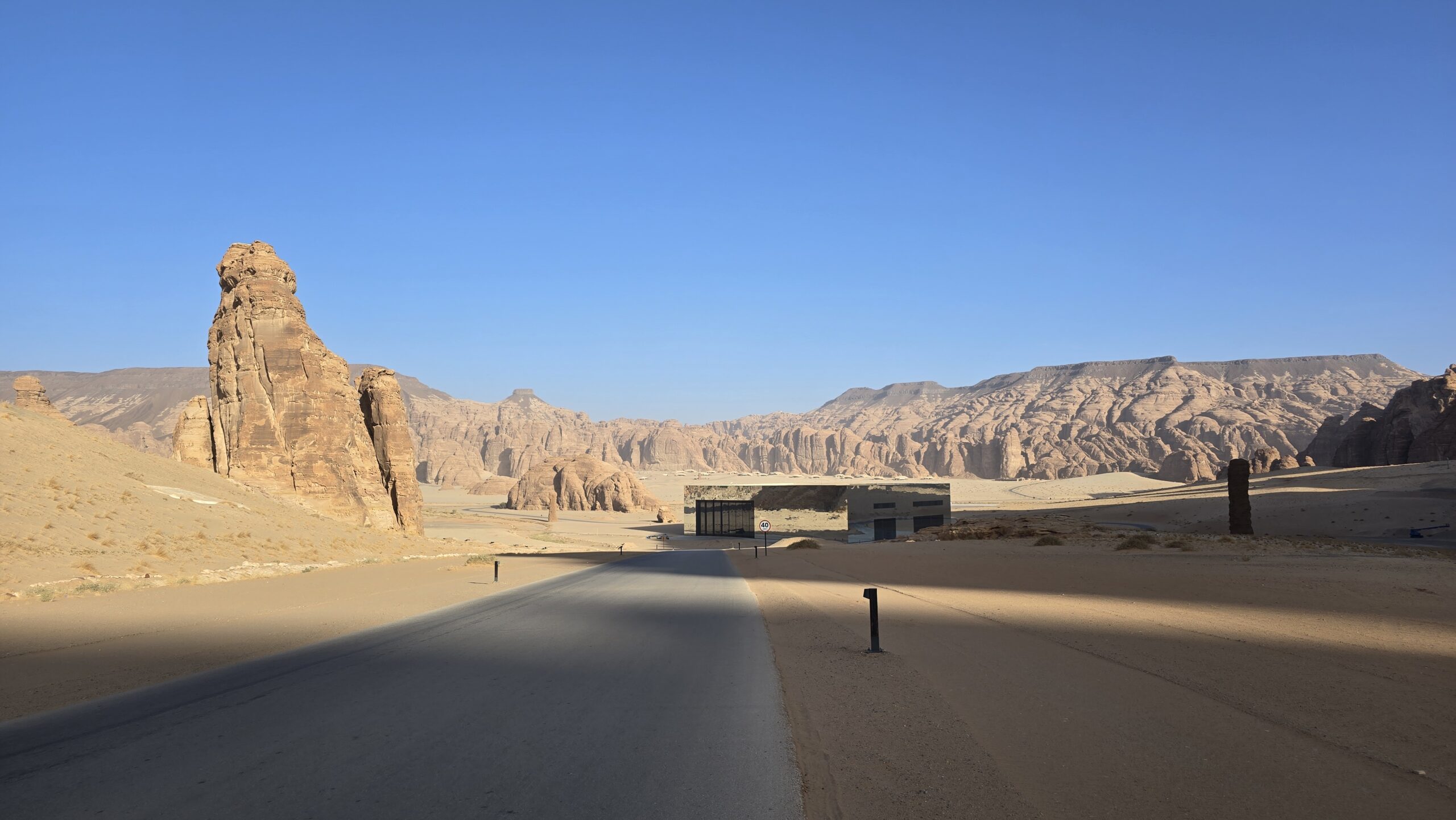
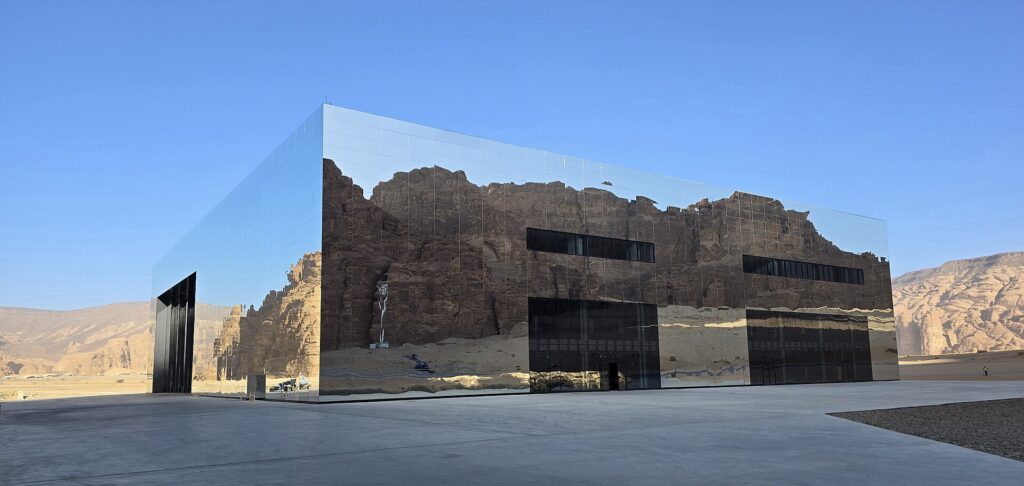
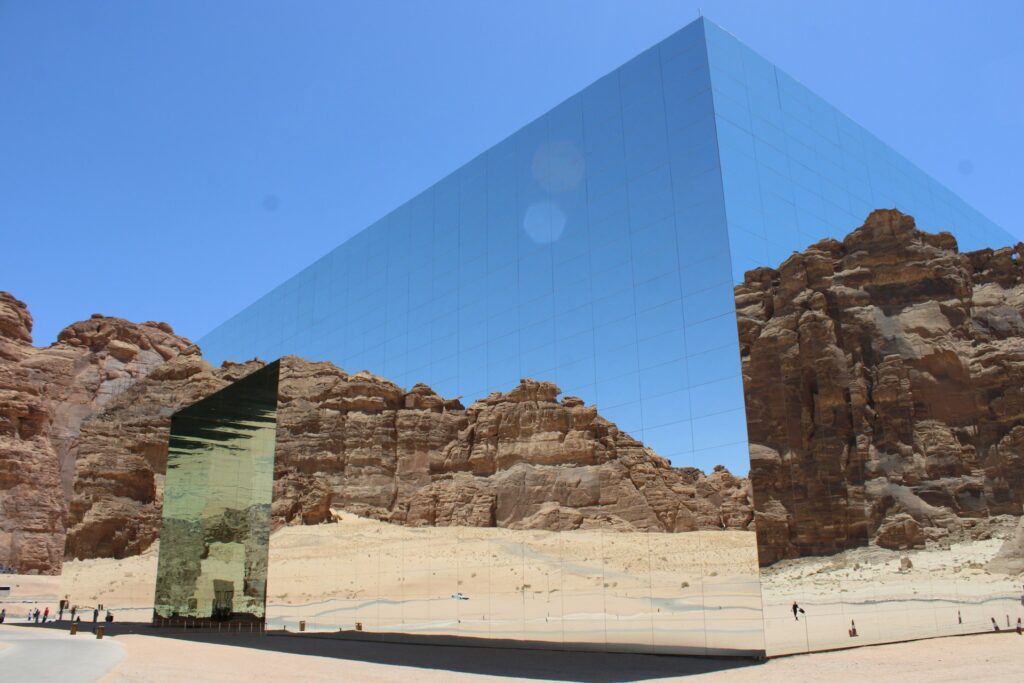
Maraya in Ashar Valley, AlUla, is one of the strangest recent buildings in the Middle East: a large performance and event venue whose architectural ambition is not to dominate the desert but to dissolve into it. Its mirrored envelope turns rock formations, sand, sky, and light into the building’s visible surface, so that the object is legible less as mass than as reflection.
Completed for the Royal Commission for AlUla as part of the first phase of the wider cultural redevelopment of AlUla, Maraya sits within a landscape where archaeology, tourism strategy, and image-making are inseparable. The project therefore operates at more than one level at once: as an event hall, as a destination marker, and as a highly controlled instrument for framing an internationally marketable vision of the valley.
Designed by Giò Forma with Black Engineering, the building is outwardly simple: a rectilinear volume wrapped in mirrored panels. Yet that simplicity hides a demanding technical problem. A climate-controlled venue with substantial acoustic, structural, and services requirements had to be built in a harsh desert environment while presenting an almost immaterial public face.
The strongest analytical lens is therefore architectural and environmental rather than merely formal. Maraya matters because it turns enclosure into camouflage, using reflection as façade strategy, territorial image, and environmental response all at once. It is an architecture of apparent disappearance made possible by substantial engineering.
What makes the project revealing is not only its record-setting mirrored skin, but the way that skin serves a broader political and economic logic. Maraya is both a building and a development signal: an object commissioned to announce that AlUla can host concerts, state hospitality, conferences, luxury tourism, and global media attention without abandoning the visual primacy of its desert setting.
Maraya in Numbers
9,740 m²
The Guinness-recognized mirrored surface area that made Maraya the world’s largest mirrored building
5,000 m²
The reported project area for the building itself in architectural documentation
2018
The year Maraya opened as one of the first flagship projects in AlUla’s recent redevelopment phase
585 seats
The documented theatre-style capacity of the Maraya Concert Hall space in venue specifications
800 m²+
The approximate area of the giant retractable opening that can frame the surrounding valley as a live backdrop
40 m × 15 m
The reported stage dimensions that position Maraya as a serious concert and event venue rather than a symbolic pavilion
800 seats
The theatre-style capacity listed for the larger Great Hall configuration known as The Cube
621 seats
The theatre-style capacity recorded for Conference Hall 2 in venue planning documents
1,777 m²
The area allocated to the concert hall portion of the complex in the official venue brochure
1,275 m²
The area listed for the larger Great Hall configuration, showing the building’s conference and banquet flexibility
537 m²
The documented size of the East Wing, another event-ready component of the venue program
100 seats
The theatre-style capacity assigned to the VVIP balcony over the East Wing in venue specifications
45 minutes
The approximate duration of the standard Maraya guided visit offered as part of the AlUla visitor experience
20 minutes
The commonly stated driving time from central AlUla to Maraya in Ashar Valley
56,000+
The number of guests reported across the first two editions of Winter at Tantora, the festival context that helped propel Maraya into prominence
2030
The national target year within which AlUla’s cultural infrastructure, including Maraya, has been positioned as a strategic tourism and heritage asset
What is most intriguing about Maraya is that it uses maximum visual artifice to produce minimum visual objecthood: a highly serviced, climate-controlled, acoustically engineered event machine wrapped in mirror so thoroughly that its architectural presence depends on reflecting the desert rather than competing with it.
Engineering and Construction of Maraya
The engineering of Maraya begins with an apparently contradictory ambition: to create a substantial enclosed venue in a severe desert environment while allowing the building to appear almost dematerialized. Rather than expressing structure through weight, depth, or tectonic legibility, the project relies on reflection to reduce visual mass. That decision immediately turns façade design into a combined problem of climate, optics, durability, and precision.
Mirror as envelope strategy
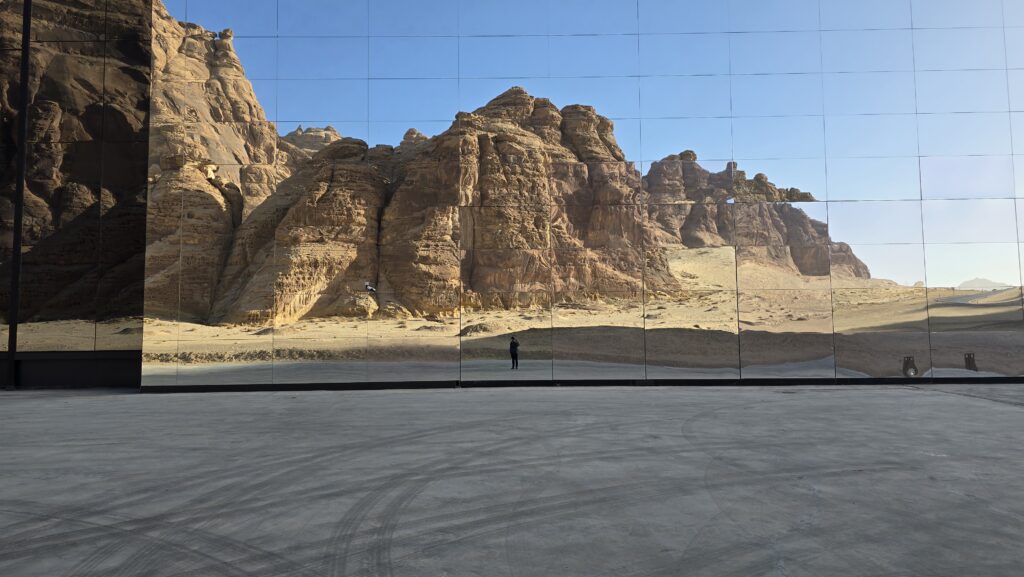
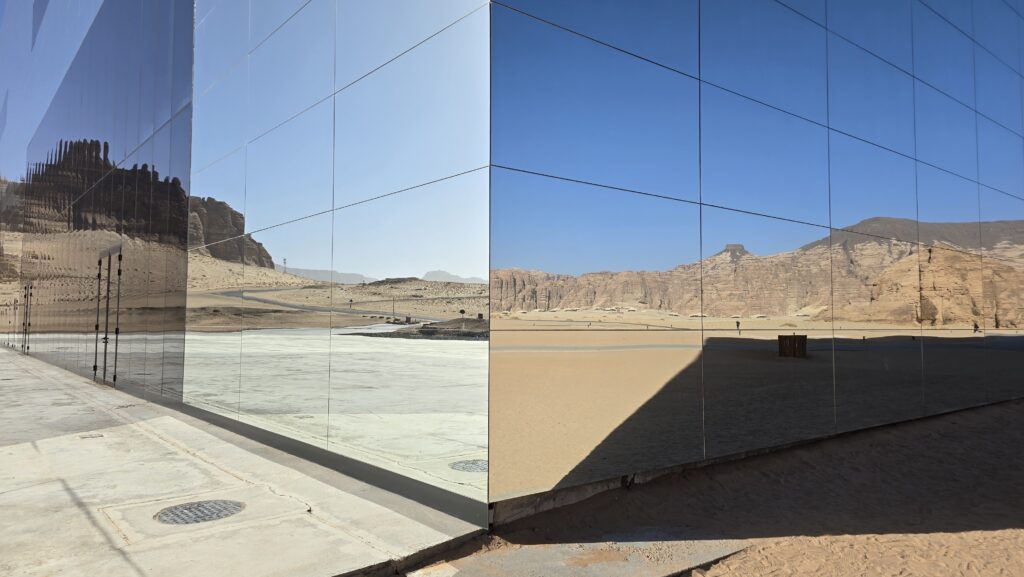
The building’s most famous feature is its mirrored skin, recorded at 9,740 square metres and recognized by Guinness World Records. This is not decorative cladding in a casual sense. At Maraya, reflection is the building’s primary spatial and territorial device: the façade borrows the color, light, and geological texture of Ashar Valley so that the building reads as a shifting register of its surroundings rather than as an autonomous sculptural object.
That strategy requires unusually disciplined fabrication and alignment. A mirrored surface at this scale magnifies every deviation in flatness, jointing, and panel coordination. The envelope therefore depends not only on conceptual elegance but also on exacting construction tolerances, because misalignment would break the illusion on which the project’s entire public identity depends.
Desert performance / enclosure / services
Behind the mirror image sits a highly serviced venue program. Maraya had to accommodate concert use, ceremonial events, hospitality, conferences, vertical circulation, mechanical systems, and back-of-house functions within a compact rectilinear form. In technical terms, the project is less a pure art object than a tightly compressed performance building whose operations had to be hidden behind an envelope dedicated to disappearance.
That concealment matters architecturally. Many event buildings advertise their program through visible foyers, expressed structure, or overt signage. Maraya does the opposite. The building withholds most evidence of its internal complexity, making the contrast between exterior silence and interior infrastructure one of its most sophisticated design effects.
Stage logic / transformability / landscape framing
A key technical gesture is the large retractable opening, reported at more than 800 square metres, which allows performance space and desert landscape to be brought into direct relation. That mechanism transforms the building from sealed hall to framed threshold. It also clarifies that the valley is not only the site of the project but part of its scenography.
The reported 40-by-15-metre stage further shows that Maraya was conceived as a serious production venue from the outset. This is important, because the building might otherwise be misread as a ceremonial shell created primarily for photographs. In reality, its architectural credibility depends on how effectively it reconciles spectacle, acoustics, climate control, audience movement, and event flexibility within a form that outwardly claims almost no tectonic thickness at all.
Architectural meaning of the technical move
What ultimately defines Maraya is that its engineering is in the service of visual self-erasure. The building has to resist heat, contain sound, support variable event modes, and maintain a difficult mirrored finish in a desert setting, yet its public image insists on near immateriality. It is therefore best understood not as minimal architecture, but as architecture of maximum technical control deployed to produce the appearance of minimum physical presence.
Ecomonics of Maraya
The economic logic of Maraya is inseparable from that of AlUla as a whole. Commissioned by the Royal Commission for AlUla, the building was not developed as an isolated commercial venue seeking profitability through ticket sales alone. It was conceived as catalytic infrastructure: a cultural asset meant to accelerate destination branding, attract high-value visitors, support festival programming, and demonstrate that AlUla could host premium events within a heritage landscape of global significance.
In this sense, Maraya functions less like a conventional auditorium and more like a strategic development instrument. Concerts, diplomatic events, luxury hospitality, conferences, guided visits, media coverage, and restaurant programming all extend the building’s economic role beyond performance. Its value lies partly in direct use, but more importantly in the symbolic and commercial multiplier effect it produces for the wider AlUla tourism ecosystem.
The building’s flexibility is central to that logic. Venue documentation shows multiple halls, conference spaces, VIP areas, and adaptable event configurations, allowing Maraya to serve not only headline performances but also corporate gatherings, cultural launches, and state-facing hospitality. That range matters because a destination-building in a remote valley must justify itself through frequency of use, variety of programming, and association with premium experience rather than through single-purpose specialization.
Its mirror-clad image also has measurable branding value. Maraya has become one of the most circulated contemporary images of AlUla, condensing the territory’s development narrative into one instantly legible object: heritage landscape, architectural refinement, and luxury-cultural ambition fused into a single frame. In development terms, that image capital is not secondary to the building’s economics; it is one of the main reasons the building exists.
Maraya therefore represents a twenty-first-century model of cultural infrastructure in which architecture, tourism, territorial branding, and event programming are financially intertwined. Its long-term importance lies not in conventional commercial metrics alone, but in how effectively it helps convert AlUla’s landscape and heritage into a globally marketable cultural destination under the broader ambitions of Saudi Vision 2030.
Trivia
The Name Says Everything
“Maraya” means “mirror” in Arabic, and the project does not hide behind a complicated title. The building announces its governing idea with unusual bluntness. That directness is part of why the project became so instantly memorable.
A Record Built Into the Envelope
Maraya is not just called reflective. It holds the Guinness World Record as the largest mirrored building. That fact turned a façade specification into a global publicity device.
The Desert Is the Facade
On most buildings, cladding hides structure. On Maraya, cladding also imports the valley onto the building’s surface. Rock formations, dunes, and sky effectively become the public face of the project.
It Began with a Festival
Maraya’s rise is tied closely to Winter at Tantora, the festival that helped introduce AlUla to a wider international audience. That link matters because the building was never simply a passive container. It was part of the event strategy from the beginning.
The Stage Can Open to the Valley
One of Maraya’s most surprising features is the giant retractable opening behind the stage. It allows the desert to become part of the event image. Few venues can literally turn landscape into backdrop at this scale.
A Cube with a Restaurant on Top
Maraya is remembered for its mirrored skin, but many visitors encounter it through hospitality as much as architecture. The rooftop restaurant Maraya Social gave the building another public life. It helped turn a record-setting envelope into a luxury destination.
The Climate Problem Is Hidden
From the outside, Maraya looks almost effortless. In reality, it has to survive and operate in a demanding desert climate. The elegance of the illusion depends on mechanical, material, and enclosure systems most visitors never see.
VIP Space Is Part of the Program
The venue specification devotes notable area to VVIP rooms and balconies. That is a reminder that Maraya was planned not only for concerts but also for high-level hospitality. Its layout tells the same story as its public image: this is cultural infrastructure with diplomatic and premium-tourism ambitions.
The Building Can Seem to Vanish
Photographs of Maraya often make the building look smaller than it is because the envelope reflects the landscape so completely. That optical trick is one reason visitors remember the project so vividly. It is not everyday architecture behaving like camouflage.
It Is a Venue and a Tourism Image at Once
Many buildings become symbols after years of use. Maraya was designed to be one almost immediately. Its event program and its photographic afterlife were planned together.
The Cube Is More Complicated Than It Looks
From outside, the form is almost diagrammatically simple. Inside, the building holds halls, conference rooms, hospitality zones, and performance infrastructure. The apparent simplicity of the cube is really a disguise for programmatic density.
It Helped Define the New Image of AlUla
There are many older and historically deeper sites in AlUla, but Maraya became one of the region’s most circulated contemporary images. That is a striking inversion. A new building, by reflecting an ancient landscape, became one of the fastest routes through which that landscape was globally reintroduced.
Sources and References
This article draws on official project materials, venue documentation, institutional development information, record certification, and high-quality architectural reporting concerning Maraya, AlUla, Ashar Valley, and the wider cultural redevelopment program.
Referenced source groups include:
- Royal Commission for AlUla official materials
- Maraya official venue brochure and event documentation
- Giò Forma project information
- Black Engineering project materials
- Guinness World Records certification
- reputable architectural and industry reporting on Maraya and AlUla development
The article references data related to:
- mirrored façade area and world-record status
- project area and completion chronology
- concert hall, great hall, and conference capacities
- stage dimensions and retractable opening
- venue layout and VIP program
- Winter at Tantora attendance and destination-building logic
- Saudi Vision 2030 and AlUla cultural development context
- the building’s architectural role within Ashar Valley
Some figures associated with Maraya differ slightly across public sources, particularly where mirrored surface area is rounded, venue capacities vary by layout, or project descriptions distinguish between building area, event area, and specific hall configurations. Where that occurs, the most consistently supported figure or the most cautious wording has been used.