
A civic landmark where architecture, politics, and urban identity meet
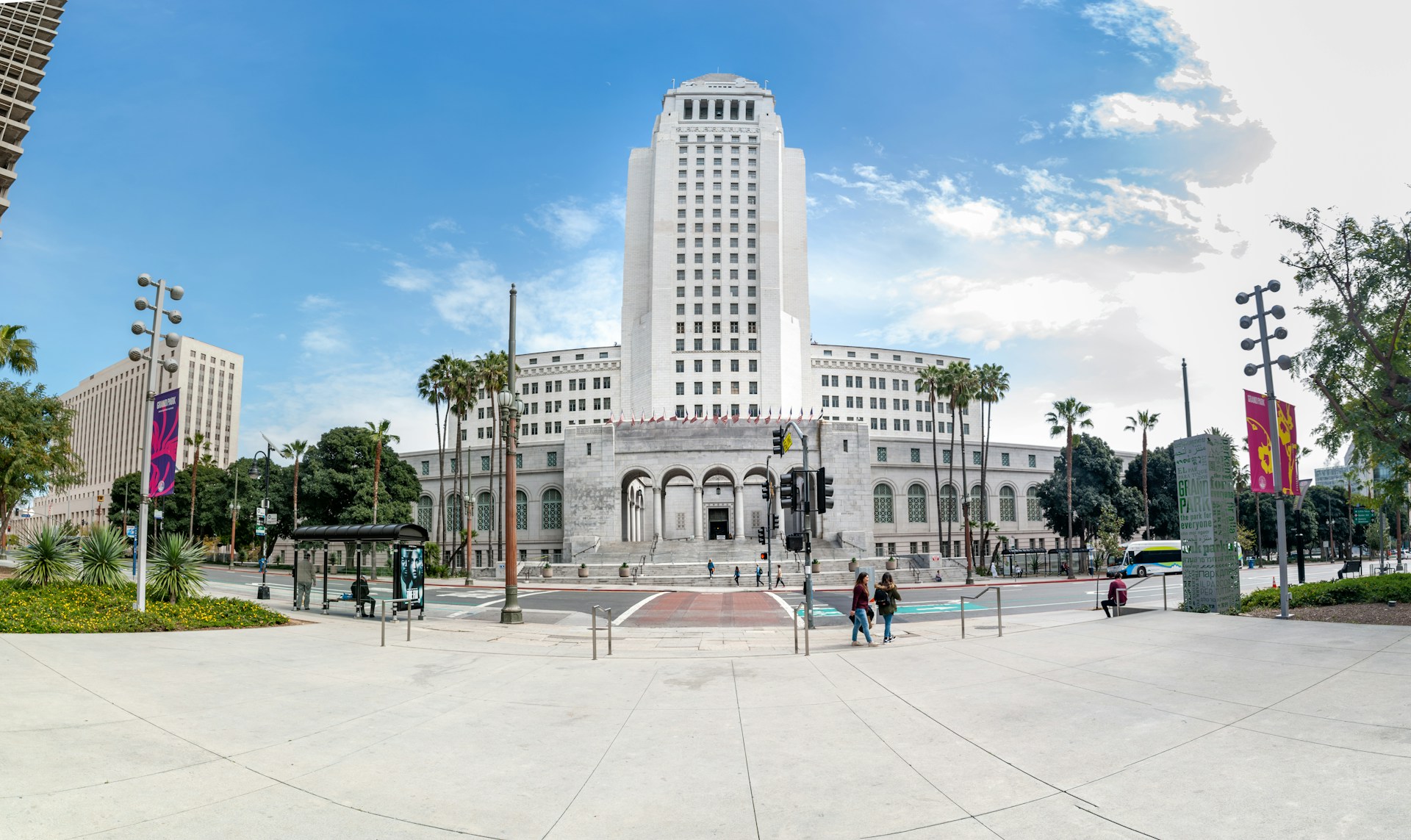
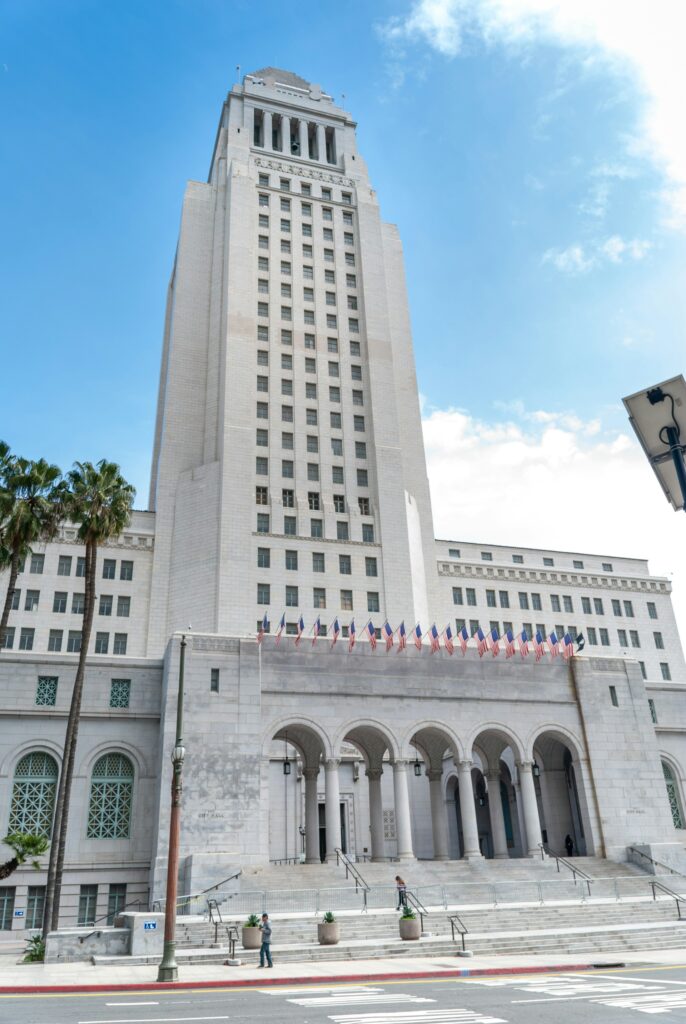
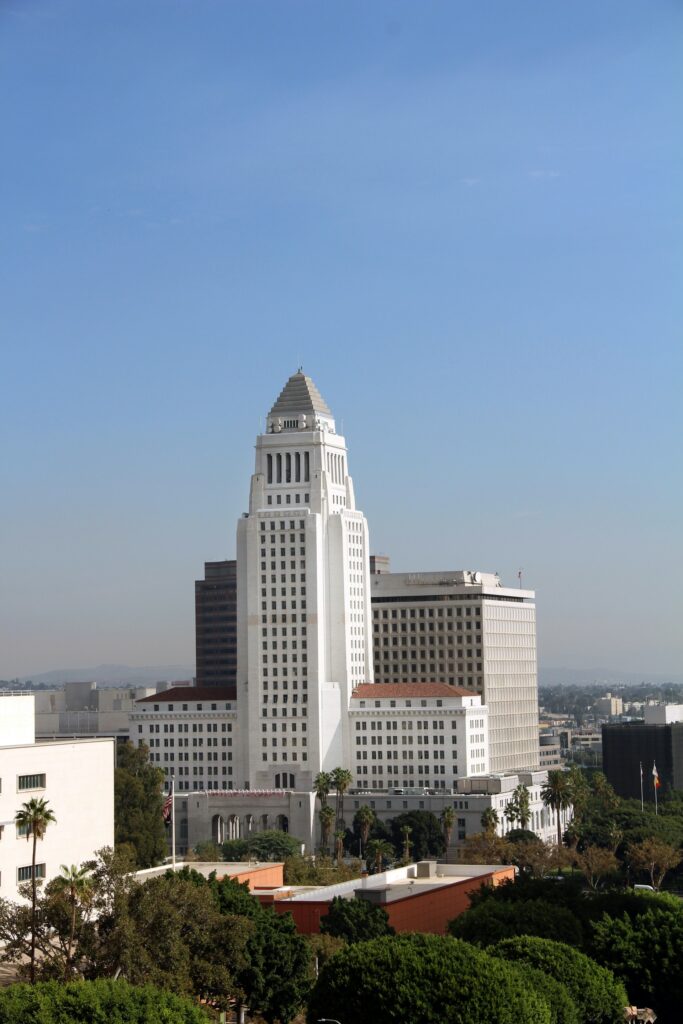
In the heart of downtown Los Angeles stands one of the most recognizable civic buildings in the United States — Los Angeles City Hall. Completed in 1928, this monumental tower served as the tallest building in the city for more than three decades and remains a defining symbol of Los Angeles’ governmental and architectural heritage. Rising above the dense urban grid, the building combines classical monumentality with early American skyscraper engineering, reflecting a moment when cities across the United States were redefining their civic centers through vertical architecture.
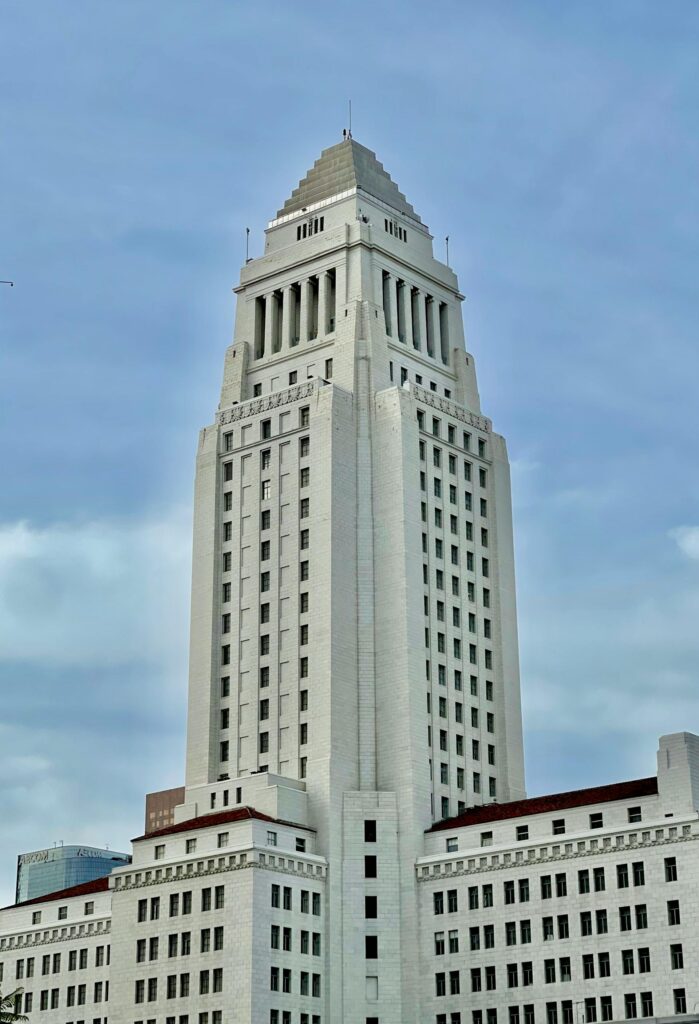
What makes Los Angeles City Hall particularly fascinating is how it merges civic symbolism with structural ambition. Designed during a period when skyscrapers were still experimental forms of public architecture, the building’s stepped tower and stone façade evoke both classical European monuments and modern American ambition. Its silhouette, visible from across downtown, quickly became an icon of the city’s skyline and a backdrop for countless films, television shows, and historical moments.
Beyond its architectural presence, the building represents the political heart of Los Angeles. It houses the offices of the Mayor, the City Council chambers, and numerous municipal departments responsible for governing one of the largest cities in the world. Over the decades, decisions shaping the growth of Los Angeles—from infrastructure expansion to urban planning—have been made within its walls.
Nearly a century after its completion, Los Angeles City Hall continues to function as both a working government building and a historic landmark. Its observation deck offers sweeping views of downtown and the surrounding mountains, reminding visitors that the building is not only a center of civic power but also a lasting symbol of Los Angeles’ evolution from a rapidly growing 1920s metropolis into a global megacity.
Los Angeles City Hall in Numbers
454 feet
The total height of the building (approx. 138 meters)
32
The number of stories contained within the central tower
150 feet
The height limit for all other buildings in LA during that same era (City Hall was the sole exception)
27th Floor
The location of the famous Tom Bradley Observation Deck
425,000 sq ft
Total floor area of the building
438 base isolators
Huge rubber bearings installed during a 1998 retrofit to allow the building to survive an 8.2 magnitude earthquake
2,500 t
The amount of structural steel used in the primary frame
3
The building was a collaborative effort between John Parkinson, John C. Austin, and Albert C. Martin
25 feet
The height of the bronze doors at the Main Street entrance
4
different types of stone – Used in the façade materials
15 members
The number of Los Angeles City Council seats housed within the chambers
50+
An estimate of the major motion pictures filmed here, including Chinatown and L.A. Confidential
36 years
The period (1928–1964) during which it remained the tallest building in Los Angeles due to a city ordinance
$4.8 million
The original construction cost in 1928
1928
The year the building was officially completed and dedicated
$299 million
Approximate cost of the seismic retrofit completed in 2001
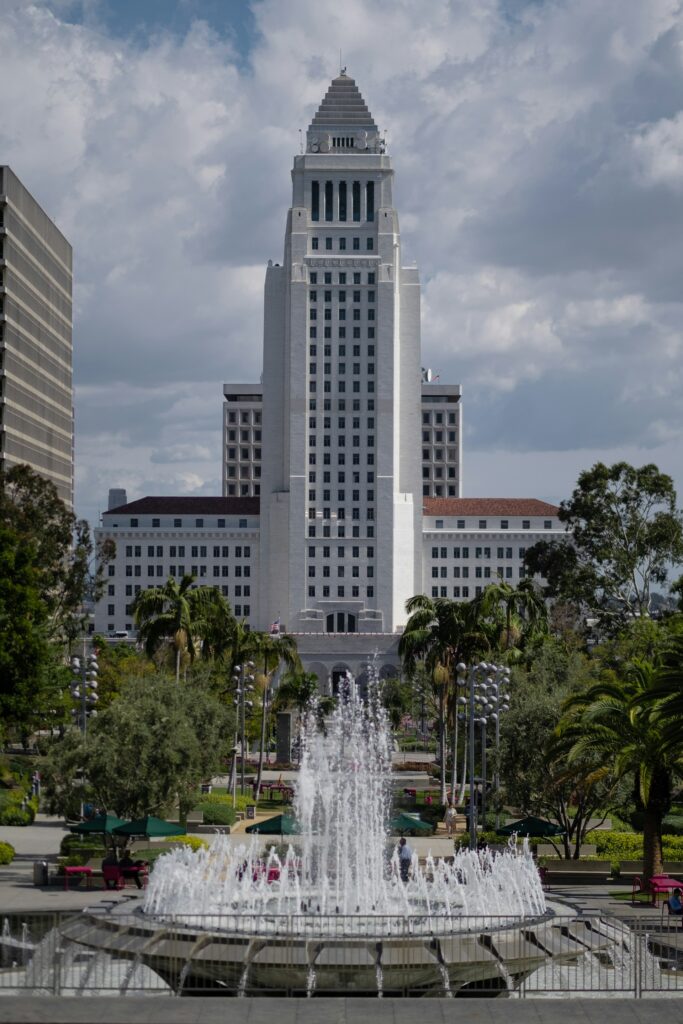
What’s most intriguing about this building isn’t its height, but the way it translates the symbolism of civic power into the language of early skyscraper engineering. Rising 138 meters above downtown Los Angeles, City Hall combines a steel frame structure with a monumental stepped tower inspired by classical mausoleums and historic civic architecture. Rather than maximizing commercial floor area like most skyscrapers of its era, the building prioritizes visibility and urban presence, turning the seat of municipal government into a vertical landmark that anchors the city’s political and spatial identity.
History of Los Angeles City Hall
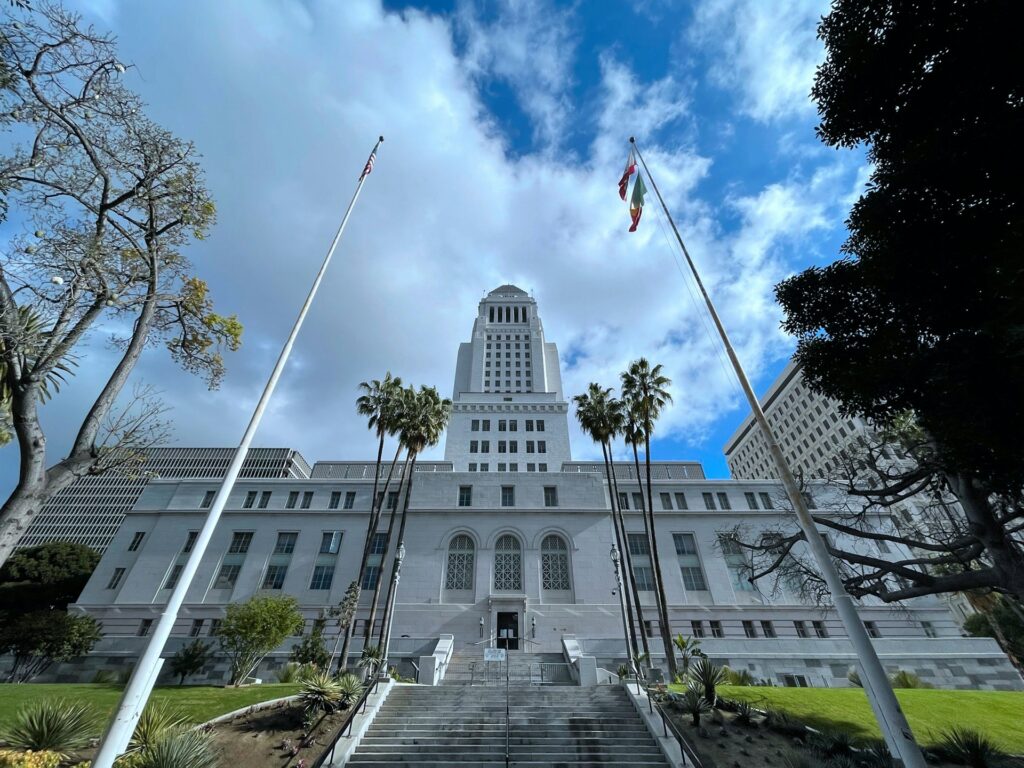
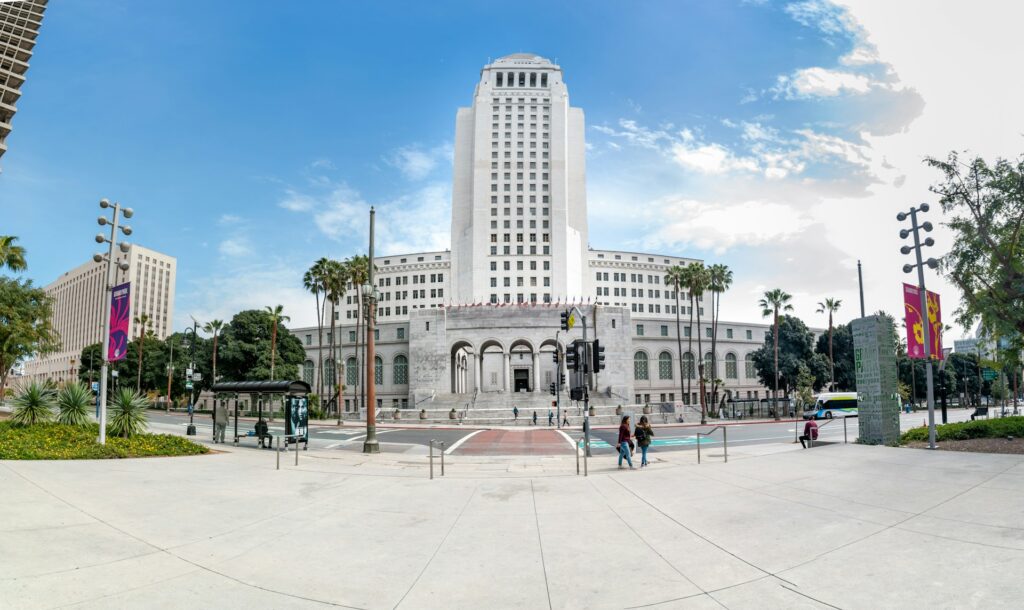
The story of Los Angeles City Hall begins in the early 20th century, when Los Angeles was rapidly transforming from a regional city into a major American metropolis. By the 1920s, the existing municipal buildings could no longer accommodate the expanding city administration. In response, city officials approved the construction of a monumental civic tower that would symbolize the growing importance and ambition of Los Angeles. Construction officially began in 1926, marking the start of one of the most significant public building projects in the city’s history.
The building was completed in 1928 and quickly became the tallest structure in Los Angeles. At the time, strict building regulations limited the height of most structures in the city, which meant that City Hall dominated the skyline for decades. Its distinctive stepped tower was inspired by classical architecture, particularly ancient mausoleums and historic European civic buildings. The design reflected the desire to create a building that represented both governmental authority and the cultural aspirations of a rapidly growing city.
Throughout the 20th century, Los Angeles City Hall became the center of political life in the region. Inside its chambers, mayors, city council members, and administrators made decisions that shaped the development of Los Angeles—from infrastructure expansion and transportation planning to housing and urban growth. The building also became widely recognized through popular culture, appearing in numerous Hollywood films and television series as a symbol of the city.
By the late 20th century, concerns about earthquake safety led to a major modernization effort. Between 1998 and 2001, the building underwent a comprehensive seismic retrofit designed to strengthen the historic structure against major earthquakes. The project preserved the building’s historic character while integrating modern engineering solutions. Today, nearly a century after its completion, Los Angeles City Hall remains both a functioning center of government and one of the most iconic historic landmarks in California.
ngineering and Structural Design
The engineering of Los Angeles City Hall reflects the technological transition from traditional masonry construction to modern steel-frame skyscrapers. Completed in 1928, the building was designed around a steel structural skeleton, which allowed it to rise far higher than earlier civic buildings while maintaining stability and structural efficiency. This internal frame carries the building’s loads, while the exterior stone façade acts primarily as cladding rather than a load-bearing structure, a defining feature of early high-rise engineering in the United States.
One of the most distinctive engineering elements of the building is its stepped tower design. Instead of a simple vertical shaft, the tower gradually narrows as it rises, reducing wind loads and structural stress on the upper floors. This pyramidal composition also lowers the center of mass and improves overall stability. Such a form was both an aesthetic choice and a structural strategy, helping engineers manage the forces acting on a 138-meter civic tower in an era when skyscraper engineering was still evolving.
The building’s foundation and lower levels were engineered to support enormous vertical loads from the steel frame and stone façade. Engineers used reinforced concrete foundations and a dense grid of structural columns to distribute the weight of the tower into the ground beneath downtown Los Angeles. The base of the building incorporates California granite and other durable materials, providing both structural strength and resistance to long-term weathering.
At the end of the 20th century, the building underwent a major seismic retrofit between 1998 and 2001 to ensure it could withstand modern earthquake standards. Engineers reinforced the structure with new damping systems, strengthened joints within the steel frame, and added base isolation strategies that help absorb seismic energy. This retrofit preserved the historic architecture while transforming the nearly century-old building into a structure capable of meeting the safety demands of a major earthquake-prone city.
Trivia
The Concrete of Unity
When the building was constructed, sand and gravel were collected from each of California’s 58 counties. This symbolic gesture was intended to represent the unity of the entire state within the heart of its largest city. The water used to mix the concrete was even sourced from the state’s 21 historic missions.
A Lonely Giant
For 36 years, City Hall was the only building in Los Angeles allowed to exceed a strict 150-foot height limit. This ordinance was enacted to prevent „Manhattanization” and ensure a low-density skyline across the city. The restriction was finally lifted in 1964, sparking the skyscraper boom that created the modern downtown skyline.
Hollywood’s Favorite Backdrop
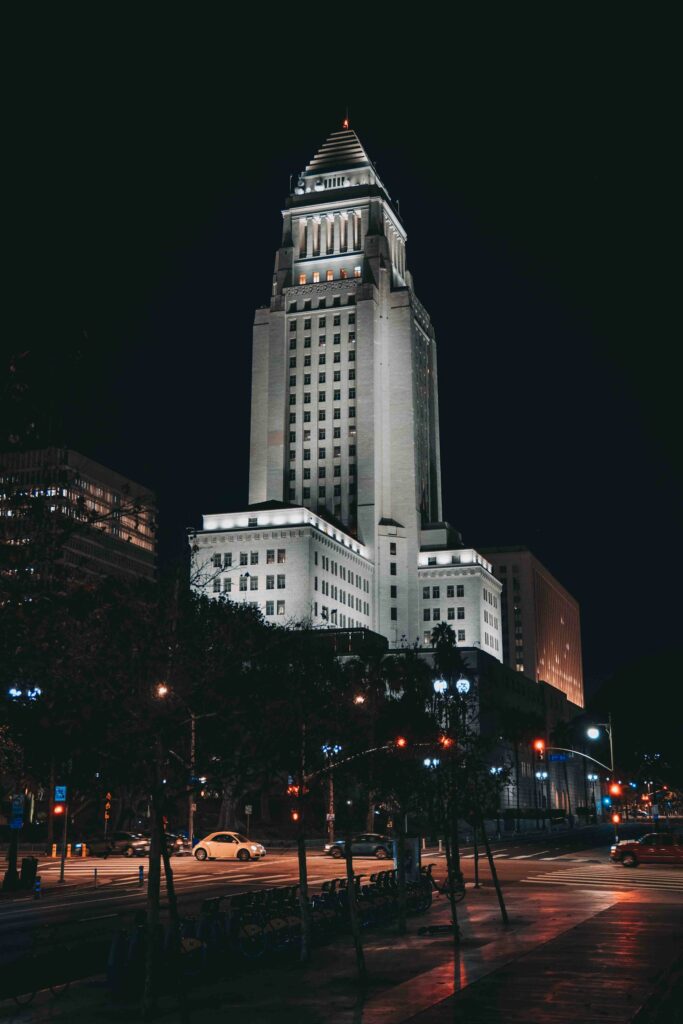
The building is one of the most filmed locations in the world, famously serving as the „Daily Planet” building in the 1950s Adventures of Superman TV show. It has appeared in classic noir films like Chinatown and modern blockbusters like L.A. Confidential. Its Art Deco silhouette is so recognizable that it instantly signals „Los Angeles” to audiences globally.
The Lindbergh Beacon
At the very top of the pyramid sits the Lindbergh Beacon, which was installed in 1928 to assist early aviators. It was named in honor of Charles Lindbergh and originally rotated a white light that could be seen for miles. The beacon was deactivated during World War II for security reasons and now only shines on special commemorative occasions.
Seismic Survival
During a major renovation in the late 1990s, the building became the tallest base-isolated structure in the world. Engineers installed 438 massive rubber and steel bearings at the foundation to act as shock absorbers during an earthquake. This system allows the heavy stone tower to sway up to 18 inches without collapsing.
The Tower of Many Styles
The architecture is a unique „Modern American” blend that incorporates several historical influences. While the overall form is Art Deco, the design features Romanesque, Greek, and Byzantine details throughout the interior. This eclectic mix was meant to portray Los Angeles as a sophisticated, world-class metropolitan center.
The Tom Bradley View
The 27th-floor observation deck is named after Tom Bradley, the city’s longest-serving mayor. It is one of the few places in downtown where the public can enjoy a 360-degree view of the city for free. From this height, visitors can see everything from the Hollywood Sign to the Pacific Ocean on a clear day.
A Presidential Connection
In 1960, John F. Kennedy gave his famous „New Frontier” speech at the Los Angeles Memorial Coliseum, but his campaign headquarters were centered in this district. The City Hall steps have since hosted countless political rallies, protests, and victory speeches by major world leaders. It remains the primary stage for civic expression and activism in Southern California.
Ancient Symbolism
The pyramid roof at the top is modeled after one of the Seven Wonders of the Ancient World: the Mausoleum at Halicarnassus. This choice was intended to give the building an aura of timelessness and authority. By looking back to antiquity, the architects sought to ground the young city’s government in a sense of historical gravity.
The Rotunda’s Artistry
The third-floor rotunda features an exquisite Byzantine-style dome decorated with intricate tile work and gold leaf. This space was designed to be the „living room” of the city, where citizens could meet their representatives in a grand setting. The acoustics of the dome are so precise that even a whisper can sometimes carry across the hall.
Grand Bronze Doors
The main entrance on Spring Street features massive bronze doors that weigh several tons each. These doors are decorated with relief sculptures depicting significant moments in the history of Los Angeles and California. They serve as a monumental gateway that transitions visitors from the busy street into the quiet halls of government.
A Resilience Symbol
Despite numerous major earthquakes since 1928, the building has never suffered catastrophic structural failure. This is a testament to the high-quality engineering and the massive amount of structural steel used in its original frame. Its survival through the decades has made it a permanent symbol of the city’s endurance and growth.