
From medieval stone crossings to industrial engineering landmarks, these five European bridges reveal how infrastructure evolved into architectural identity.
Bridges have always been more than simple structures connecting two sides of a river. Throughout history, they have played a crucial role in shaping the growth of cities, facilitating trade, and transforming the way people move through urban landscapes. In many European cities, bridges became the backbone of economic activity, linking markets, districts, and cultural centers that would otherwise remain divided by water.
Over time, bridges also became remarkable achievements of engineering. From the heavy stone arches of the medieval period to the innovative suspension structures of the nineteenth century, each era introduced new construction techniques and materials. These advances allowed engineers and architects to build longer spans, stronger structures, and increasingly ambitious designs that pushed the limits of their time.
Yet the most iconic bridges are not remembered solely for their technical ingenuity. Many of them gradually evolved into powerful urban symbols. Their silhouettes became inseparable from the skylines of the cities they serve, turning practical infrastructure into landmarks recognized around the world. Today, bridges often function as both transportation corridors and public spaces where residents and visitors gather, walk, and experience the city from a unique perspective.
The five bridges presented in this article illustrate this transformation perfectly. Built across several centuries, they represent different technological eras and architectural approaches, yet they all share one common trait: each became an enduring symbol of its city. From medieval Florence and Venice to industrial London and Budapest, these structures demonstrate how bridges can shape not only geography, but also the identity of entire urban landscapes.
Five Historic European Bridges and the Engineering Behind Them
1. Ponte Vecchio – Florence

History
Many of Europe’s most iconic bridges were built at moments when cities were rapidly expanding and needed reliable crossings to support trade and movement. Rivers were often the main transportation routes of the time, but they also created natural barriers between districts. Constructing permanent bridges allowed cities to integrate their urban fabric, connect marketplaces, and strengthen political and economic ties between different parts of the city.
The history of these bridges often reflects the broader story of the cities in which they stand. Some were commissioned by monarchs or powerful city governments to symbolize prosperity and stability, while others replaced earlier wooden crossings that were repeatedly destroyed by floods, fires, or war. Over the centuries, these bridges witnessed major historical events, from medieval trade routes and royal processions to modern tourism and urban development.
Today, many of these historic bridges have become cultural landmarks rather than purely functional infrastructure. They are protected heritage sites, carefully restored and maintained to preserve their historical character. Their presence reminds us that bridges were not only technical achievements but also central elements in the social and economic life of European cities for centuries.
Engineering
The engineering behind historic European bridges reflects the technological capabilities of the periods in which they were built. Many medieval bridges relied on massive stone arches capable of transferring loads efficiently through compression. For example, the structural system of the Charles Bridge consists of 16 stone arches spanning a total length of approximately 516 metres, supported by robust piers designed to resist strong currents of the Vltava River.
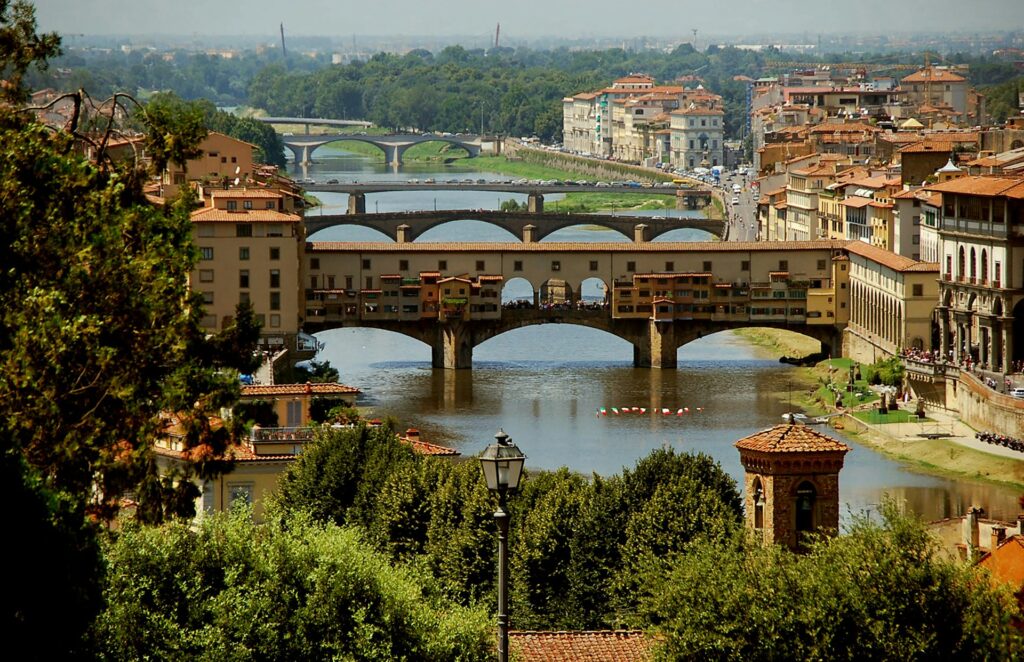
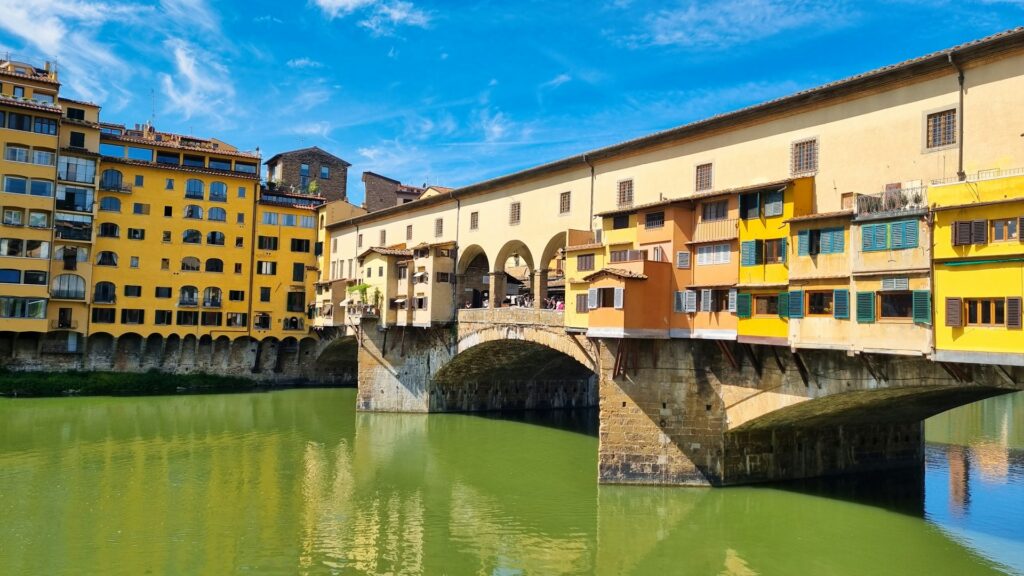
Later bridges introduced more advanced structural systems and materials. The Rialto Bridge, completed in 1591, was a remarkable achievement for its time with a 31.8-metre stone arch span. Meanwhile, the Ponte Vecchio stretches roughly 95 metres across the Arno River and is supported by three segmental arches, demonstrating how Renaissance engineers refined earlier medieval construction techniques.
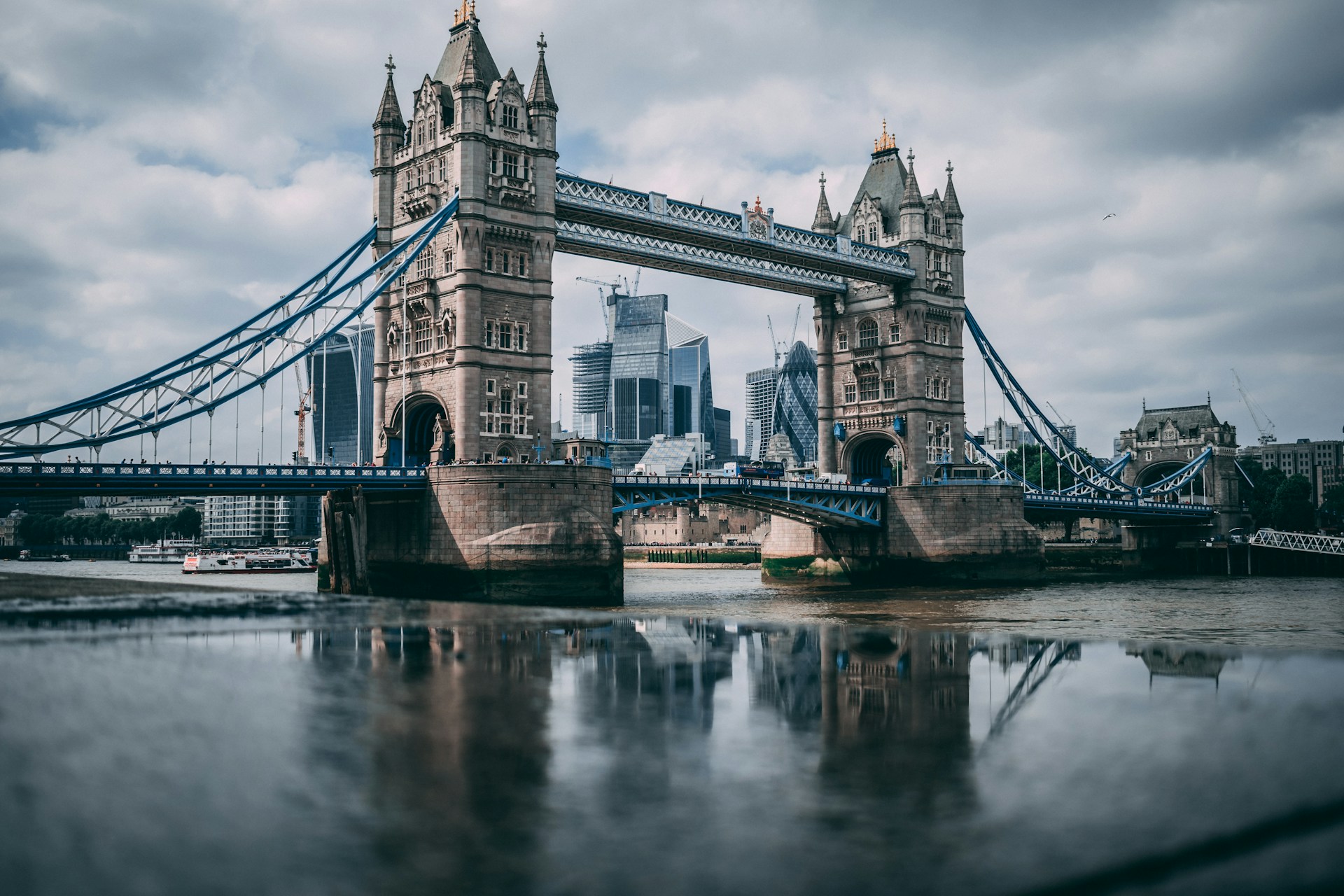
The industrial era introduced entirely new engineering possibilities. The Széchenyi Chain Bridge, opened in 1849, features a central span of 202 metres supported by massive iron chains. Similarly, the mechanical design of the Tower Bridge includes two bascule sections weighing about 1,000 tonnes each, which can lift to an angle of 86 degrees to allow ships to pass along the River Thames. These numerical details highlight how bridge engineering evolved from heavy masonry structures to sophisticated mechanical and metal systems capable of supporting increasing urban traffic and navigation demands.
2. Rialto Bridge – Venice
History
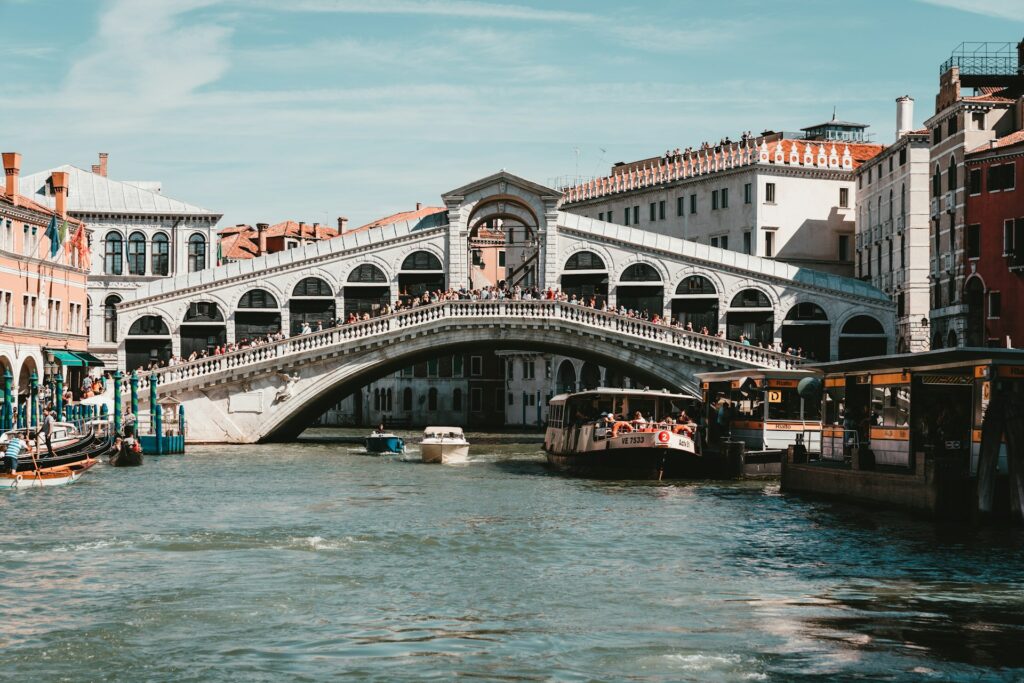
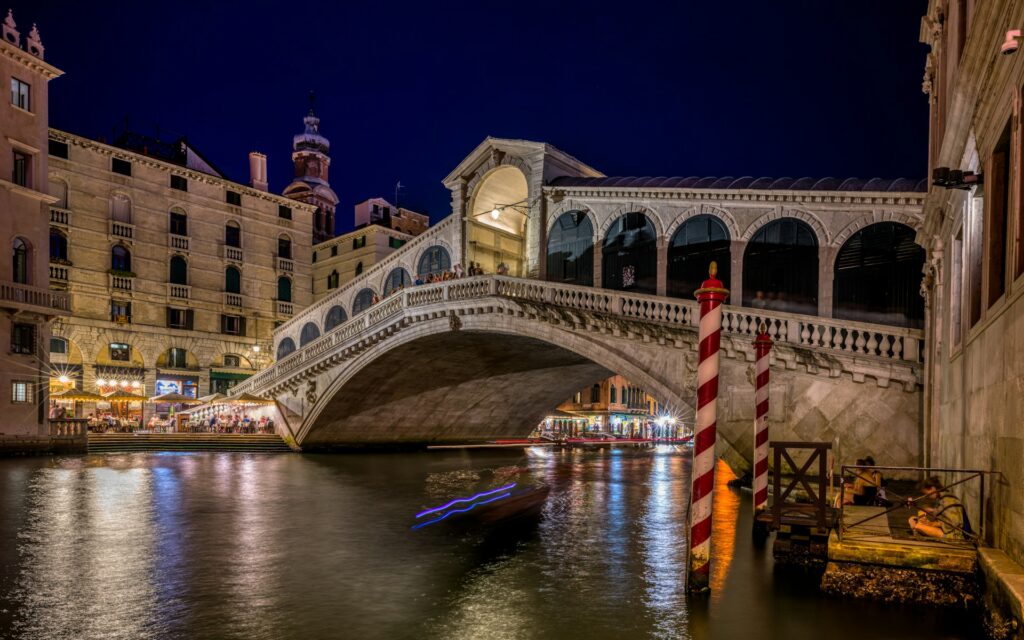
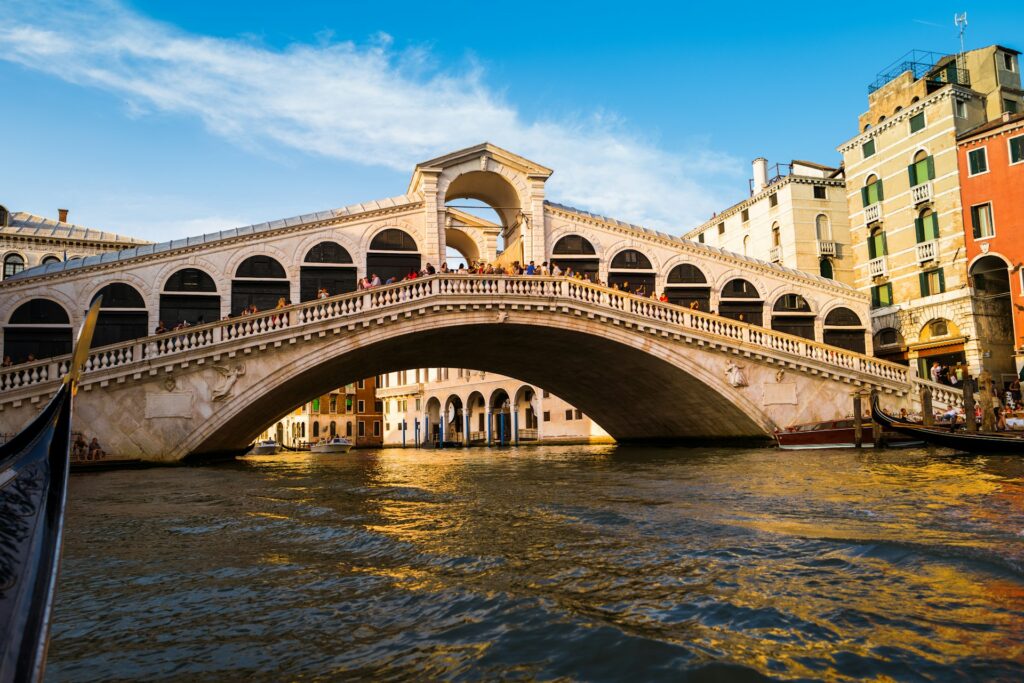
The history of the Rialto Bridge is closely connected with the commercial rise of Venice during the Middle Ages and the Renaissance. For centuries, the Rialto district served as the financial and trading center of the Venetian Republic. Merchants from across Europe and the Mediterranean gathered here, and a reliable crossing over the Grand Canal was essential for connecting markets, warehouses, and administrative buildings.
The first bridge at this location was a pontoon bridge built in 1181, known as the Ponte della Moneta. As the city grew wealthier and trade intensified, this temporary structure was replaced with a wooden bridge in 1255. However, the wooden structure suffered several collapses and fires over the centuries, including a major collapse in 1444 when large crowds gathered to watch a ceremonial procession.
In the late sixteenth century, the Venetian government decided to construct a permanent stone bridge that would symbolize the power and stability of the republic. After a design competition involving several renowned architects, including Michelangelo, the project was ultimately awarded to Antonio da Ponte. Construction took place between 1588 and 1591, resulting in the iconic structure that still spans the Grand Canal today.
Engineering
From an engineering perspective, the Rialto Bridge represented a bold structural solution for its time. Instead of using multiple smaller arches like many earlier bridges, the designers opted for a single large stone arch with a span of 31.8 metres. This ambitious design reduced the number of supports in the canal, improving navigation for the numerous boats and merchant vessels moving through Venice.
The bridge measures approximately 48 metres in total length and about 22 metres in width, accommodating both pedestrian circulation and rows of small shops. The structure rests on around 6,000 wooden piles driven deep into the lagoon’s soft sediment, forming a stable foundation capable of supporting the massive stone arch above.
The arch itself was constructed using precisely cut blocks of Istrian stone, a durable limestone widely used in Venetian architecture due to its resistance to saltwater corrosion. The weight of the bridge is distributed through the arch into the foundations, allowing the structure to remain stable for more than 430 years despite constant exposure to tidal movement, humidity, and heavy pedestrian traffic.
3. Charles Bridge – Prague


History
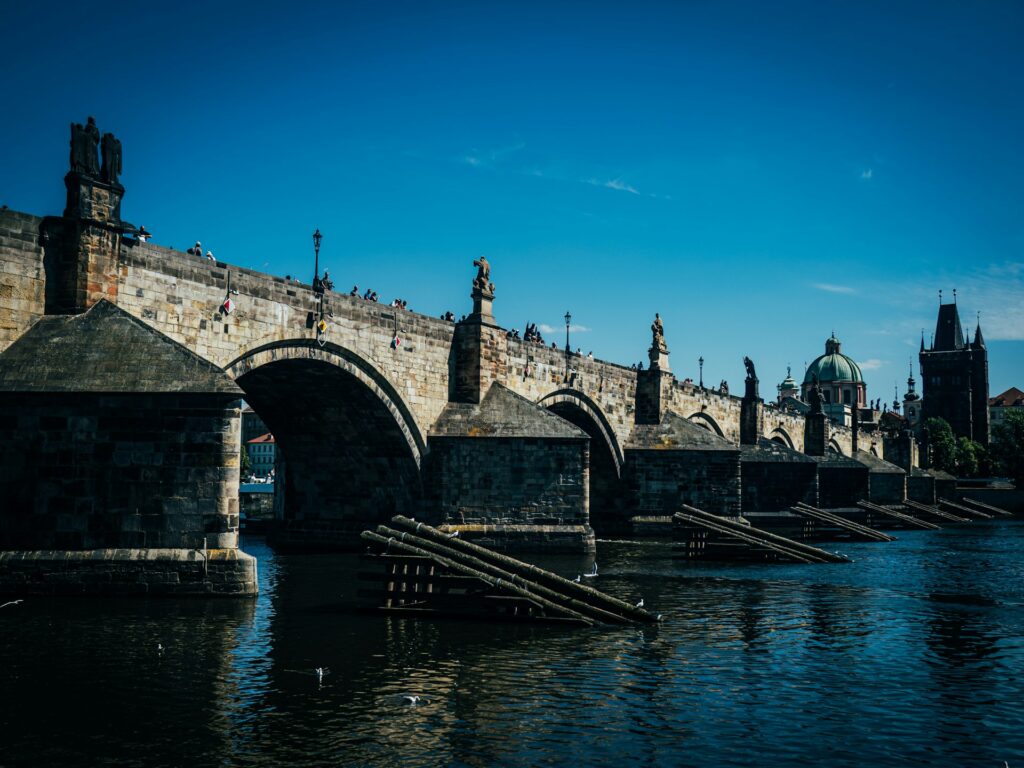
The construction of the Charles Bridge is closely tied to the political and cultural rise of Prague during the reign of Charles IV. In the fourteenth century, Prague was becoming one of the most important cities in Central Europe, and a durable bridge was needed to connect the Old Town with Prague Castle and the districts on the opposite side of the Vltava River.
Before the Charles Bridge, a Romanesque structure known as the Judith Bridge stood in the same location. Built in the 12th century, it served as Prague’s primary river crossing until it was destroyed by severe flooding in 1342. The destruction of the earlier bridge highlighted the need for a stronger and more resilient structure capable of withstanding the powerful currents of the Vltava.
Construction of the Charles Bridge began in 1357, reportedly at 5:31 a.m. on July 9, a date chosen according to numerological symbolism favored by Emperor Charles IV. The bridge was largely completed in the early 15th century and later decorated with 30 baroque statues and sculptural groups, mostly installed between the 17th and 18th centuries, turning the bridge into both an architectural and artistic landmark.
Engineering
From an engineering perspective, the Charles Bridge is one of the most impressive medieval bridge constructions in Europe. The structure stretches approximately 516 metres in length and about 9.5 to 10 metres in width, making it one of the longest bridges of its time. It crosses the Vltava River using 16 large stone arches, each carefully designed to distribute loads efficiently into the massive piers.
The bridge piers were constructed with protective ice guards and reinforced foundations to resist the strong currents and seasonal flooding of the river. Large sandstone blocks were used in the construction, and the masonry was bonded with durable lime mortar. Historical sources even suggest that organic materials such as eggs may have been added to the mortar mixture to improve its strength, a technique occasionally referenced in medieval construction traditions.
Each pier supports the load of the arches and transfers it deep into the riverbed foundations. Over the centuries, the structure has survived numerous floods, including severe events in 1784, 1890, and 2002, demonstrating the durability of its medieval engineering. Despite being more than 650 years old, the bridge remains structurally stable and continues to function as one of the most important pedestrian routes in Prague.
4. Széchenyi Chain Bridge – Budapest
History
The construction of the Széchenyi Chain Bridge marked a turning point in the development of Budapest. In the early nineteenth century, the Danube River separated the cities of Buda and Pest, and crossings were largely dependent on temporary pontoon bridges or ferries. These were often unusable during winter when the river froze, creating major disruptions to trade and travel.
The idea for a permanent bridge was strongly promoted by the Hungarian reformer István Széchenyi, who recognized that a stable crossing would significantly improve economic connections between the two sides of the river. Construction began in 1839, based on the design of the British engineer William Tierney Clark, while the project was supervised on site by the Scottish engineer Adam Clark.
The bridge officially opened in 1849, becoming the first permanent bridge across the Danube in Hungary. It played a crucial role in unifying Buda and Pest, which later merged in 1873 to form modern Budapest. During the Second World War the bridge was destroyed in 1945, but it was carefully reconstructed and reopened exactly 100 years after its original inauguration, in 1949.
Engineering
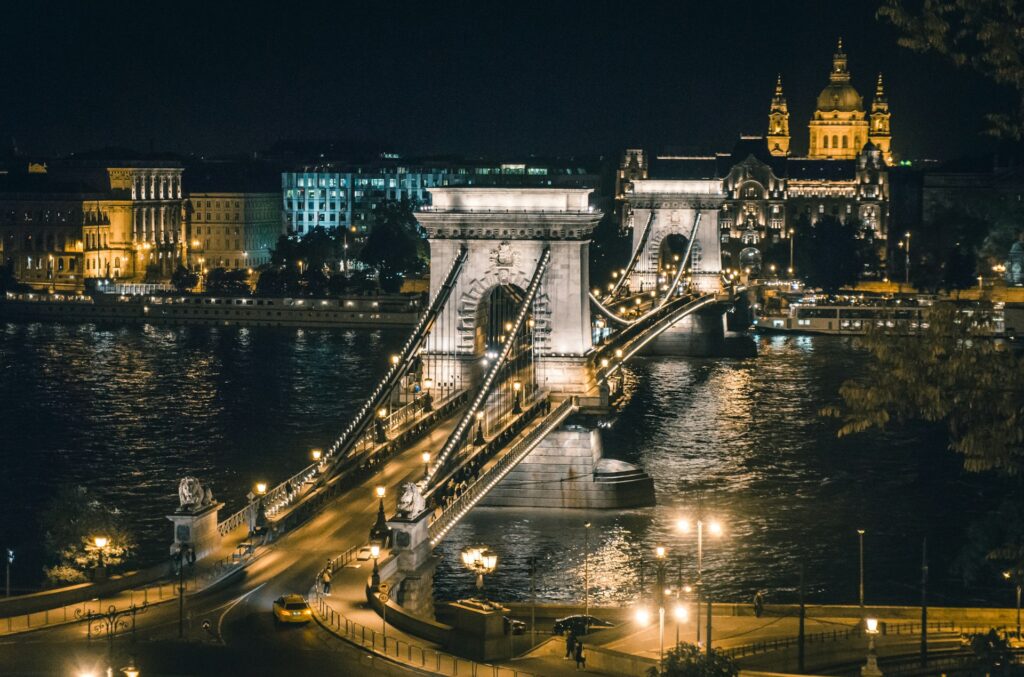
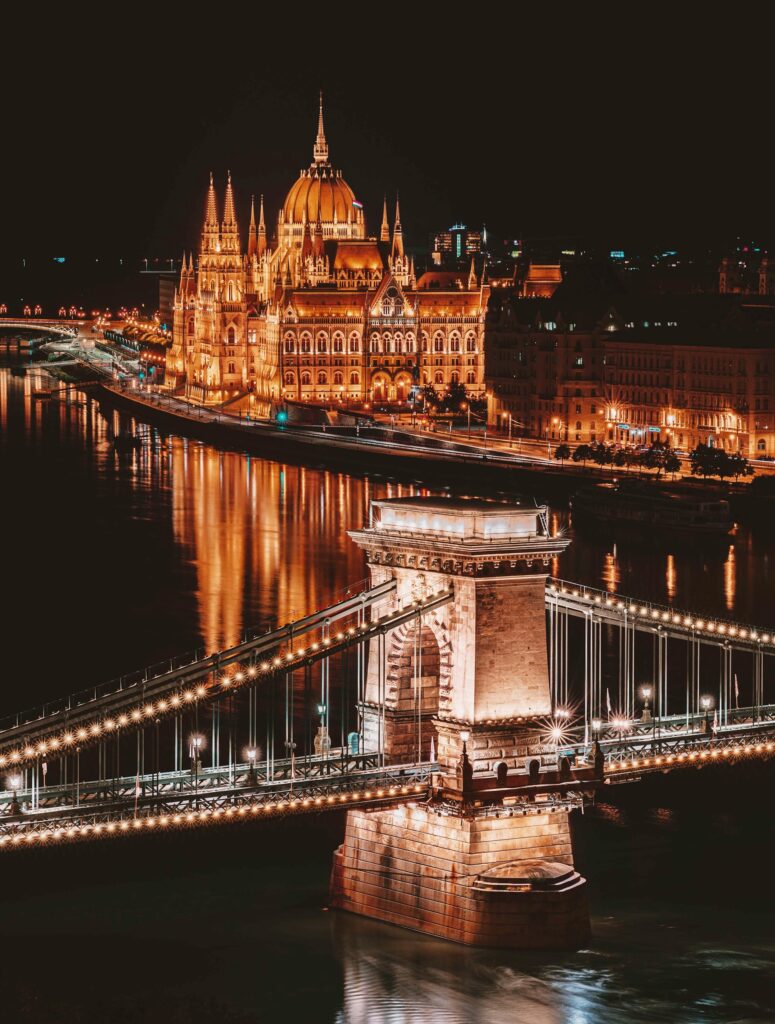
From an engineering standpoint, the Széchenyi Chain Bridge was one of the most advanced suspension bridges of its time. The total length of the structure is approximately 375 metres, with a central span measuring 202 metres between the two main towers. This large span allowed ships to navigate freely along the Danube without obstruction from multiple river piers.
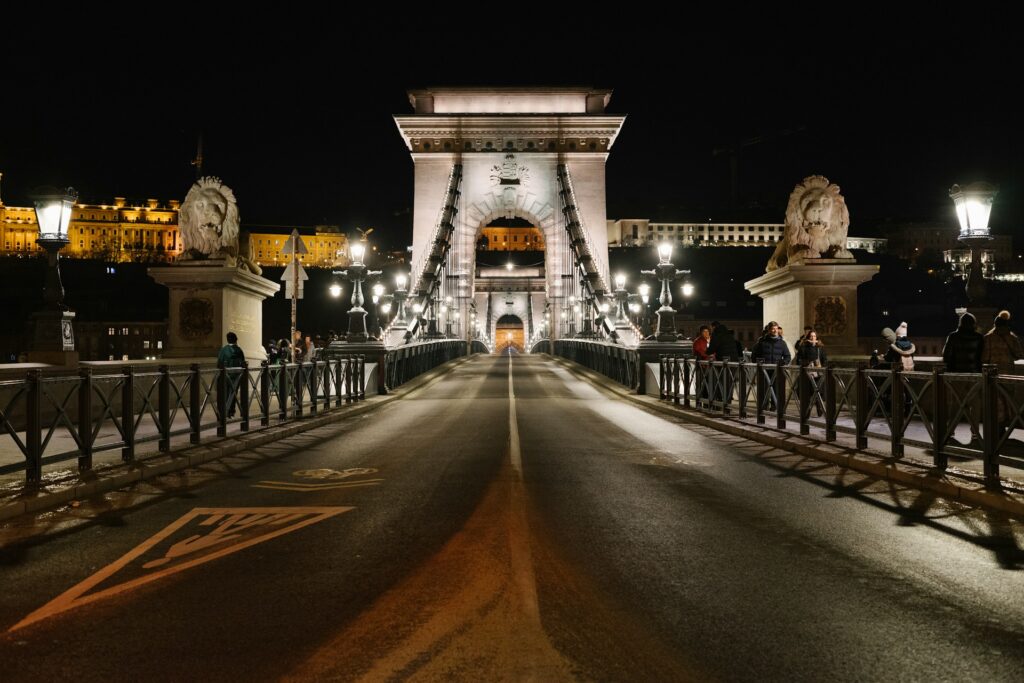
The bridge deck is supported by massive iron chains suspended between two monumental stone towers rising about 48 metres above the river level. These chains transfer the weight of the bridge and its traffic into anchor structures embedded deep into the riverbanks. At the time of its completion, the bridge represented one of the longest suspension spans in Europe.
The roadway itself is about 16 metres wide, providing space for vehicle lanes and pedestrian walkways on both sides. The foundations were carefully designed to withstand the powerful currents and seasonal flooding of the Danube. More than 5,000 tonnes of iron were used in the original construction, reflecting the rapid technological progress of the nineteenth-century industrial era. Today, the bridge remains one of the most recognizable engineering landmarks in Budapest.
5. Tower Bridge – London
History
The construction of Tower Bridge was driven by the rapid expansion of London during the nineteenth century. By the 1870s, the eastern part of the city had become one of the busiest port areas in the world, and existing crossings over the River Thames were no longer sufficient to handle the growing volume of road traffic. At the same time, the bridge had to allow large ships to access the busy docks upstream.
After years of debate and design proposals, the final project was approved in 1884. The bridge was designed by the city architect Horace Jones in collaboration with the engineer John Wolfe Barry. Construction began in 1886 and required more than 8 years of work before the bridge was officially opened to the public in 1894.
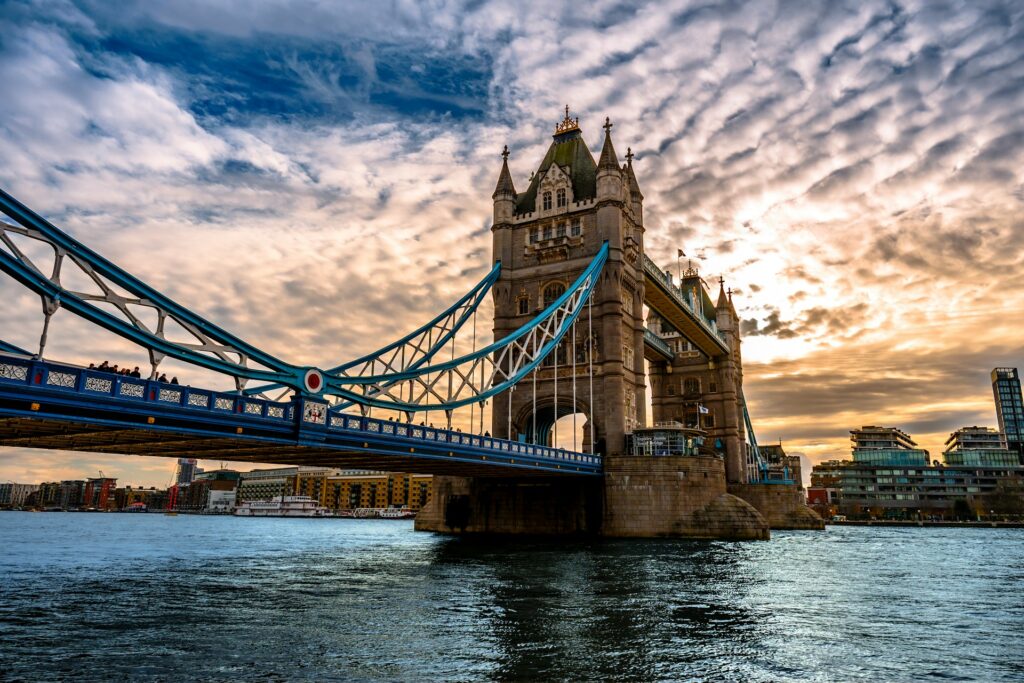
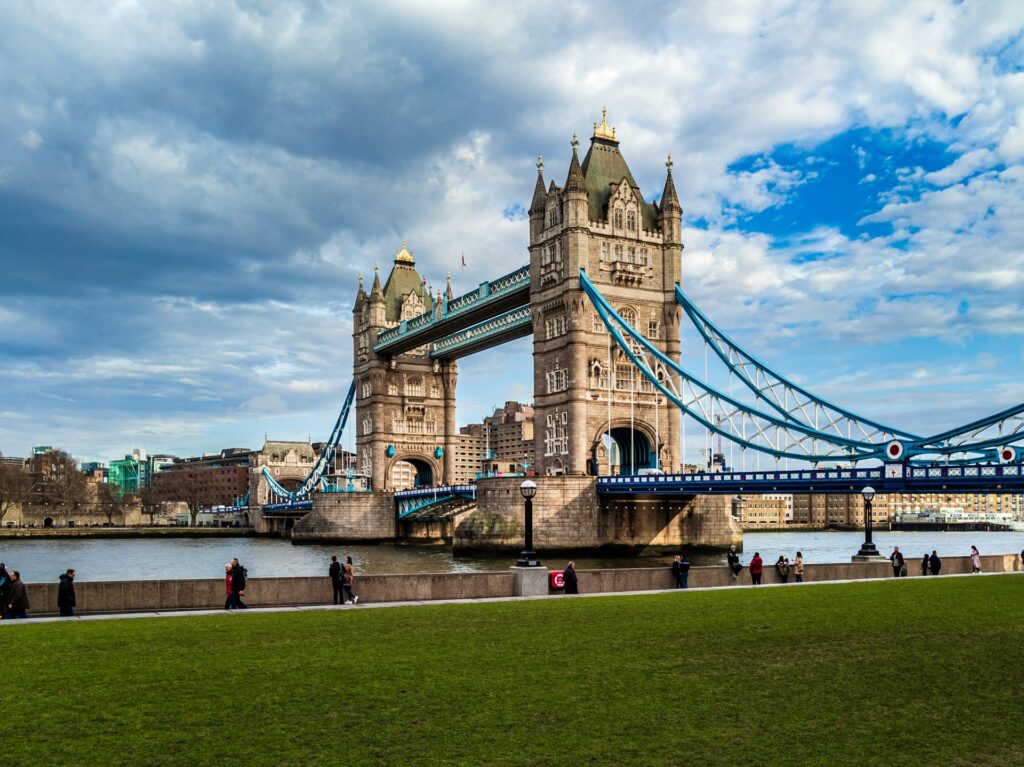
From the beginning, Tower Bridge was intended not only as a functional structure but also as an architectural landmark. Its distinctive neo-Gothic towers were designed to harmonize with the nearby Tower of London, one of the city’s most historic landmarks. Today, the bridge remains one of the most recognizable symbols of London and one of the most photographed bridges in the world.
Engineering
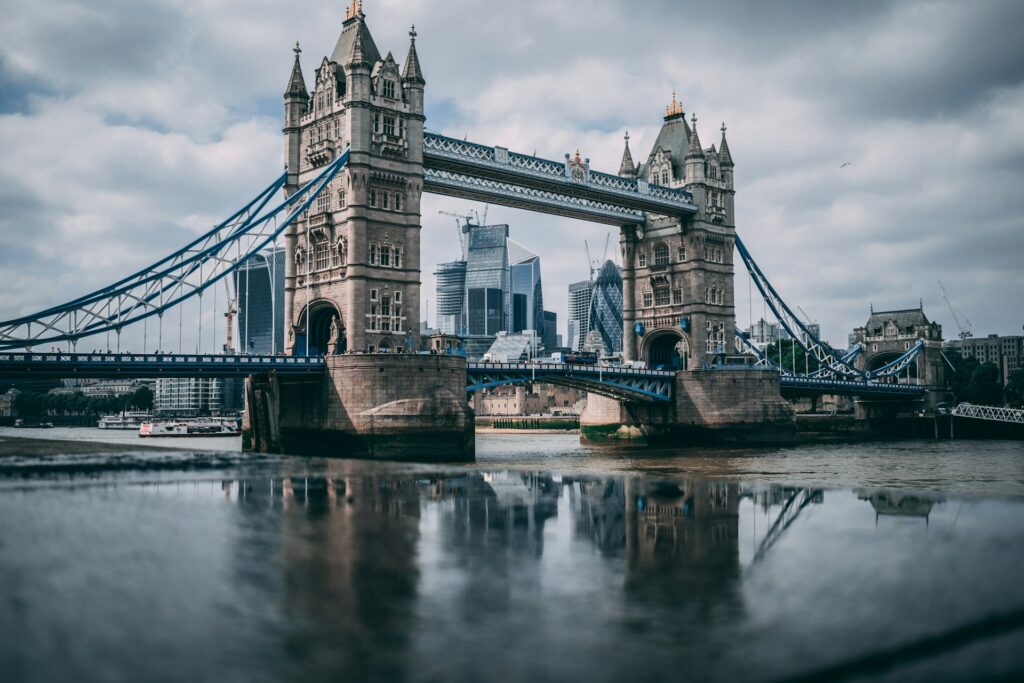
Tower Bridge represents a remarkable example of late nineteenth-century engineering combining suspension and bascule bridge technology. The total length of the structure is approximately 244 metres, while the two main towers rise about 65 metres above the River Thames. These towers support high-level walkways that connect the upper sections of the bridge.
The most distinctive engineering feature is the pair of bascules—movable bridge sections that allow ships to pass. Each bascule weighs more than 1,000 tonnes and can be raised to an angle of about 86 degrees. Originally, the lifting mechanism was powered by a sophisticated hydraulic system using steam engines, which pumped water into large accumulators to generate the necessary pressure.
The bridge structure required approximately 11,000 tonnes of steel, which forms the internal framework of the towers and the suspended sections of the roadway. This steel skeleton is clad in stone and granite to achieve the bridge’s historic architectural appearance. Despite being more than 130 years old, Tower Bridge continues to operate with modernized hydraulic systems, opening around 800–1,000 times per year to allow vessels to navigate the Thames.
Bridges That Became Symbols of Their Cities
Across Europe, bridges have always been more than practical crossings over rivers. They often emerged at critical moments in urban development, when cities required stronger connections between districts, markets, and political centers. The bridges discussed in this article illustrate how infrastructure can shape the growth of cities, transforming natural barriers into vital urban corridors that support trade, mobility, and social interaction.
Looking at these structures chronologically also reveals the remarkable evolution of engineering techniques. Medieval builders relied on heavy stone arches capable of withstanding enormous loads through compression. By the Renaissance, architects refined these methods to create more elegant and efficient spans. The nineteenth century then introduced iron and steel structures, allowing engineers to build longer bridges with fewer supports and more sophisticated mechanical systems.
Over time, these bridges gradually became architectural landmarks. Their silhouettes became inseparable from the identities of the cities they serve, appearing in photographs, paintings, and travel literature for centuries. Whether it is the stone arches of historic bridges or the mechanical bascules of industrial-era engineering, these structures demonstrate how infrastructure can evolve into cultural symbols.
Today, these bridges remain essential elements of the urban landscape. They continue to carry pedestrians, vehicles, and visitors while also serving as historical monuments that connect the past with the present. More than simply engineering achievements, they represent the enduring relationship between architecture, technology, and the cities that grew around them.