
Extended Introduction: Hard Data Behind the Sculpture
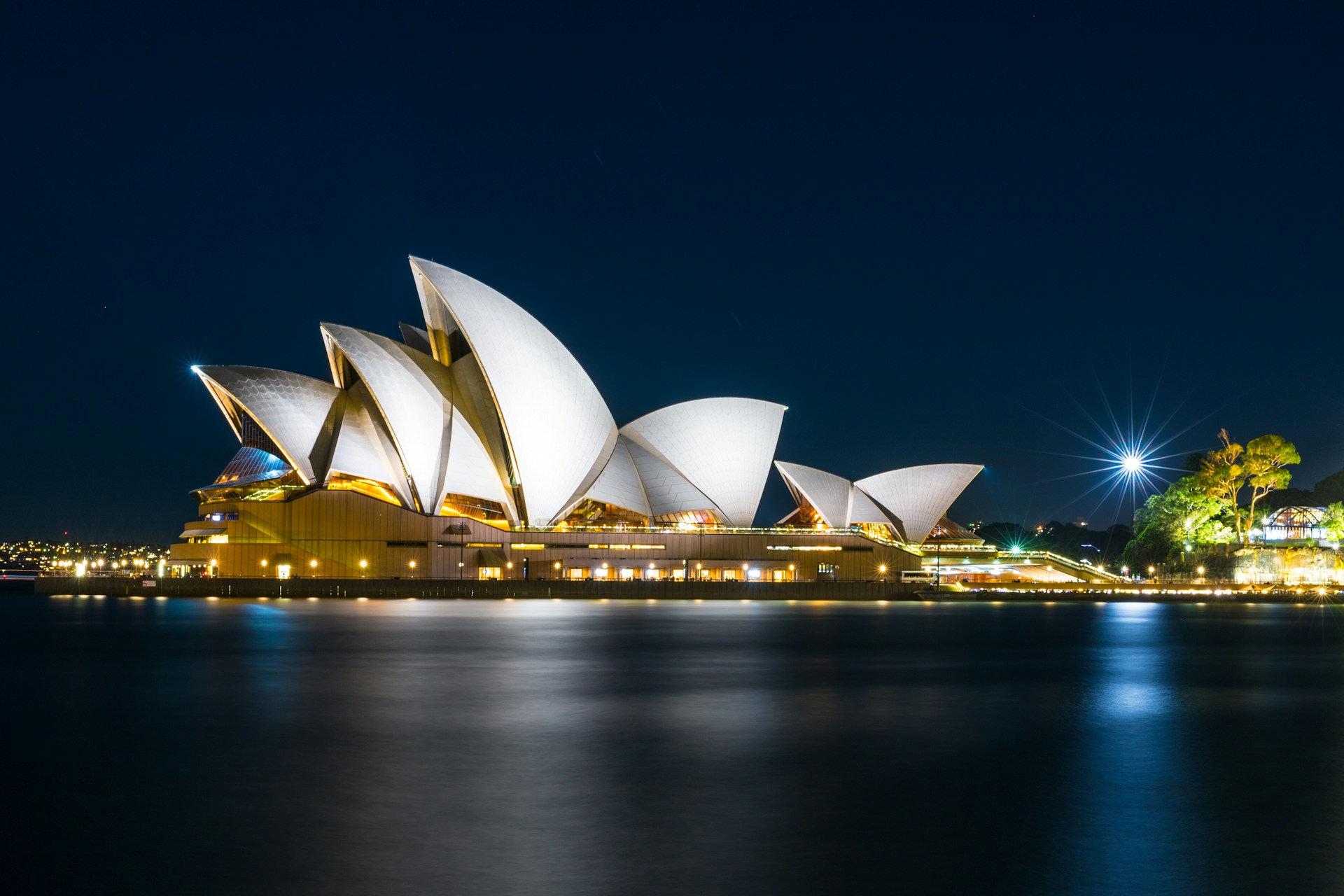
The Sydney Opera House is one of the few buildings instantly recognized across continents. Opened in 1973, after 14 years of construction, it transformed Sydney’s harbor into a global architectural stage.
Designed by Danish architect Jørn Utzon, the project was selected from 233 international competition entries — a decision that reshaped modern architecture. What followed was a complex engineering process that pushed the limits of precast concrete technology and computational geometry of its time.
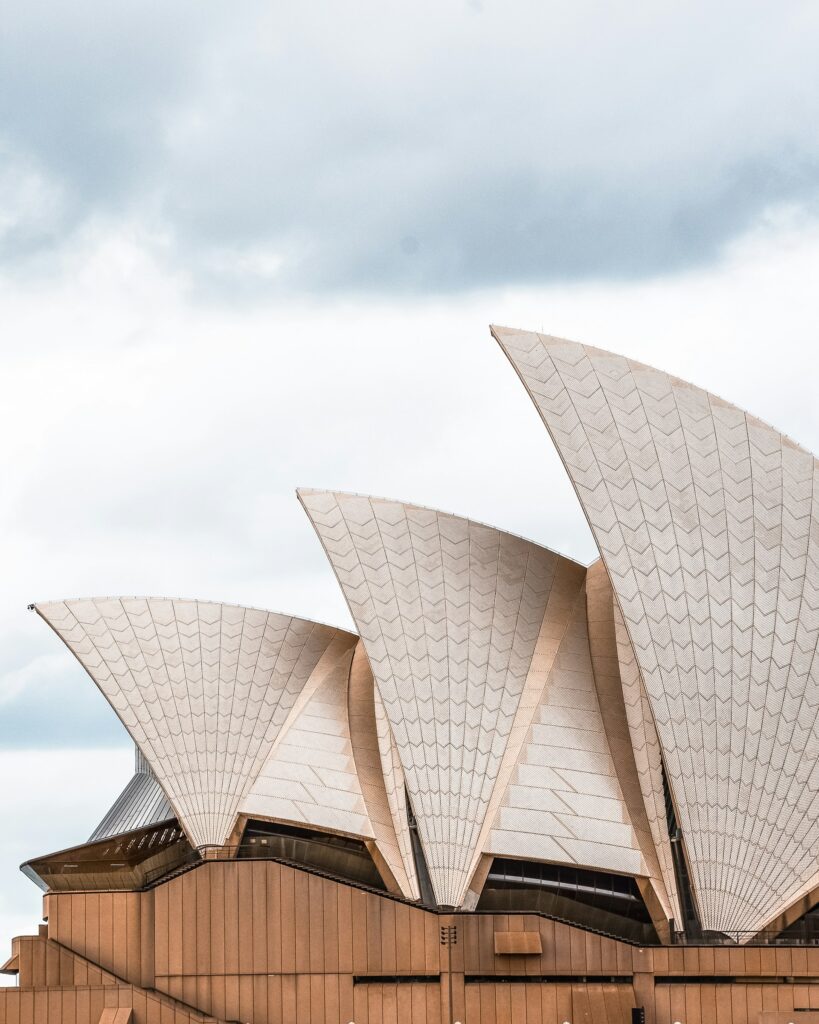
The structure rises 67 metres above sea level at its highest shell and is clad in over 1 million ceramic tiles, forming the iconic sail-like geometry. Inside, the building contains five main performance halls and welcomes more than 10 million visitors annually, making it both a cultural venue and a large-scale economic engine.
In 2007, it was listed as a UNESCO World Heritage Site, cementing its status not only as architecture, but as a measurable global asset.
This is not just a sculptural landmark.
It is ambition translated into structure.
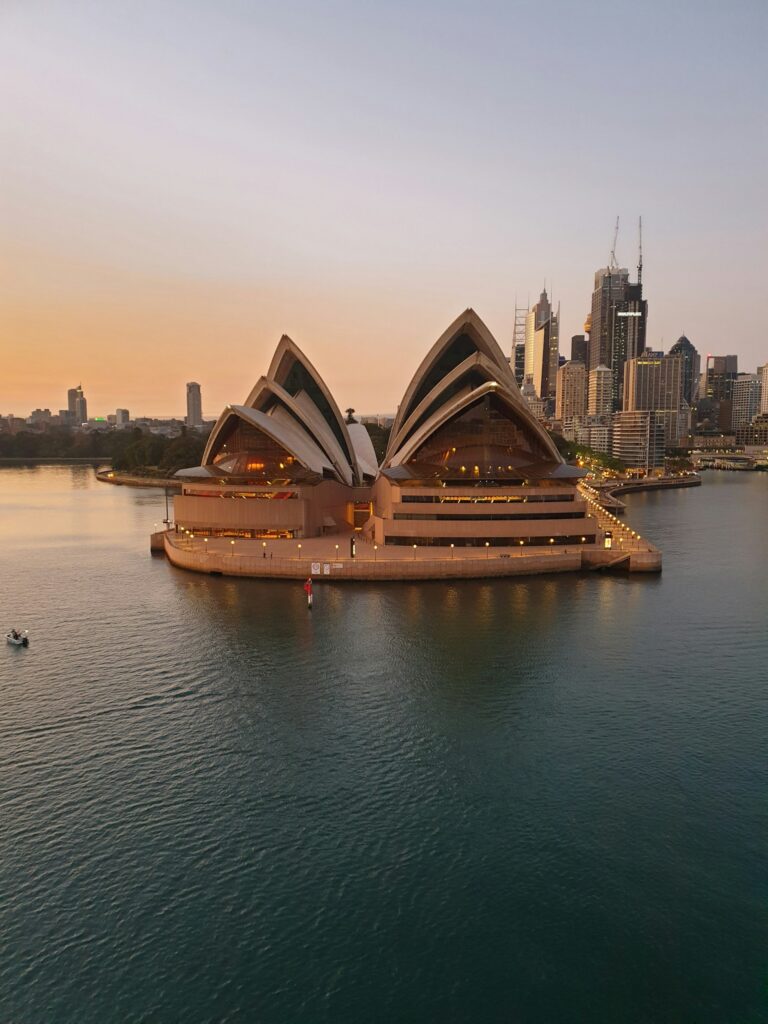
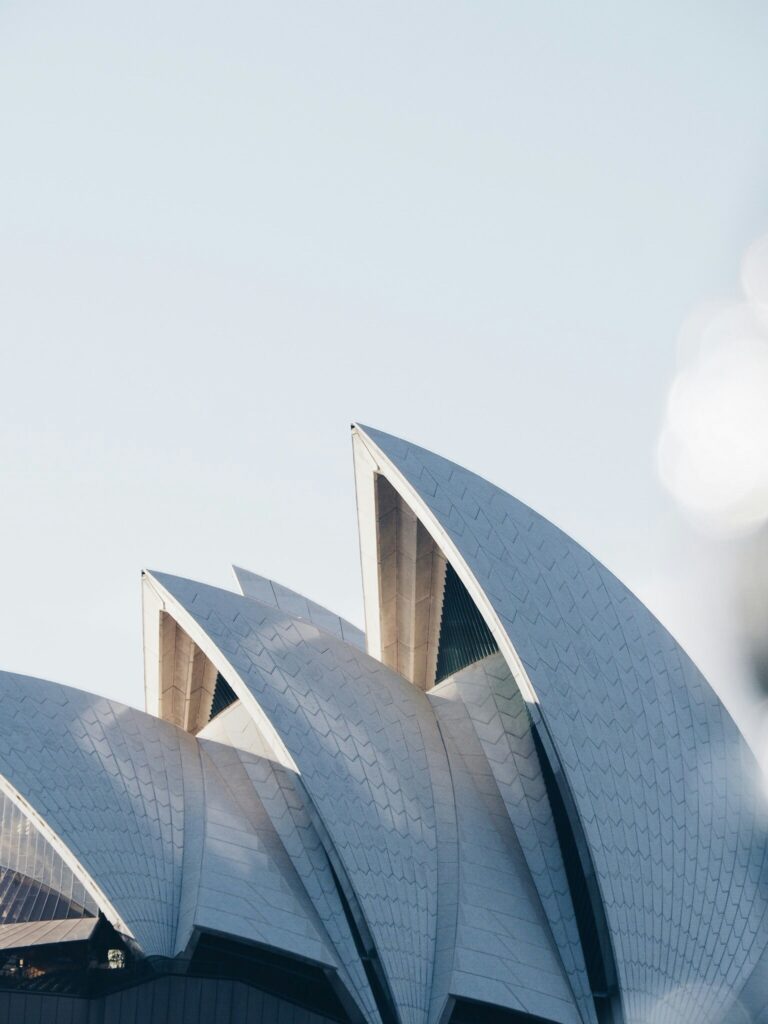
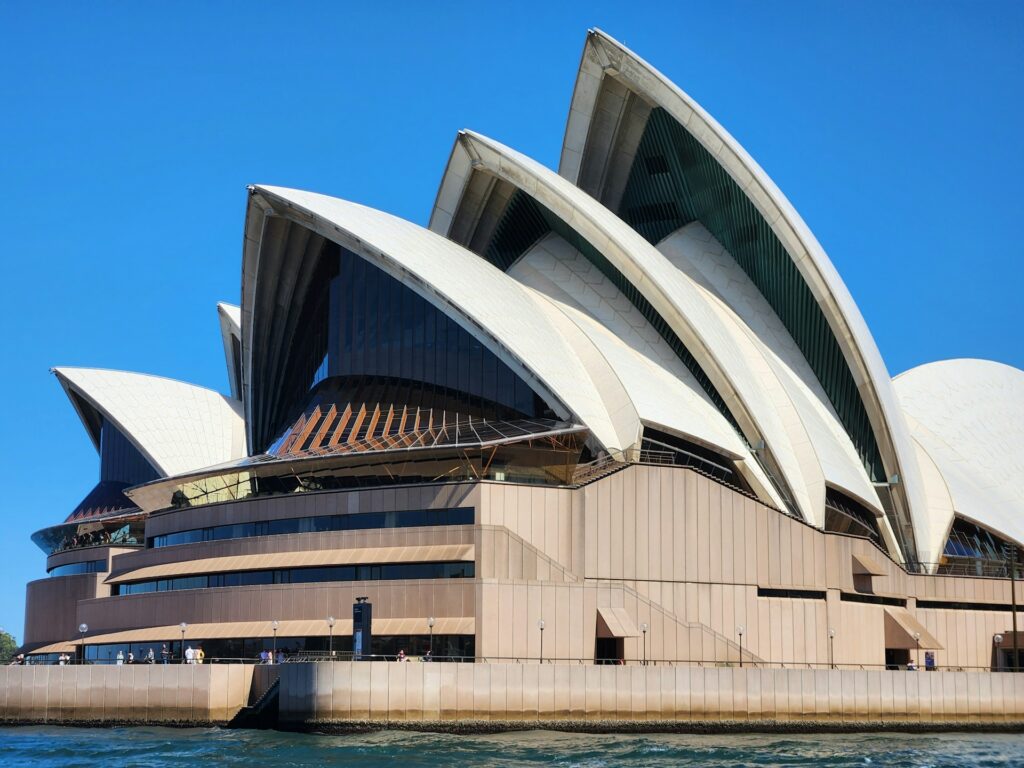
Sydney Opera House in Numbers
14 years
The time it took to build (1959–1973). It was originally scheduled for 4 years
233
The number of designs submitted for the 1957 international competition, won by Jørn Utzon
183 m
Building length
120 m
Maximum width
67 m
Height of the tallest shell above sea level
1 056 006
The exact number of Swedish-made ceramic tiles covering the roof
1.8 hectares
The total surface area of the roof (about 4.5 acres)
15 t
The weight of the largest precast concrete ribs supporting the roof structure
2 194
The number of precast concrete sections that make up the roof, held together by 350 km of steel cable
1 000
The total number of rooms inside the entire complex
2 679
The capacity of the Concert Hall, the largest venue in the building
10 154
The number of pipes in the Grand Organ, making it the largest mechanical tracker-action organ in the world
6 225 m2
The total area of glass used for the building’s specialized French-made curtains
1 000
The total number of rooms inside the entire complex
222 000 t
Total weight of the roof structure
588
Concrete piers supporting the structure
10.9 mln
The average number of people who visit the Opera House every year
2 000
The number of performances (concerts, operas, plays) held annually
15 500
The number of lightbulbs changed every year during routine maintenance
2007
The year it was inscribed on the UNESCO World Heritage List (it’s one of the youngest sites on the list)
What’s most intriguing about the Sydney Opera House isn’t its scale, but the structural breakthrough that made its radical geometry buildable: the decision to derive all roof shells from a single spherical form. By standardizing the curvature, engineers were able to prefabricate 2,194 precast concrete segments, transforming what first appeared as free-form sculpture into a repeatable, mathematically controlled system. Rather than rising through height, the building asserts itself through engineered horizontality — a structural landscape of interlocking shells that redefined how architecture could merge geometry, computation, and construction.
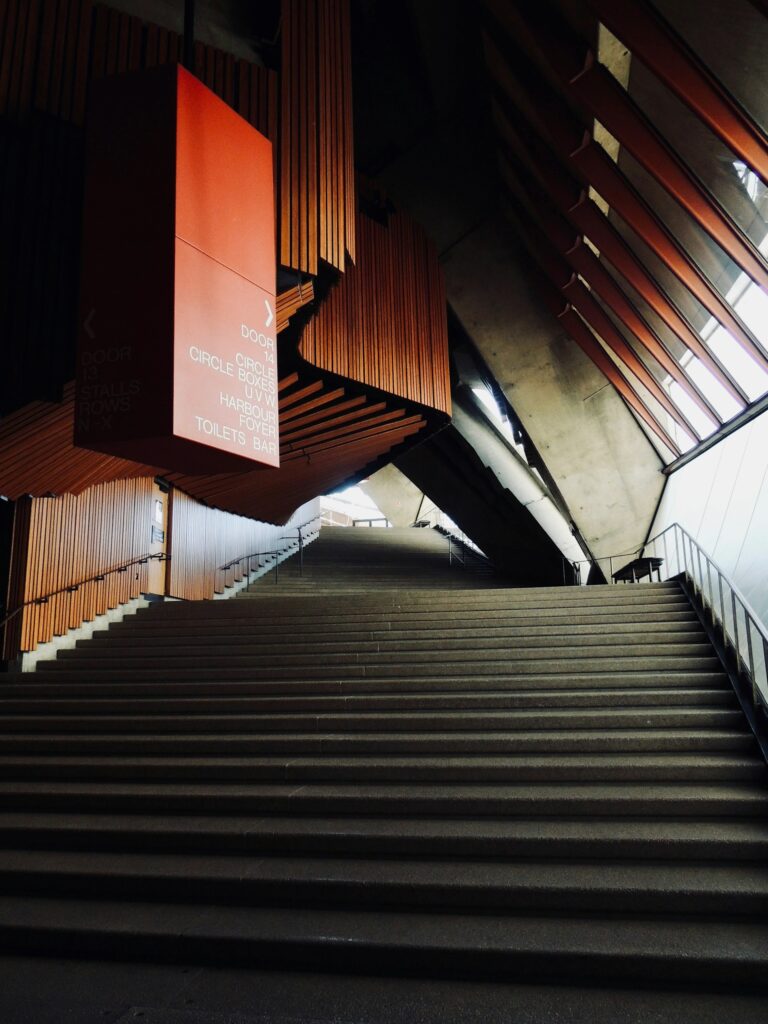
The Engineering Logic Behind Sydney Opera House
The engineering of the Sydney Opera House represents one of the most radical structural evolutions of the 20th century. What began as an expressive architectural vision by Jørn Utzon had to be translated into a system that could actually stand, resist wind loads from Sydney Harbour, and be constructed with the technological limitations of the 1960s. The original competition drawings did not include a fully resolved structural solution — meaning engineers had to invent one.
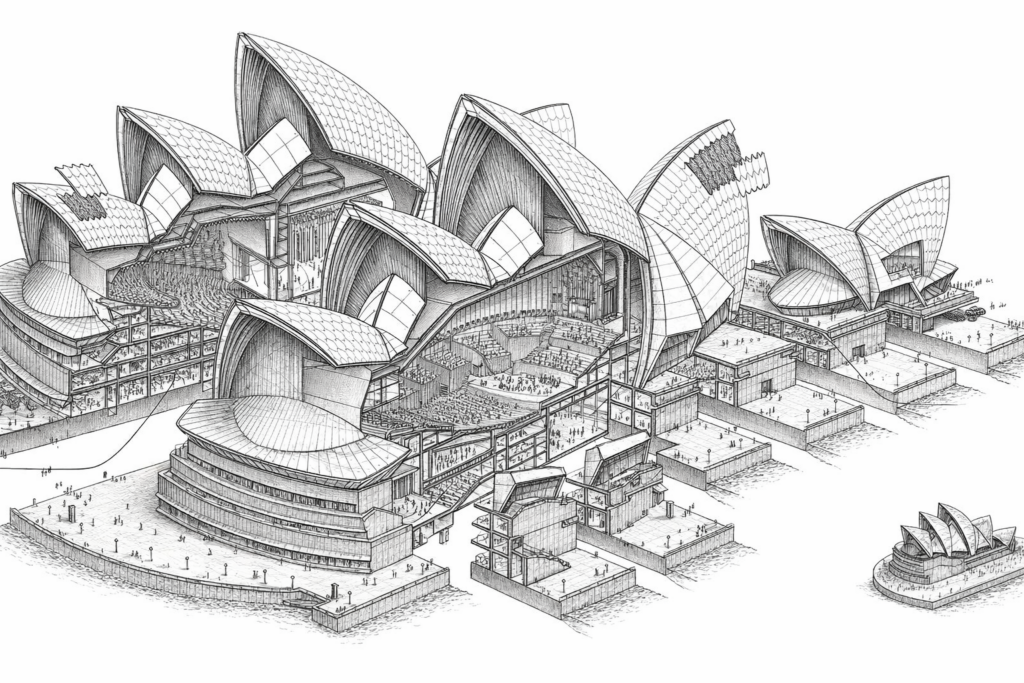
The breakthrough came with the “spherical solution.” Instead of treating each roof shell as a unique curved surface, the design was redefined so that every shell segment derived from a single imaginary sphere. This allowed repetition in formwork, standardization in precast elements, and mathematical predictability in load distribution. The roof ultimately consisted of 2,194 precast concrete ribs and panels, assembled like a three-dimensional puzzle. This was one of the earliest large-scale uses of computer-based structural analysis, marking a turning point in digital engineering workflows.
Beneath the shells, the podium structure plays an equally critical role. Built on Bennelong Point, the base had to anchor the immense roof loads while accommodating differential stresses between the heavy concrete platform and the lighter shell structures above. Hundreds of reinforced concrete piers transfer loads into bedrock below the harbour edge, stabilizing the building against both gravity and lateral forces. The separation between podium and shells also reflects a structural hierarchy: mass below, geometry above.
Acoustics later became another engineering frontier. The original halls required significant retrofitting and upgrades over decades to meet performance standards, particularly in the Concert Hall. This demonstrates that the Opera House is not a static achievement but an evolving technical system. Its engineering story is not just about daring form — it is about iteration, structural logic, and the moment architecture entered the computational age.
Economics, Cost and Urban Impact
The financial history of the Sydney Opera House is one of the most discussed case studies in modern construction economics. Originally estimated at AUD 7 million, the project ultimately cost AUD 102 million — a dramatic escalation that triggered political controversy, public debate, and the resignation of architect Jørn Utzon before completion. Funding eventually relied heavily on state lottery revenues, turning the building into a publicly financed cultural investment rather than a conventional state infrastructure project.
In the short term, the Opera House was perceived as a financial overreach. In the long term, it became one of Australia’s most powerful economic assets. Today the building contributes roughly AUD 700–800 million annually to the national economy through tourism, events, hospitality, and associated industries. It attracts more than 10 million visitors per year, with over 1 million ticketed attendees, generating direct revenue while stimulating broader spending in hotels, restaurants, and transport networks.
The Opera House fundamentally reshaped Sydney’s urban economy. Circular Quay and the harbour precinct evolved into premium real estate and high-value commercial zones, supported by the global branding power of the structure. Property values, international tourism visibility, and business investment in the surrounding district increased over decades, reinforcing Sydney’s identity as a world city. The building functions not only as a cultural venue but as a macroeconomic catalyst embedded in the city’s waterfront.
What began as a budgetary controversy ultimately became a long-term return-on-investment success. The Opera House demonstrates that iconic architecture, while risky and capital-intensive, can operate as strategic economic infrastructure — generating recurring financial impact far beyond its original construction cost.
Trivia
The Orange Inspiration
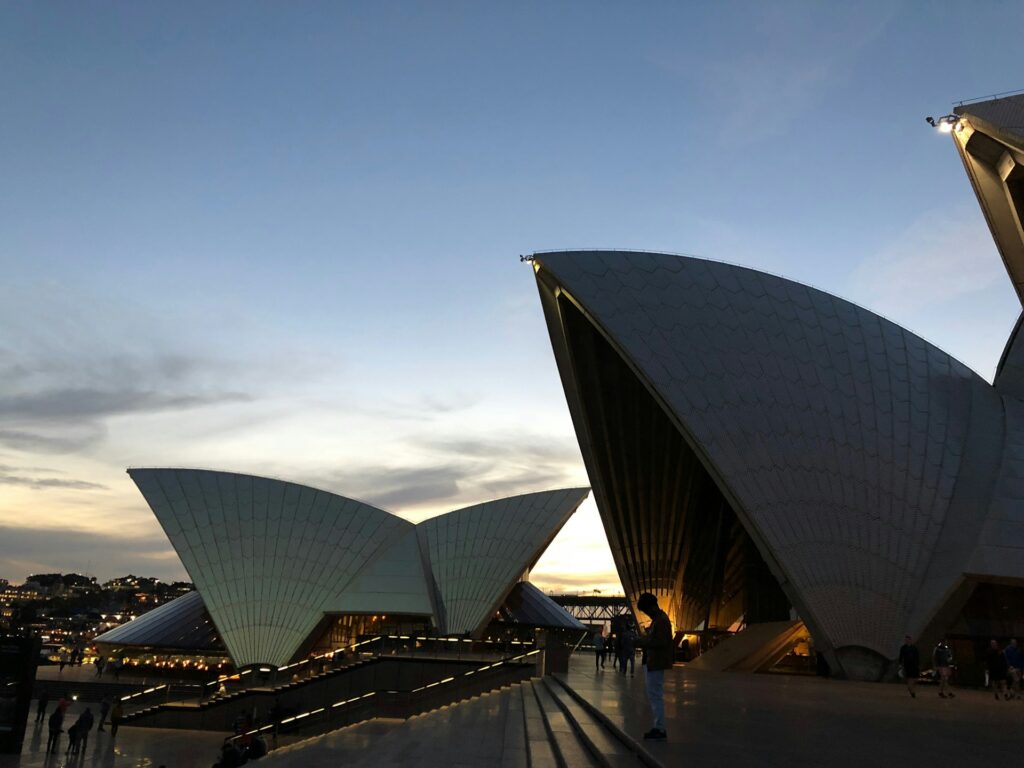
Architect Jørn Utzon famously claimed the design for the complex shells was inspired by peeling an orange. If you were to combine all the “sails” together, they would form a perfect sphere. This simple geometric solution solved a massive engineering headache that had stalled the project for years.
A Costly Masterpiece
The original budget for the building was set at a modest 7 million Australian dollars. By the time it was completed in 1973, the final bill skyrocketed to 102 million dollars. Most of this staggering amount was eventually paid for by a dedicated State Lottery.
The Self-Cleaning Tiles
The roof is covered in over one million Swedish ceramic tiles that appear solid white from a distance. In reality, they feature two different finishes: glossy white and matte cream. Their unique design makes them virtually self-cleaning, requiring only the natural Sydney rainfall to stay bright.
Cold Water Cooling
The Opera House features a revolutionary climate control system that was ahead of its time. It pumps cold seawater directly from Sydney Harbour through 35 kilometers of pipes to cool the entire structure. This sustainable method reduces the building’s reliance on traditional, energy-heavy air conditioning.
The Grand Organ’s Scale
The Concert Hall houses the world’s largest mechanical tracker-action organ, boasting an incredible 10,154 pipes. It took ten years to complete the planning and assembly of this massive musical instrument. It is so valuable and complex that it is considered a masterpiece in its own right.
Arnold Schwarzenegger’s Stage
The building isn’t just for high-brow opera; it has a history with professional bodybuilding as well. In 1980, the Concert Hall stage hosted the famous Mr. Olympia competition. This was the very event where Arnold Schwarzenegger won his final, and somewhat controversial, seventh title.
Global Heritage Status
In 2007, the Sydney Opera House was officially inscribed on the UNESCO World Heritage List. It holds the record for being one of the youngest sites to ever receive this prestigious honor. The committee described it as one of the indisputable masterpieces of human creativity.
The Glass Curtain
The glass used in the building was custom-made in France and is unique to this specific project. It consists of two layers—one clear and one tinted bronze—bolted together for extra strength. There is roughly 6,225 square meters of this specialized glass held in place by steel frames.
A Royal Opening
Queen Elizabeth II officially opened the Sydney Opera House on October 20, 1973. The ceremony was a massive spectacle featuring fireworks and a performance of Beethoven’s Symphony No. 9. Interestingly, the architect Jørn Utzon was not invited to the ceremony and did not attend.
The Missing Architect
Jørn Utzon resigned from the project in 1966 following a heated dispute with the New South Wales government over costs. He left Australia in a hurry and never returned to see his masterpiece in person. It wasn’t until the late 1990s that the Opera House Trust reconciled with him for future renovations.
Built on a Fort
The site where the Opera House stands is called Bennelong Point, named after an Indigenous Australian interlocutor. Before the iconic sails were built, the land was occupied by Fort Macquarie, a defensive fort and later a tram depot. Construction required the demolition of these old structures to make way for the new foundations.
Constant Maintenance
Keeping the world’s most famous roof in top shape is a never-ending task for the maintenance crew. Every single year, technicians replace approximately 15,500 lightbulbs throughout the vast complex. This ensures that the building remains glowing and functional for the millions of tourists who visit.