
Shanghai Tower: China’s Twisting Giant in the Sky
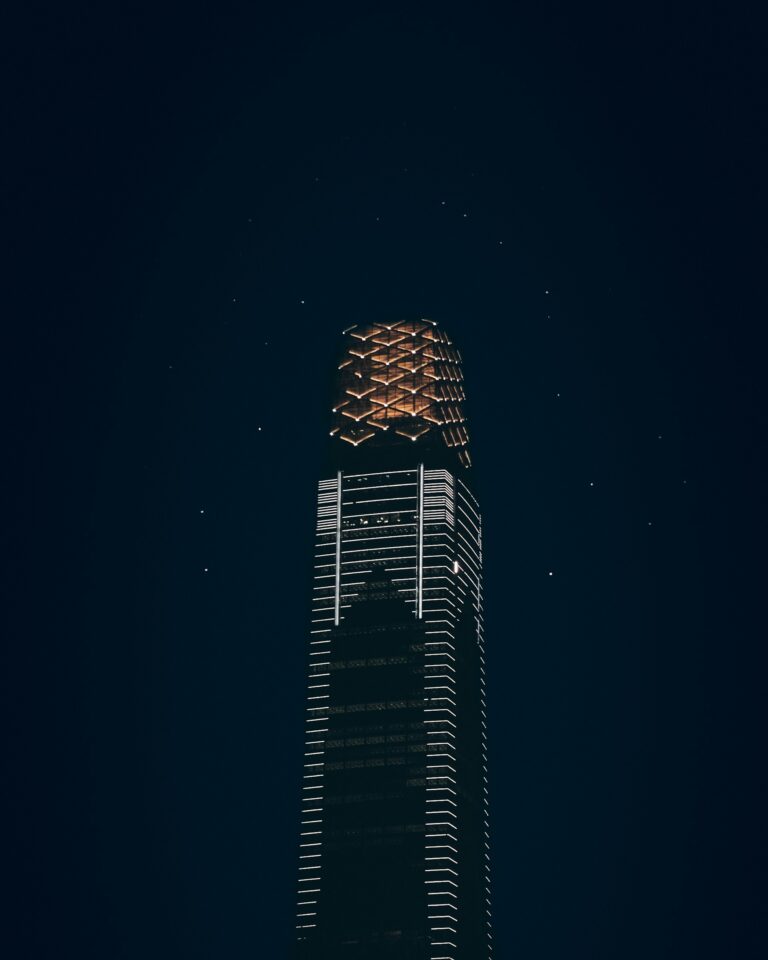
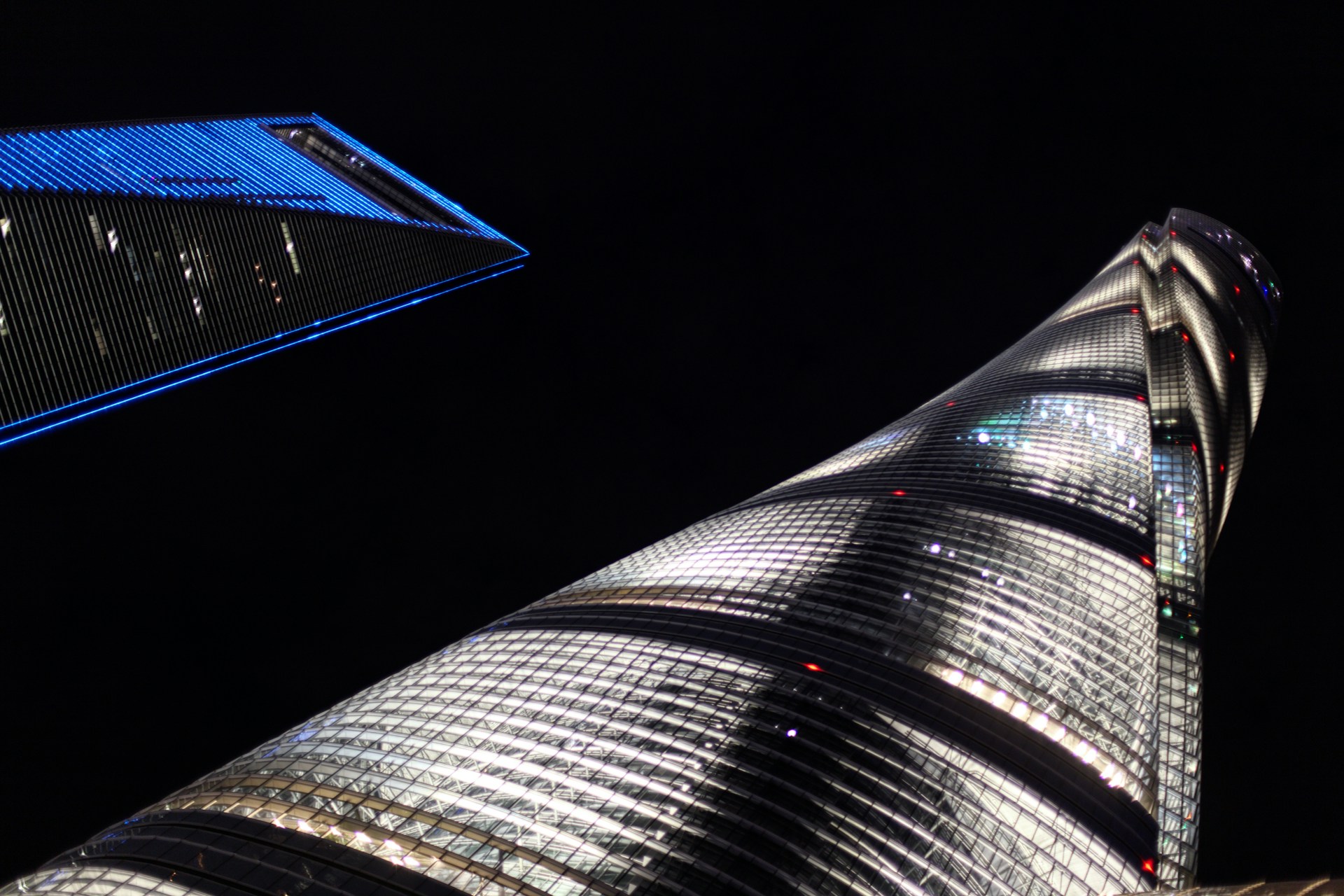
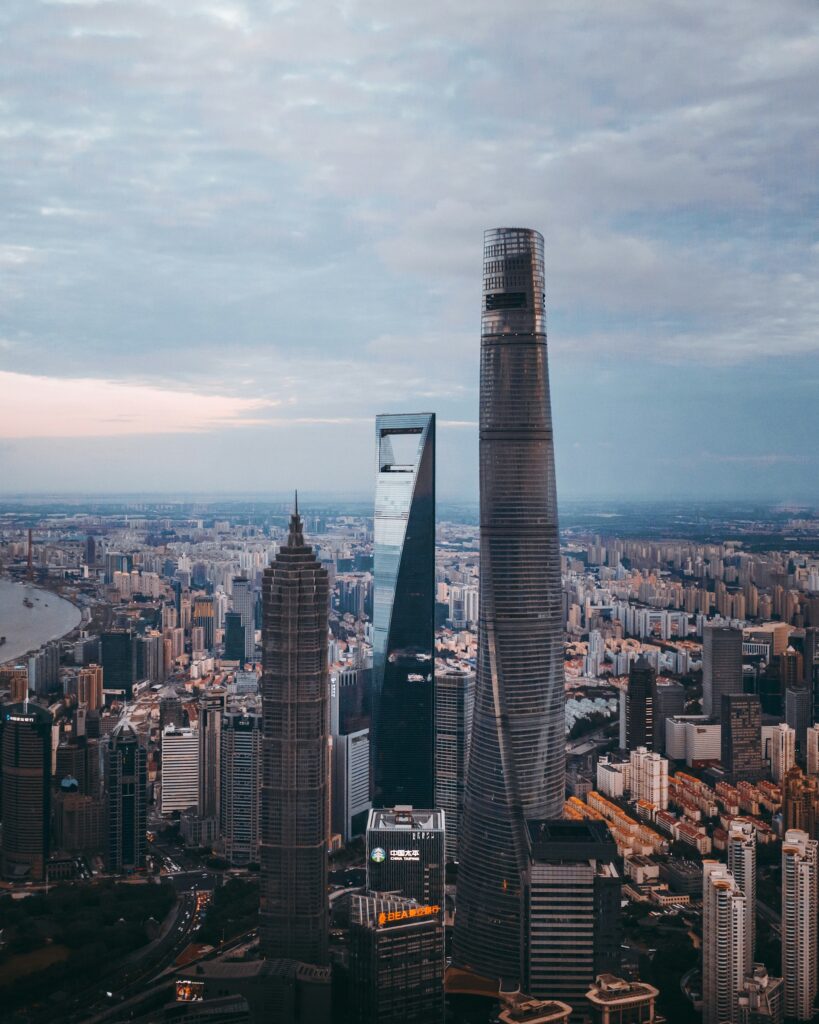
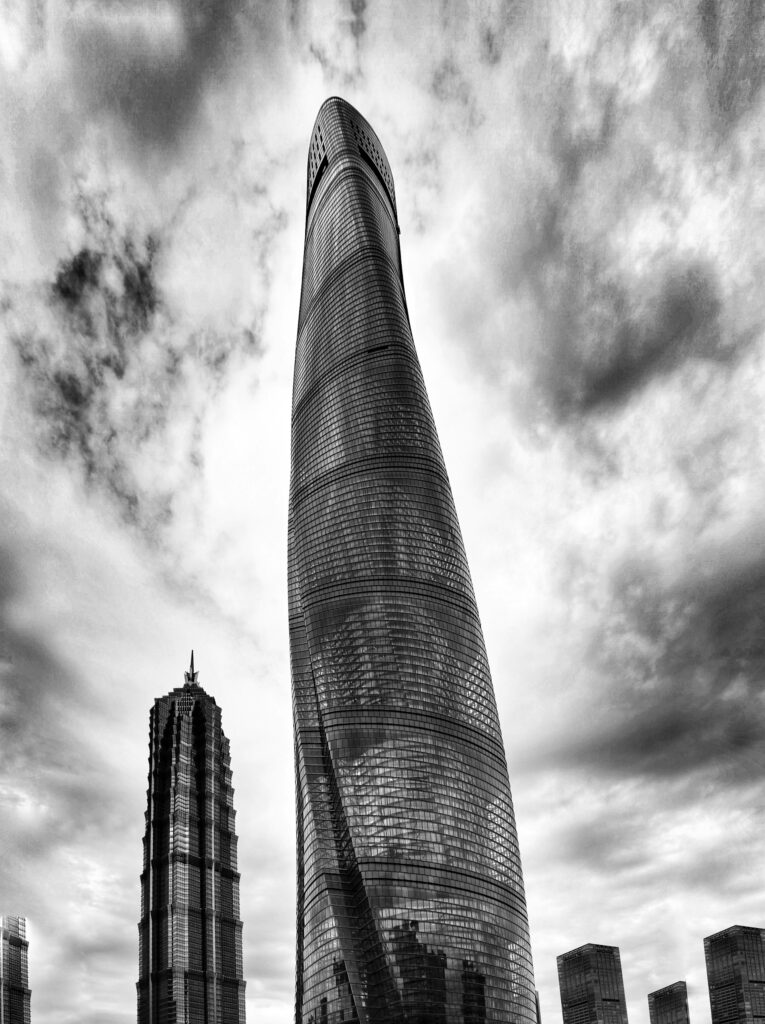
Shanghai Tower is not a building conceived to dominate the skyline by height alone. Rising from the dense cluster of Pudong’s financial district, it was designed as an infrastructural response to extreme scale—where wind, gravity, energy consumption, and human circulation become the primary generators of form. What appears as a smooth, elegant spiral is in fact the visible trace of quantified forces acting on one of the tallest structures ever built.
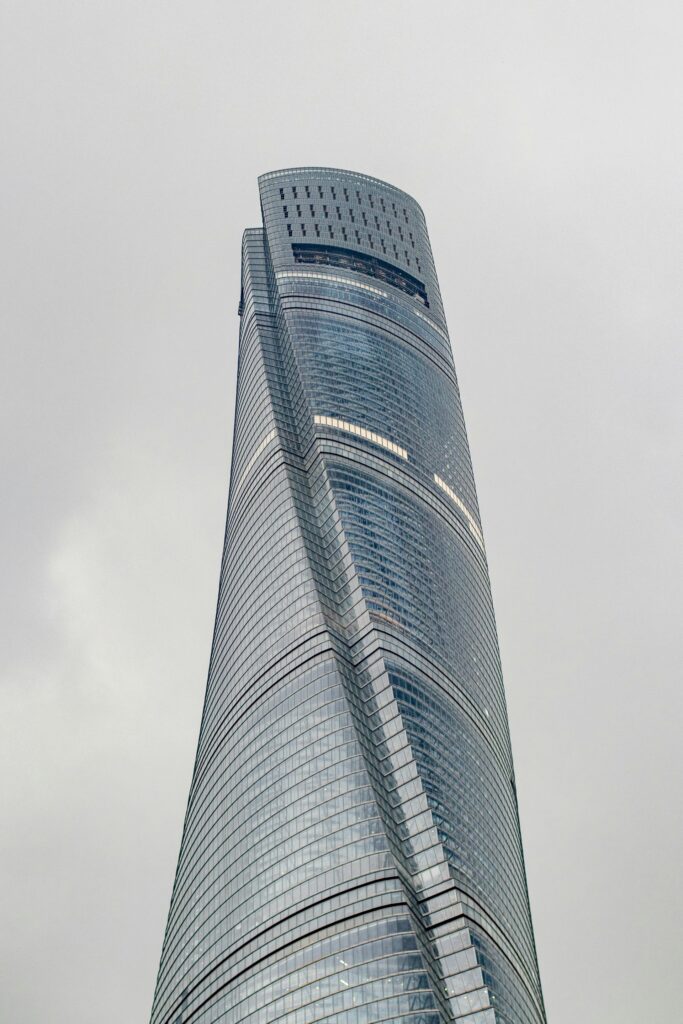
The tower’s architecture operates at a scale where conventional architectural intuition breaks down. At 632 meters tall, Shanghai Tower behaves less like a building and more like a vertical system: aerodynamically tuned, structurally optimized, and internally segmented into stacked neighborhoods. Its continuous twist and taper are not aesthetic gestures, but engineering strategies that reduce wind loads, material usage, and structural stress, allowing the tower to exist within tolerable limits of motion and efficiency.
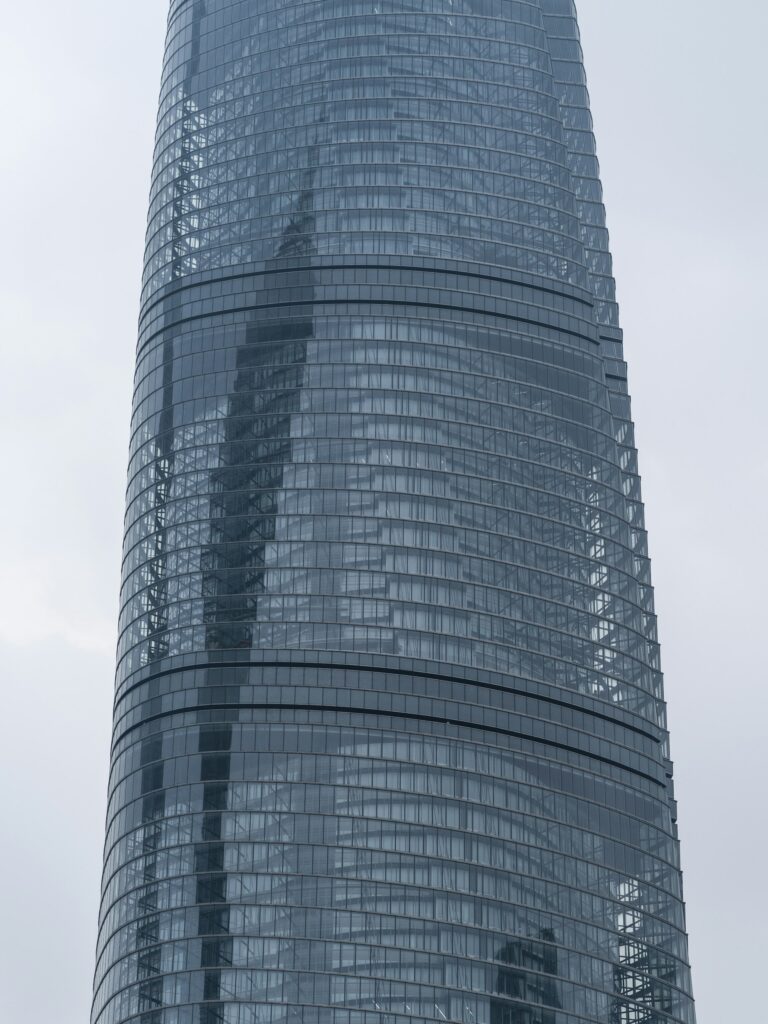
Rather than presenting a single monumental silhouette, Shanghai Tower dissolves its mass through rotation and transparency. The double-skin façade creates a series of vertical atria—intermediate climates suspended hundreds of meters above the ground—blurring the boundary between interior and exterior. In this way, the building does not simply rise from the city, but actively negotiates with the atmosphere surrounding it.
Shanghai Tower does not attempt to tell a cultural or historical story. Instead, it embodies a contemporary narrative of optimization, performance, and controlled excess. It is a symbol of a city operating at planetary scale—where architecture becomes a calibrated instrument, designed not to be understood at eye level, but to perform continuously under extreme conditions.
Shanghai Tower in Numbers : Height, Twist, Cost and Structural Logic
632 m
Architectural height of the towers
3
3rd place in the world – in terms of height (second only to the Burj Khalifa in Dubai)
583,40 m
Roof level: Above it is an openwork crowning structure.
128
Number of levels
380 000 m²
Floor area above grade
120°
Total rotation of the body from base to top
562 m
Height of the highest observation point “Top of Shanghai”
1 000 t
Weight of the Tuned Mass Damper located on the 125th floor
270
Number of wind turbines installed on 580m
20,5 m/s
Maximum speed of elevators
20 492
Number of facade panels on the external facade of various shapes
2,4 billion $
Total cost of construction
Shanghai Tower: Key Questions Answered
How tall is the Shanghai Tower?
The Shanghai Tower is 632 metres tall and has 128 above-ground floors,making it the tallest building in China and the third tallest in the world.
Is the Shanghai Tower twisted?
Yes. The tower rotates approximately 120 degrees from base to top,reducing wind loads by around 24%.
How much did the Shanghai Tower cost to build?
The total construction cost is estimated at around 2.4 billion US dollars.
What’s most intriguing about this building isn’t its height, but the aerodynamic logic that shapes its form. Shanghai Tower uses rotation and tapering to reduce wind loads, turning structural optimization into architecture rather than spectacle.
Engineering Against the Wind: The Structural Logic of Shanghai Tower
The architecture of Shanghai Tower is driven by quantified forces rather than formal ambition. Rising to 632 meters on the soft alluvial soils of the Yangtze River Delta, the building is founded on a piled raft system consisting of over 950 concrete piles, each extending up to 86 meters into the ground, tied together by a 6-meter-thick reinforced concrete raft. This foundation was designed to resist not only the building’s vertical load, but also extreme lateral forces generated by typhoon winds exceeding 50 m/s and seismic activity characteristic of the region.
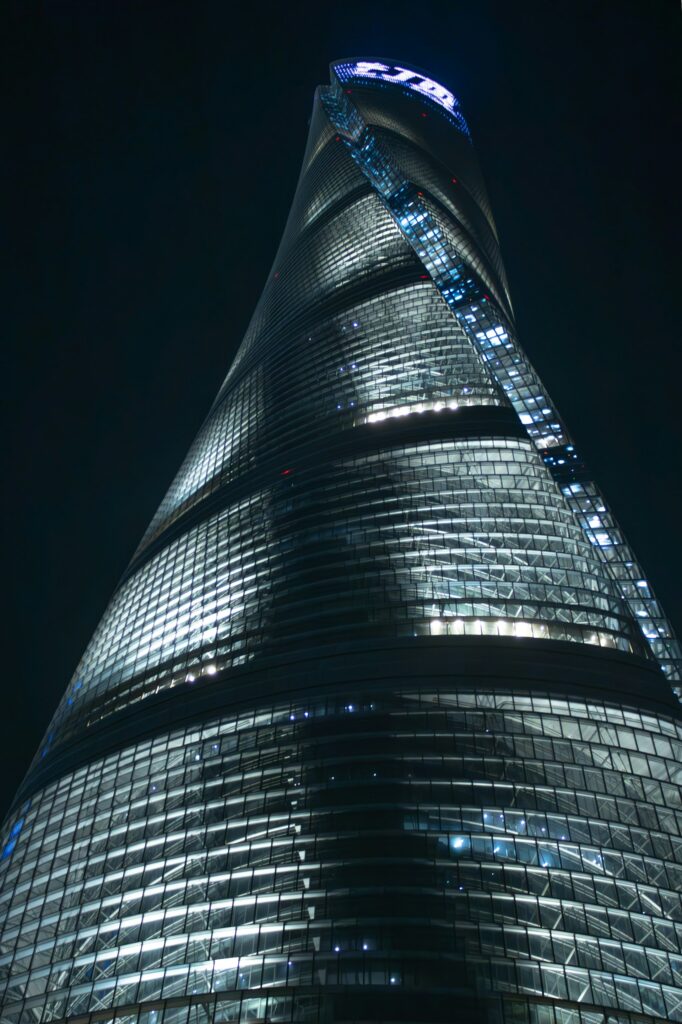
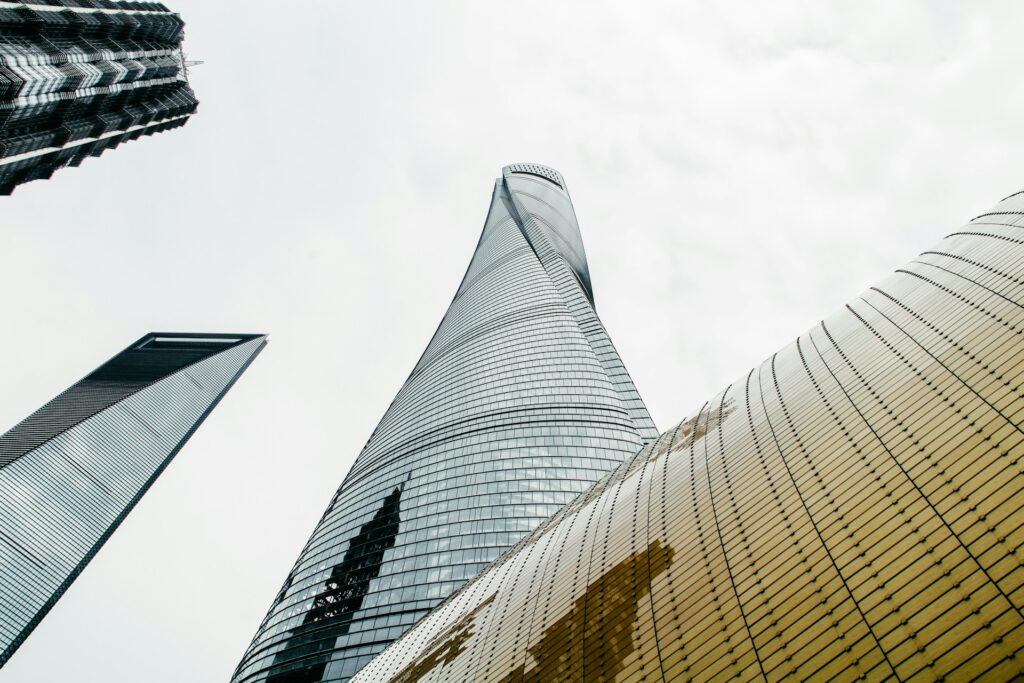
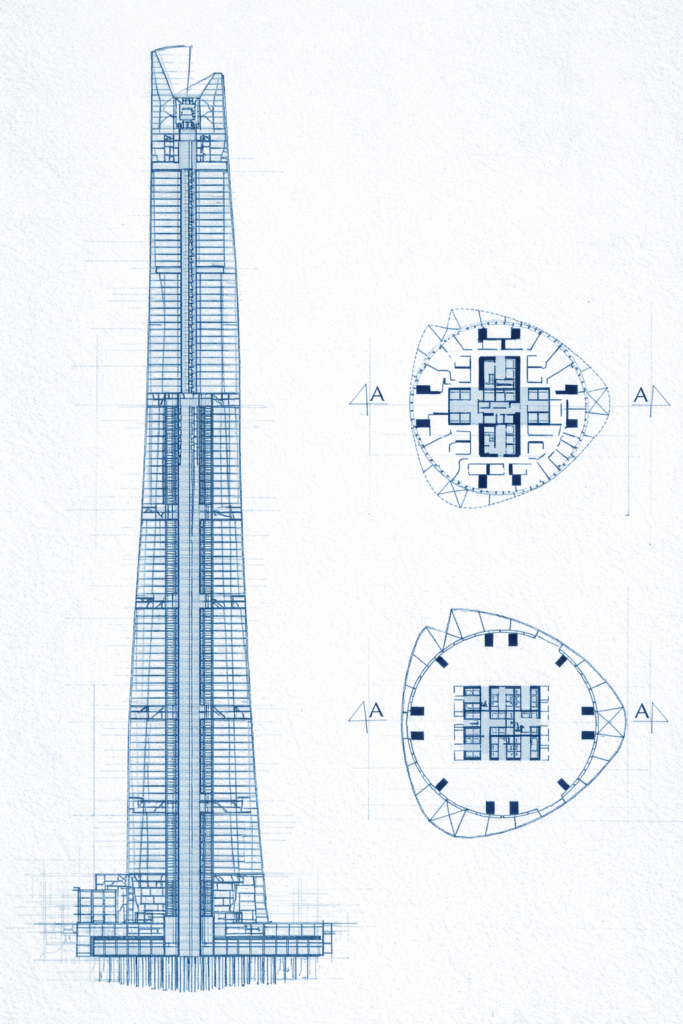
Above ground, the tower’s defining spiral is a direct aerodynamic response. Over its 128 above-ground floors, the plan rotates by a total of 120 degrees, while the floor plate area is reduced by approximately 55% from base to top. Wind tunnel testing demonstrated that this geometry reduces overall wind loads by roughly 24% compared to a conventional rectangular tower of similar height, allowing engineers to save an estimated 25–30% of structural steel, amounting to tens of thousands of tons.
Structurally, Shanghai Tower functions as a vertical cantilever nearly 600 meters tall. A reinforced concrete core—approximately 30 meters in diameter at its base—is paired with 8 perimeter mega-columns, linked through a series of outrigger and belt trusses at mechanical levels distributed across nine vertical zones. This system limits peak lateral drift at the top to well within comfort thresholds, despite wind-induced movements measured in hundreds of millimeters during extreme events.
Encasing the structure is a double-skin façade rising the full height of the building. The outer glass skin encloses a sequence of nine stacked atria, each several floors tall, creating buffer zones that reduce energy demand by approximately 20–25% compared to a single-skin envelope. The façade system incorporates more than 20,000 glass panels, designed to accommodate differential movements between the inner and outer structures without inducing stress concentrations.
The vertical transportation system reflects the same logic of scale. Shanghai Tower contains over 100 elevators, including high-speed units traveling at 20.5 m/s, once the fastest in the world. These elevators connect programmatic zones that function as stacked neighborhoods rather than continuous office floors, supporting a peak occupancy of roughly 12,000–14,000 people.
A Tower Built to Hold Value: The Economics of Shanghai Tower
The economic model of Shanghai Tower is based on long-term stability rather than rapid capital return. With a construction cost of approximately US$2.3–2.4 billion, the project was developed by a state-owned entity as a strategic anchor for Shanghai’s financial district, not as a speculative, profit-maximizing asset. Construction began in 2008, during the global financial crisis, extending the investment horizon to nearly seven years.
Revenue is driven primarily by Grade A office leasing, supplemented by retail, conference space, observation decks, and the J Hotel, one of the world’s highest hotels. Unlike entertainment-led megastructures, Shanghai Tower relies on sustained occupancy and land-value appreciation rather than mass tourism. In this sense, the tower functions as economic infrastructure—concentrating capital, prestige, and financial activity over decades rather than delivering immediate financial spectacle.
Trivia
120-Degree Spiral Efficiency
The building’s signature twist is a masterpiece of aerodynamic engineering rather than just an aesthetic choice. This 120-degree rotation reduces wind loads on the structure by 24%, which was crucial during Shanghai’s typhoon season. Consequently, the design saved the developers approximately $58 million in structural steel costs.
High-Altitude Power Plant
Near the summit, the tower houses 270 vertical-axis wind turbines that take advantage of strong high-altitude winds. This system generates roughly 150,000 kWh of electricity per year, which powers all of the building’s external lighting. It remains one of the highest renewable energy installations integrated into a skyscraper globally.
A Record-Breaking Hotel
The J Hotel, located within the tower, is recognized as the highest hotel in the world within a building. Guests check in at a lobby on the 101st floor, with luxury rooms extending up to the 110th floor. Even the most standard suites offer a panoramic view of the Shanghai skyline from over 400 meters in the air.
Sky High Gutters
The top of the tower is specifically shaped to collect rainwater into large internal storage tanks. This water undergoes a sophisticated filtration process and is reused for flushing toilets and irrigating the internal sky gardens. This sustainable water management system saves millions of liters of water every year.
Underground History Museum
Located on level B1, the Shanghai Tower Museum offers an immersive look at the history of the world’s tallest skyscrapers. Visitors can explore detailed architectural models and learn about the specific technologies used to build Shanghai’s iconic skyline. It serves as an educational starting point before visitors head up to the observation decks.
Ice Cooling System
The tower utilizes a massive ice-storage system in its basement that produces ice during the night when electricity rates are lower. During the heat of the day, the melting ice assists the air conditioning system, drastically reducing peak power demand. This strategy allows the building to maintain a perfect climate while significantly lowering its carbon footprint.
Earthquake Resilience
Despite its immense height, the building is designed to withstand a magnitude 9 earthquake on the Richter scale. The structure relies on a 30-meter-square concrete core connected to eight “super-columns” via massive steel outriggers. This flexible skeleton allows the tower to absorb and dissipate seismic energy without catastrophic failure.
Over 40 Green Technologies
Shanghai Tower is a “green lab” that holds both LEED Platinum and China Green Building Three Star certifications. It incorporates over 40 different energy-saving technologies, ranging from smart motion sensors to heat recovery systems. These efforts reduce the building’s total carbon footprint by 34,000 tons annually compared to traditional towers.
The Highest Concert Hall
A high-altitude acoustic chamber and concert hall are located over 500 meters up, designed for intimate world-class performances. Thanks to the mass damper system, musicians can perform even during high winds without any interference from building sway. It is considered one of the most exclusive cultural venues in Shanghai, accessible only by invitation.
Bird-Safe Radar Design
The facade was designed with the safety of migratory birds in mind, as they often collide with glass skyscrapers. Architects used specific glass patterns and lighting systems that are visible to birds but nearly invisible to the human eye. This makes the Shanghai Tower one of the most nature-friendly mega-structures in the world.
The Giant Thermos
The double-skin glass facade acts like a giant thermos, keeping the building warm in winter and cool in summer. The space between the two glass layers serves as an insulating buffer that pre-conditions the air before it enters the interior. This innovative design drastically reduces the energy required for air conditioning and heating.
Gardens in the Clouds
The tower features 21 “Sky Gardens” nestled between the inner and outer glass facades. These lush, plant-filled atria serve as social hubs for occupants and significantly improve the building’s internal air quality. By acting as a thermal buffer, these gardens help maintain a stable temperature throughout the vertical city.