
HARPA – architecture enchanted in numbers and light
Situated at the intersection of the city, ocean, and sky, Harpa is one of those buildings that doesn’t so much stand in the landscape as actively interact with it. Its form encloses Reykjavík’s harbor axis, simultaneously opening the interior to the water, light, and the variability of the Icelandic weather.
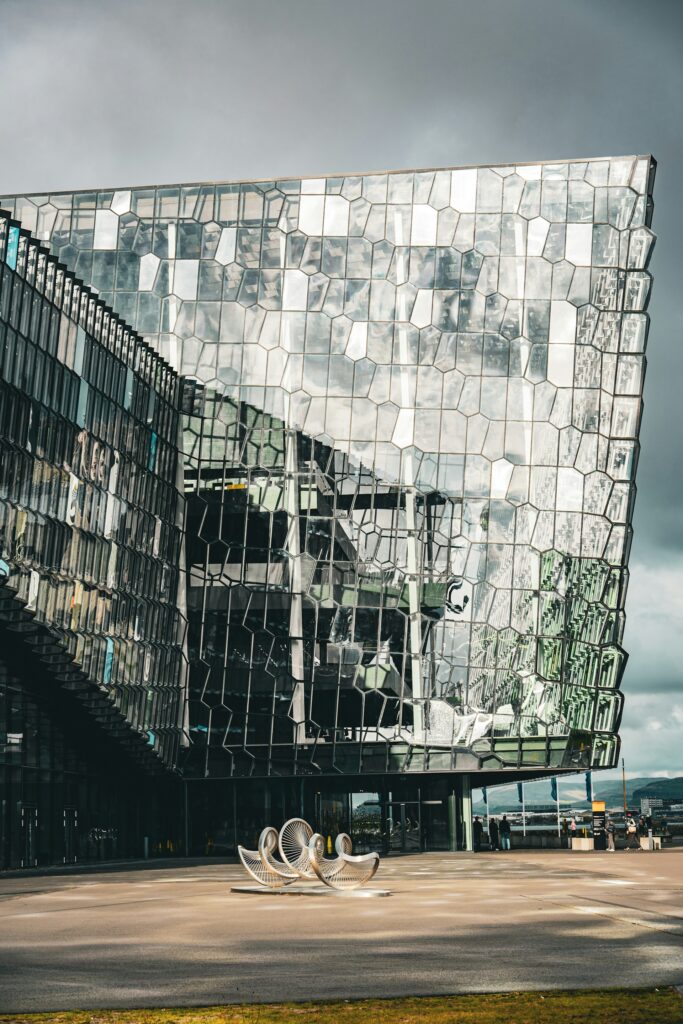
Harpa’s form was created as an architectural response to Iceland’s natural environment—the rhythm of waves, the crystalline structure of ice, and the geometric regularity of basalt columns. These natural phenomena were translated into a language of modules, repetition, and precise geometry, creating a building whose perception changes depending on the time of day, the season, and the angle of light.
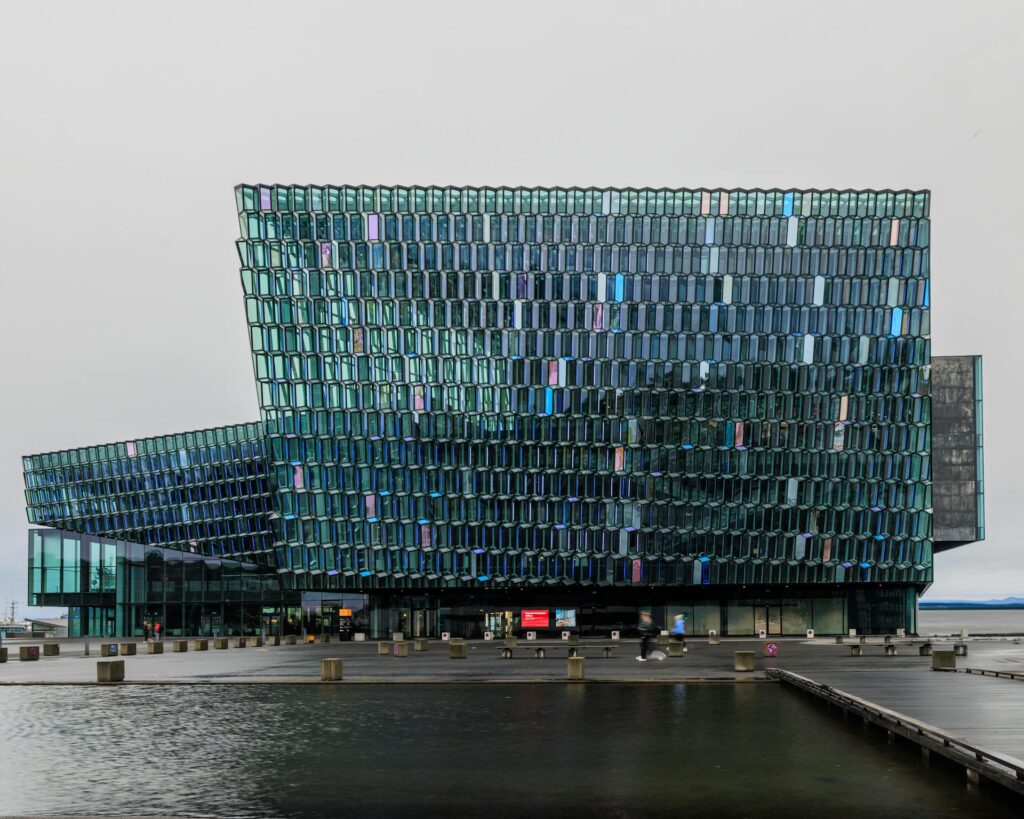
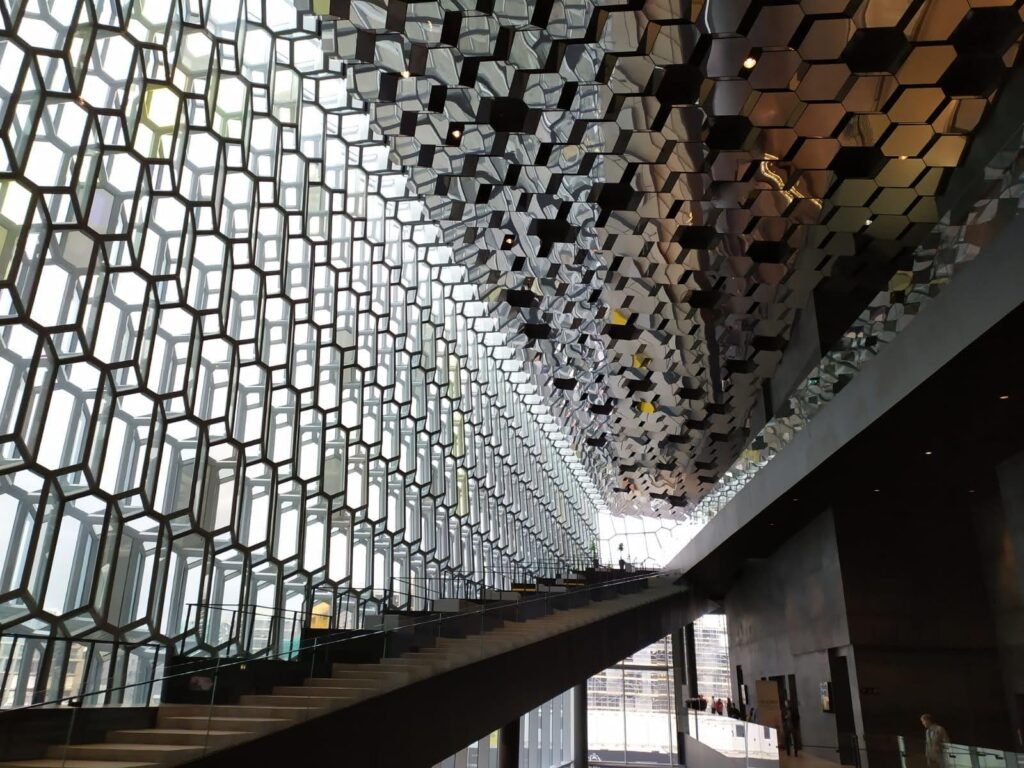
The building’s form consists of several interconnected volumes, housing concert halls, conference spaces, and an expansive foyer. This foyer serves as a public connection between the city and the water—a space accessible even outside of event hours, functioning as an internal city square.
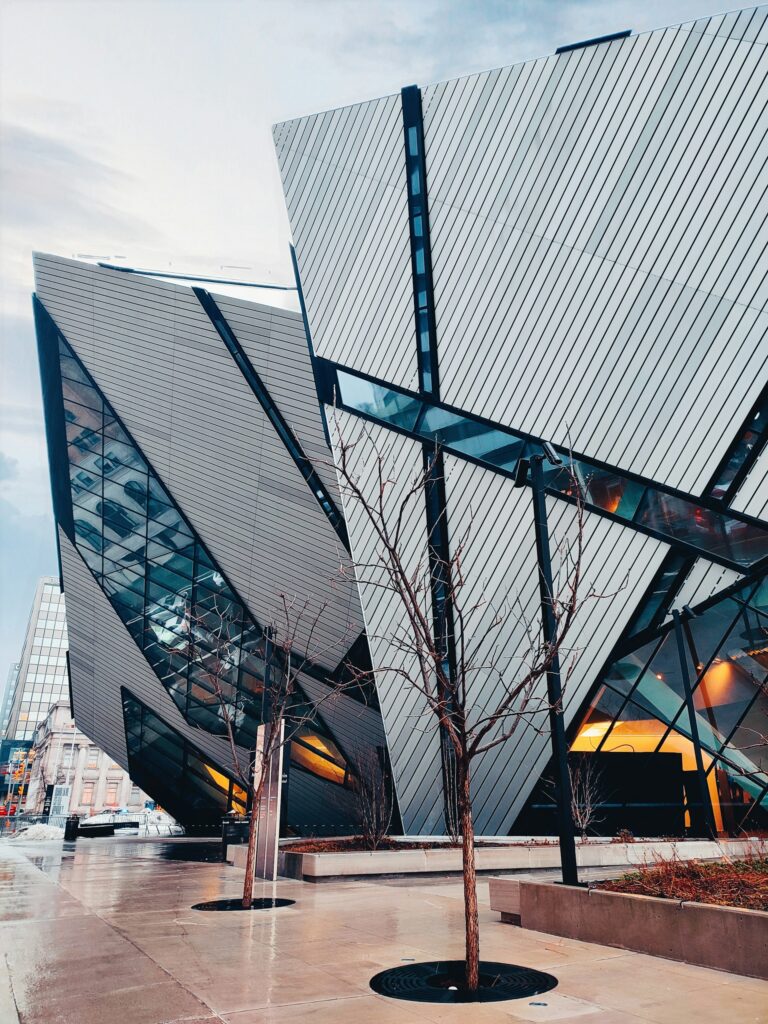
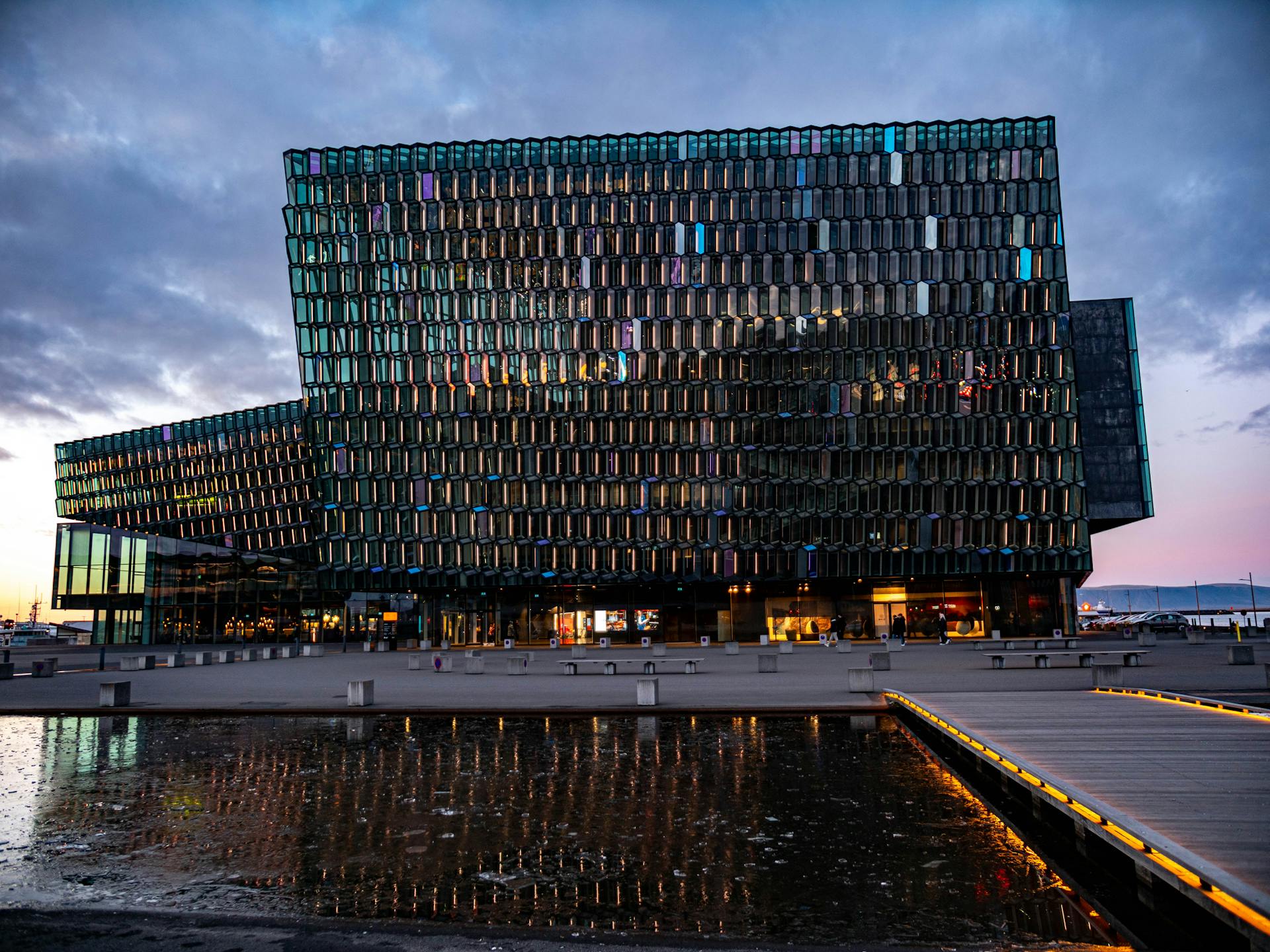
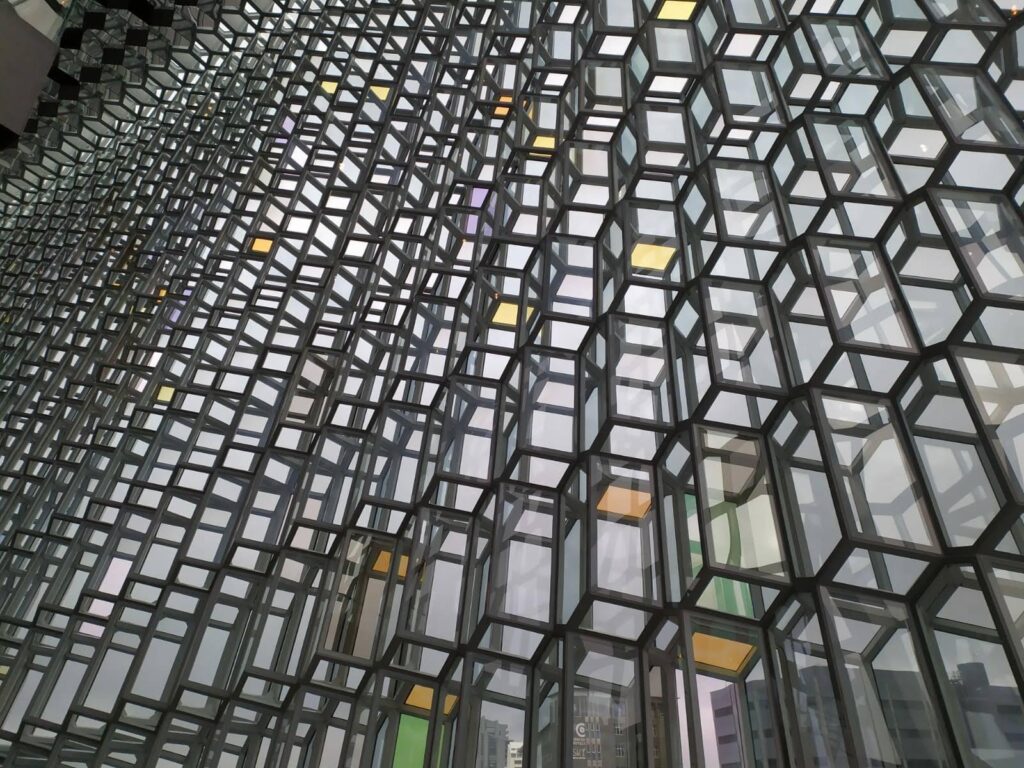
The building’s most recognizable feature is the façade on the south and east sides. Constructed from three-dimensional glass modules, it doesn’t merely enclose the building but becomes an active light filter. Each façade element reacts differently to the sun, clouds, and artificial city lighting, ensuring that Harpa never looks the same twice.
The result is a building where architecture, engineering, and mathematics are as important as function. Harpa doesn’t attempt to dominate the Reykjavík landscape—instead, it reflects, fragments, and organizes it, encapsulating Icelandic nature in thousands of precisely designed numbers.
HARPA in Numbers
A building that turns light into structure – we quantify the geometry, sound, and construction of Harpa.
~12 000 m²
Facade surface
1 800
Eldborg hall capacity
~1000
TNumber of glass blocks (Quasi-bricks)
1,7 – 3,8 s
Reverberation time
28 377 m²
Usable area
16 000
Corners connected by a glass structure
~30 000 m³
Concrete used
200 mln EUR
Finally cost
What makes this building truly intriguing isn’t its crystalline form, but the way its three-dimensional façade absorbs light, sky, and water. Harpa doesn’t simply sit on the Reykjavík waterfront; it becomes part of the horizon, constantly reshaping itself through reflections and weather, merging architecture with landscape.
Trivia
The mathematics of nature in glass
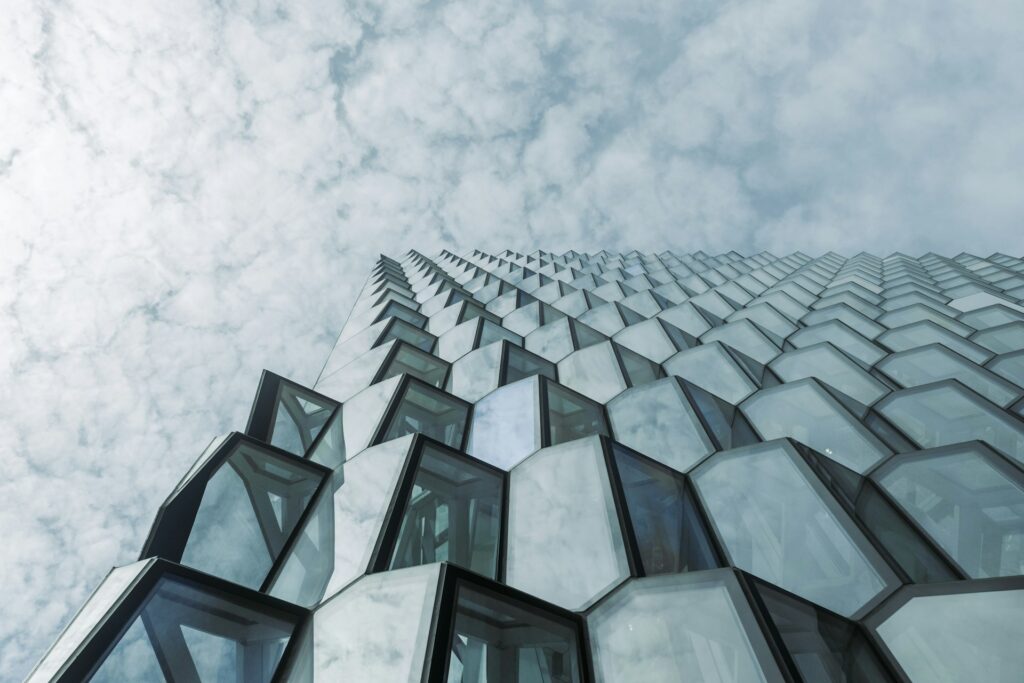
The building’s façade is no accident, but rather the result of a fascination with the geometric structure of basalt. Artist Ólafur Elíasson used so-called “quasi-bricks,” or twelve-sided shapes that fill the space without any interruption, creating a complex, crystalline grid.
An architectural symbol of survival
Construction of Harpa began in 2007, just before the devastating financial crisis that brought Iceland to the brink of bankruptcy. Although much investment in the country was halted, the government decided to complete the project, making it a symbol of the nation’s hope and determination.
Acoustic Chameleon
The main concert hall, Eldborg, features a system of movable panels and acoustic chambers that allow for the volume of the room to be varied. This allows the reverberation time to be precisely adjusted to suit the type of music – from intimate piano concertos to powerful symphonies.
Each module works independently
The façade was designed as a system of thousands of independent elements, rather than a single rigid shell. This is crucial in conditions of strong winds and temperature fluctuations – each module can compensate for structural movements without transferring stress to the entire structure.
Light as a building material
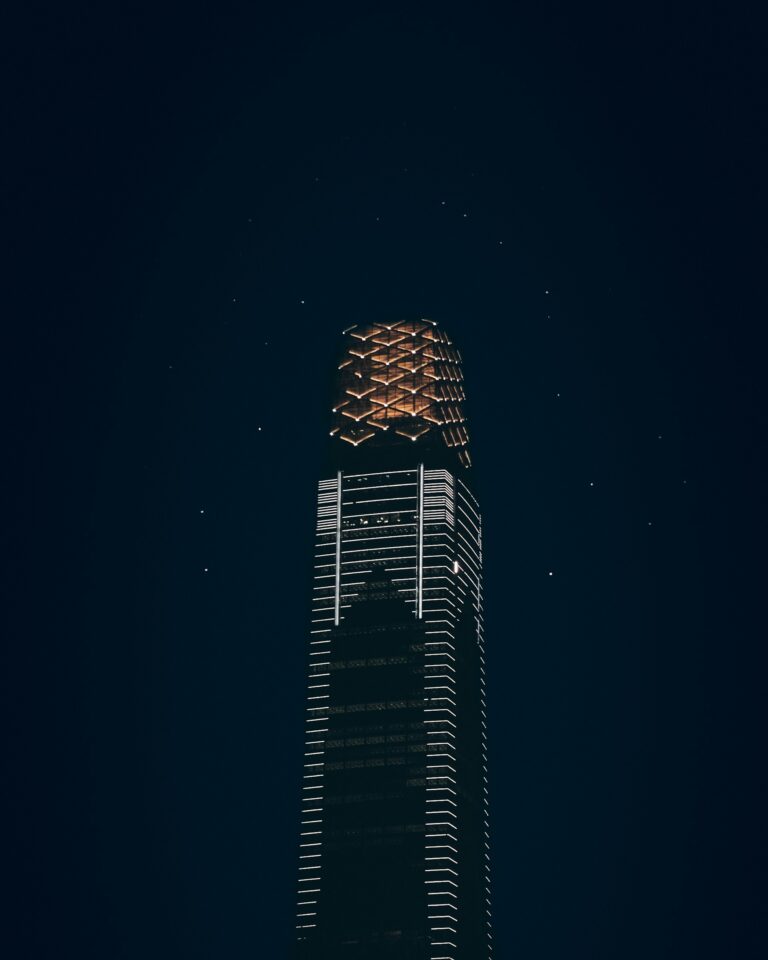
At Harpa, light is not a byproduct of the architecture, but one of its primary “design materials.” During the day, the façade responds to the sky and water, and at night—thanks to an integrated LED system—it becomes a light source itself.
Inspired by basalt, not ornament
The form of the modules refers to the natural structures of crystalline and basalt columns, rather than to historical architectural motifs. Harpa does not cite the past—instead, it transforms Iceland’s geology into a system of numbers and geometry.
A system designed for Iceland’s climate
The glass, steel, and aluminum were selected to withstand the salty air, humidity, and strong Atlantic winds. The modular design allows for the replacement of individual façade elements without the need to dismantle larger sections.
Visual irregularity, mathematical precision
Although the façade appears chaotic, its geometry was generated based on algorithmic rules of repetition and variation. It is an example of architecture where the artistic end result stems directly from mathematics.