
Evolution Tower — Twisting Logic in the Moscow Skyline
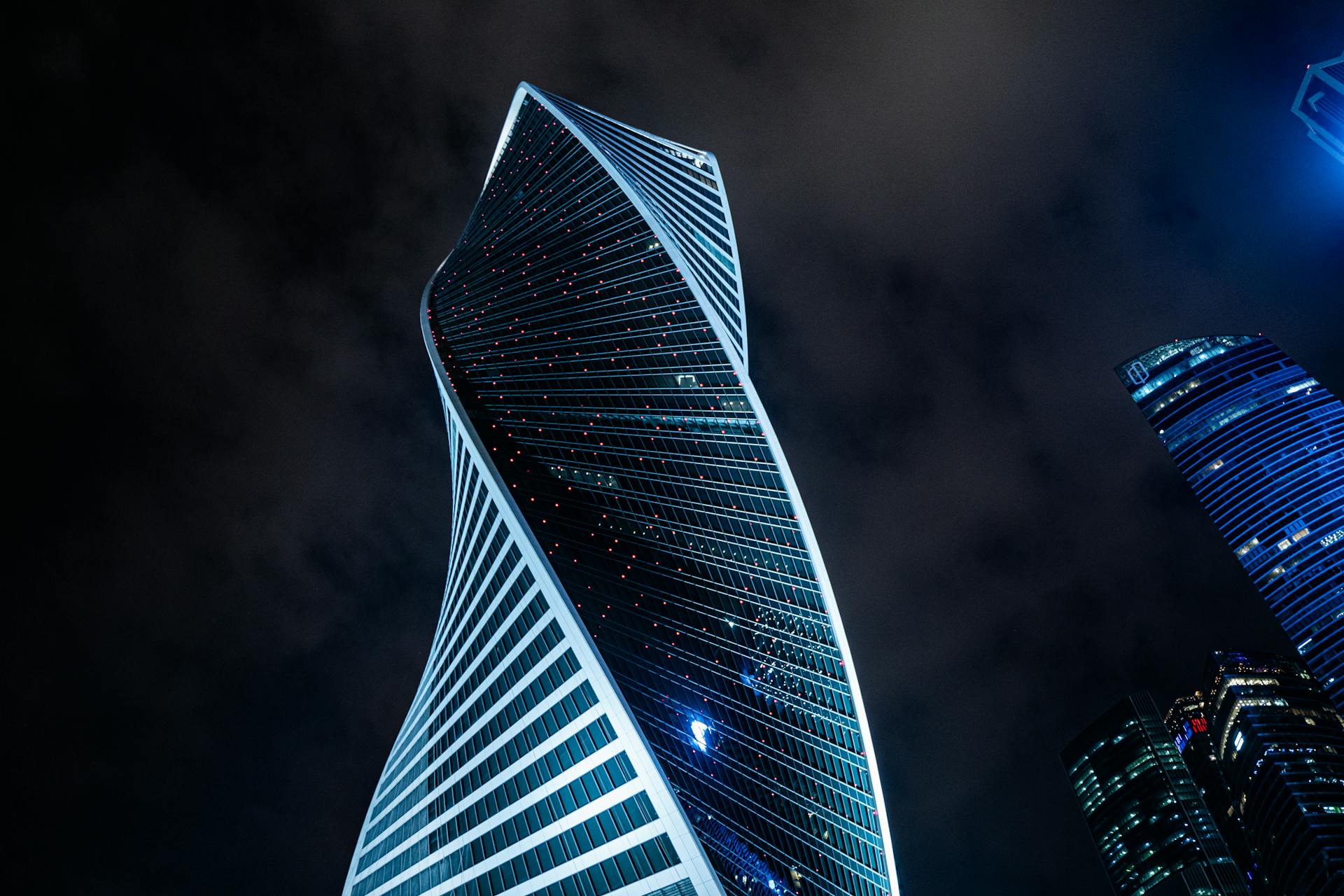
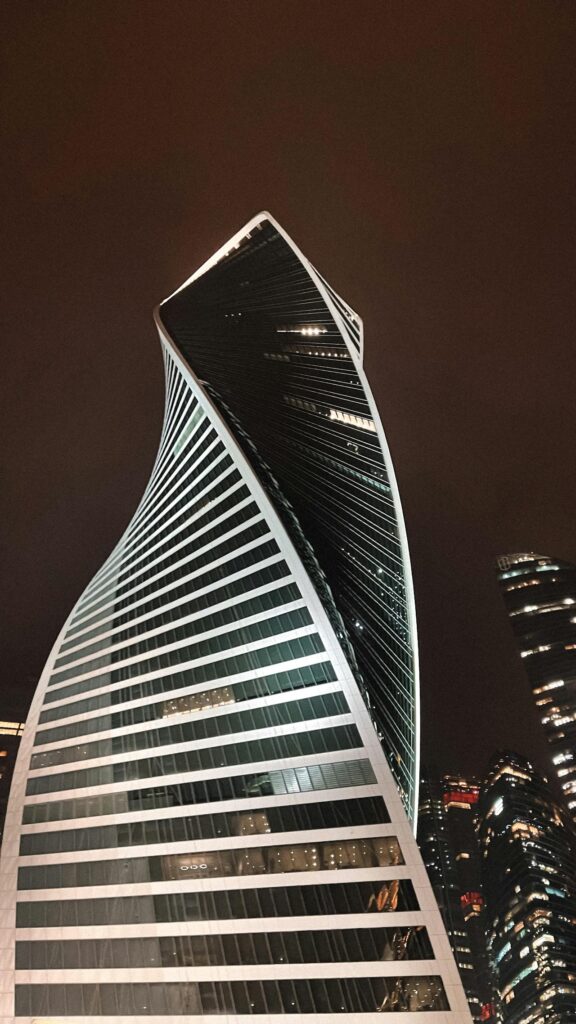
What makes Evolution Tower fascinating isn’t just its height, but the way geometry, structure, and symbolism collapse into one continuous motion. Rising from the Moscow International Business Center, the tower reads less like a static object and more like a frozen rotation — a skyscraper caught mid-turn. Designed as a visual metaphor for unity and development, its spiral form is not decorative bravado but a direct outcome of structural logic and façade engineering.
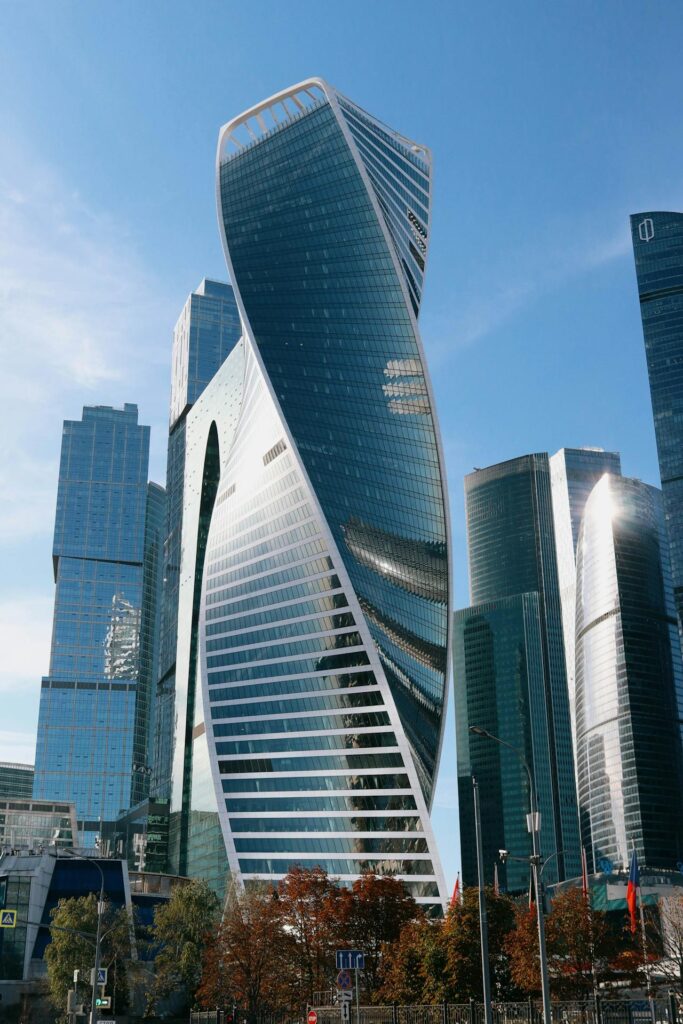
Completed in 2014, the building reaches 246 meters with 55 above-ground floors, yet its most defining feature is the 135-degree rotation from base to crown. Unlike earlier twisted towers that rely on rotated floor plates stacked vertically, Evolution Tower achieves its twist through a subtle, consistent angular shift paired with a rigid reinforced-concrete core. This allows the perimeter columns and floor slabs to remain structurally efficient while the façade absorbs the visual drama.
The tower’s structure is anchored by a monolithic concrete core, responsible for resisting wind and torsional forces generated by the rotation. Around it, radial floor slabs extend outward like spokes, maintaining regular spans despite the changing orientation. The result is a building that twists without fighting gravity — the geometry works with the load paths rather than against them.
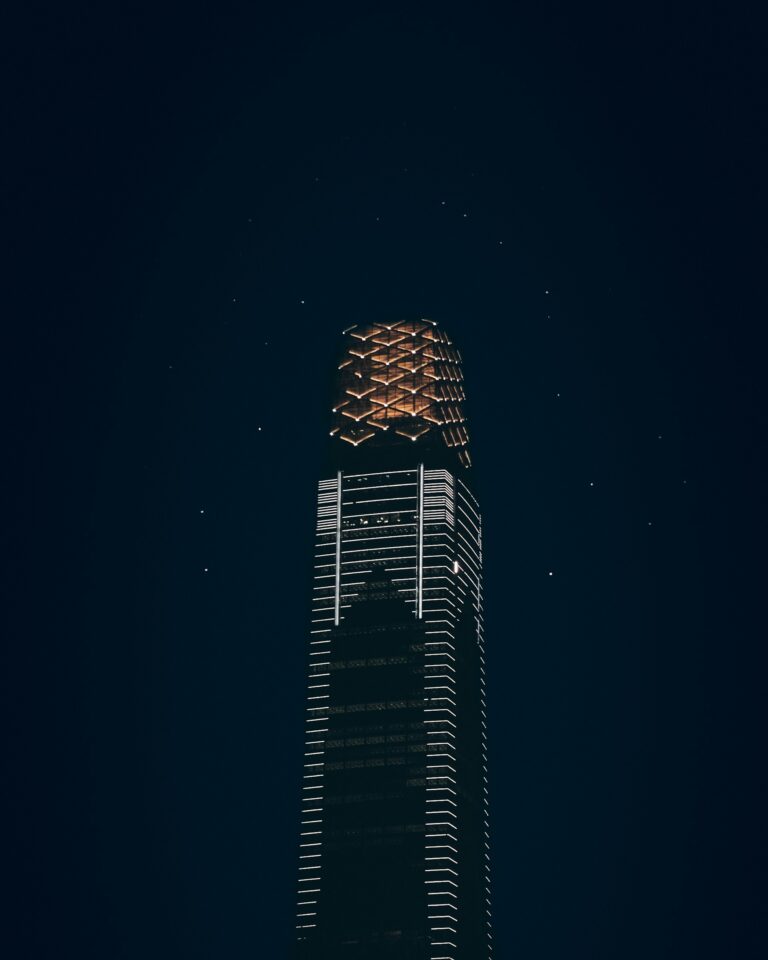
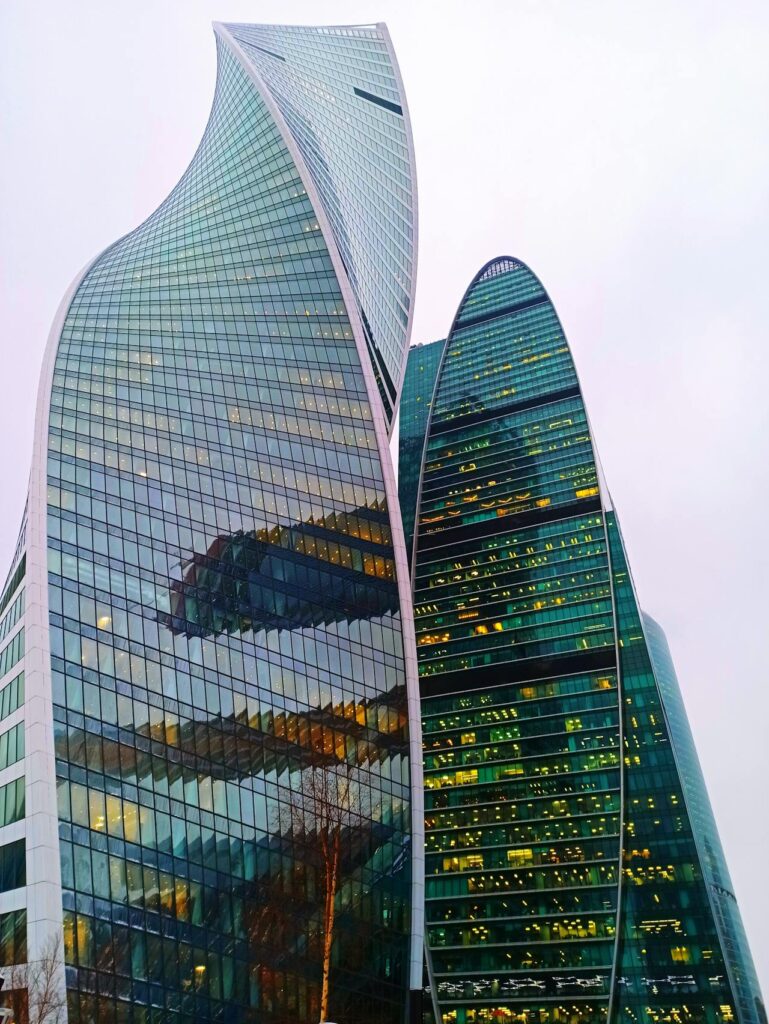
Equally important is the façade system. The glass skin is composed of cold-bent panels, each uniquely dimensioned, forming a continuous helical surface. Rather than forcing extreme curvature into single elements, the design relies on incremental angular adjustments, keeping manufacturing tolerances realistic while achieving a fluid appearance. In daylight, the tower reads as smooth and almost soft; at night, its edges sharpen into a precise spiral traced by reflections and light.
In a district dominated by aggressive verticality and visual competition, Evolution Tower stands apart by refusing brute force. It doesn’t shout through height records or mass, but through controlled motion and restraint. It’s a reminder that in high-rise design, innovation often lies not in how tall a building is — but in how intelligently it turns.
Evolution Tower in Numbers
246 m
Architectural height of the towers
~2,8°
Nominal rotation of one floor relative to the previous one
156°
Complete turnaround of the building from foundations to roof
55
Number of levels
~40 000 m²
Total area of the glazed façade (using “cold-bent glass” technology)
1/3000
Vertical core deflection tolerance maintained during construction (extremely stringent)
80 000 m²
Space intended exclusively for offices (class A)
60 m
The depth to which the foundation piles were driven
169 000 m²
Gross floor area (GFA)
~2 500 m²
Average area of one office floor
2014
Year of construction completion and commissioning
1,12 billion $
The amount for which Transneft purchased the tower in 2014 (a transaction considered one of the largest in the history of the Russian real estate market)
Rather than relying on height as its primary statement, Evolution Tower is defined by structural logic. The tower accommodates a continuous rotational geometry through a rigid concrete core and radially organized floor slabs, allowing loads to remain coherent despite the changing orientation of each level. Geometry here is not applied as form-making, but embedded directly into the structural system, making rotation a condition of stability rather than expression.
Trivia
Instagram Landmark
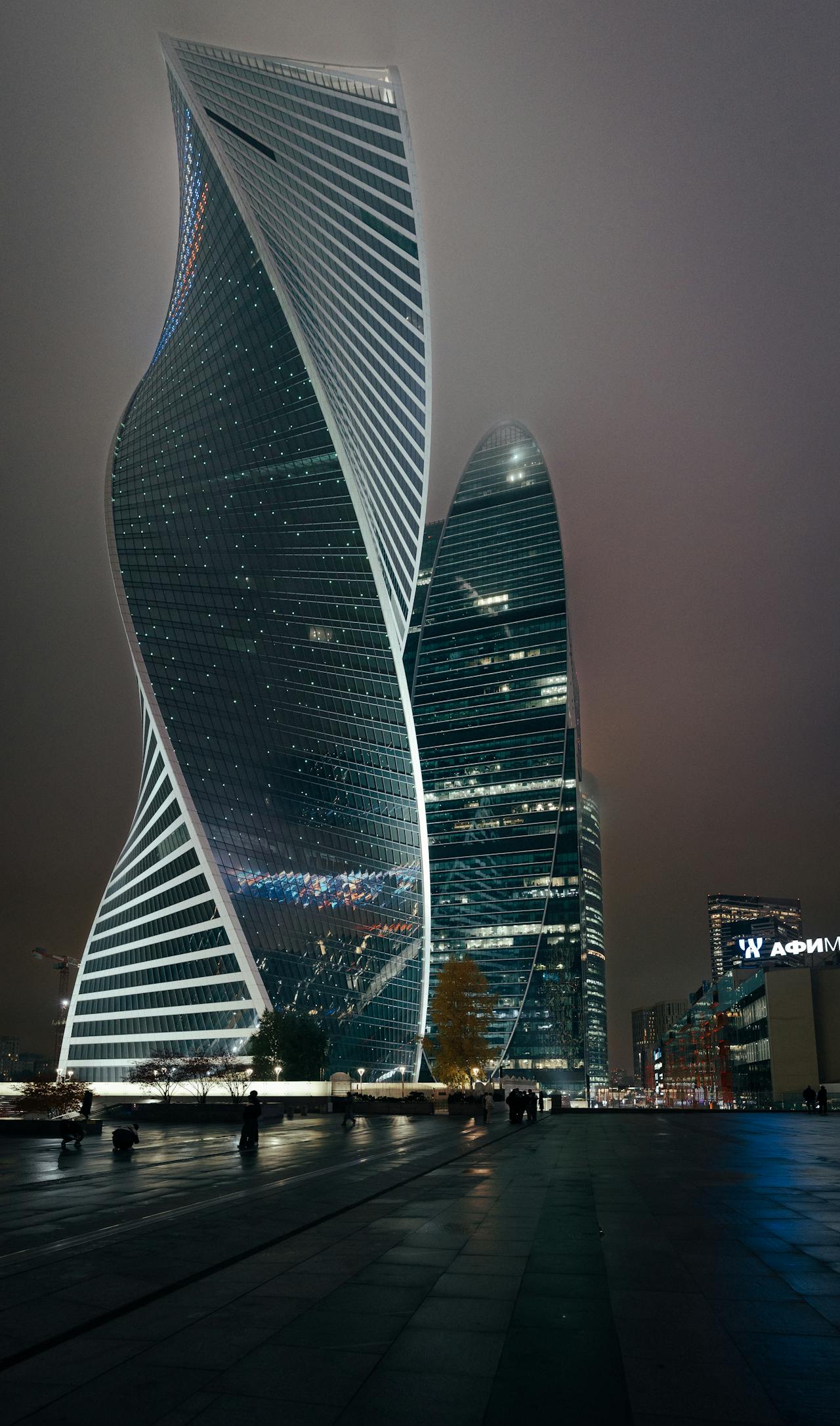
Evolution Tower is officially the most photographed skyscraper in Russia, often used as the “face” of modern Moscow in travel photography.
Climate-Controlled Connection
The tower is linked via an underground pedestrian gallery to the Metro and the Afimall City shopping center, allowing workers to commute without ever stepping outside into the Moscow winter.
Panoramic Reflection
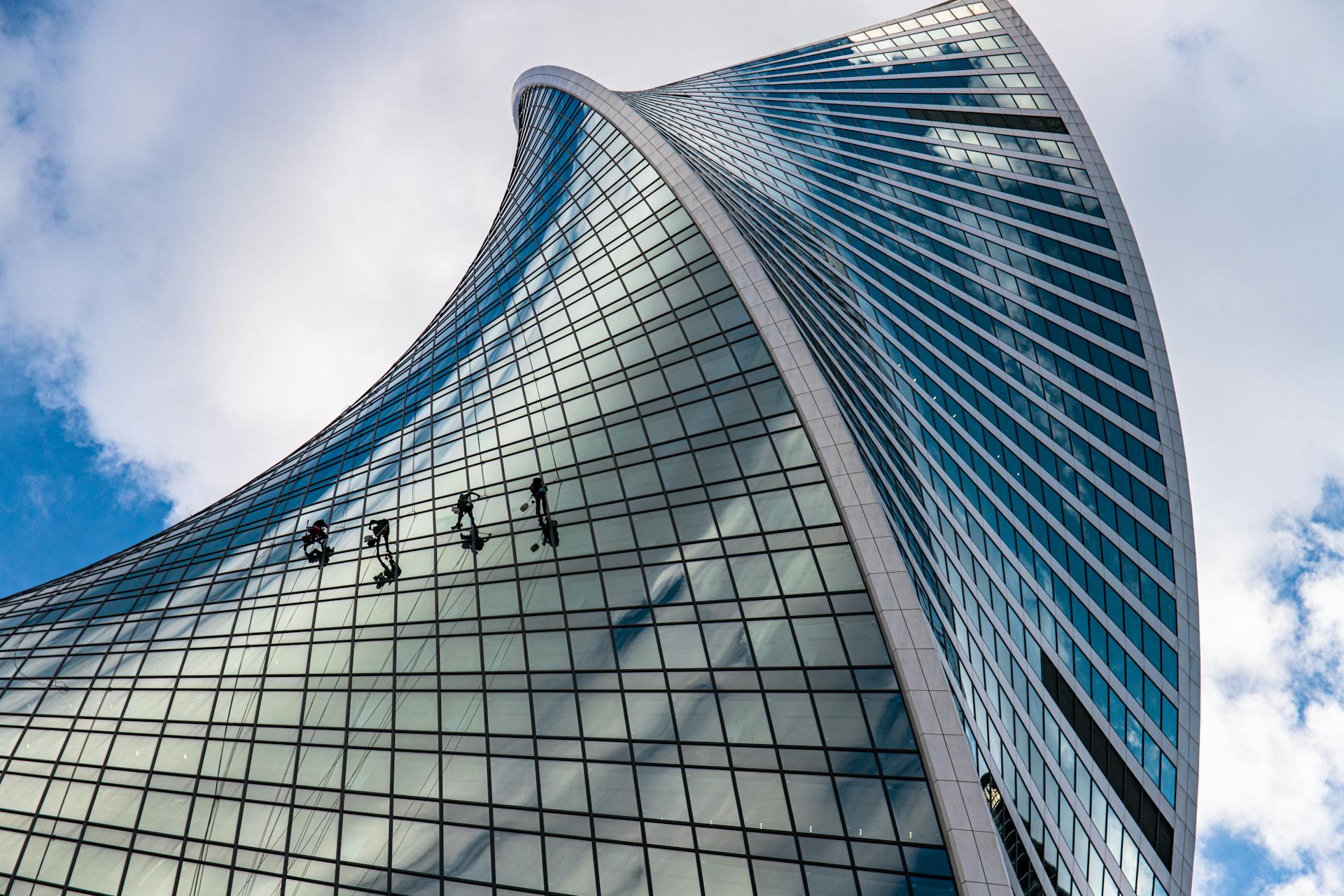
The high-performance glass acts as a giant mirror; on sunny days, the “twisting” reflection of the surrounding skyscrapers creates a surreal, distorted urban landscape on the tower’s surface.
The “Zero Cycle” Stall:
Although the concept was born in 2005, the 2008 financial crisis halted the project for years. Active construction on the tower’s structure only truly accelerated in 2011.
The “V” for Victory
The two opposite corners of the tower are designed to create a continuous “V” shape when viewed from certain angles, symbolizing “Victoria” (Victory).
Aerodynamic Advantage
The spiral shape isn’t just for looks; it helps disrupt wind flow and reduce wind vortex shedding, making the building more stable than a traditional rectangular skyscraper.
DNA Symbolism
While often compared to a DNA double helix, the architect (Tony Kettle) originally drew inspiration from Auguste Rodin’s sculpture “The Kiss,” representing two figures entwined in an embrace.
No Columns in Office Space
Office floors are designed as open-plan layouts without internal columns. Structural loads are redirected to the core and perimeter. This significantly increases flexibility for tenants.