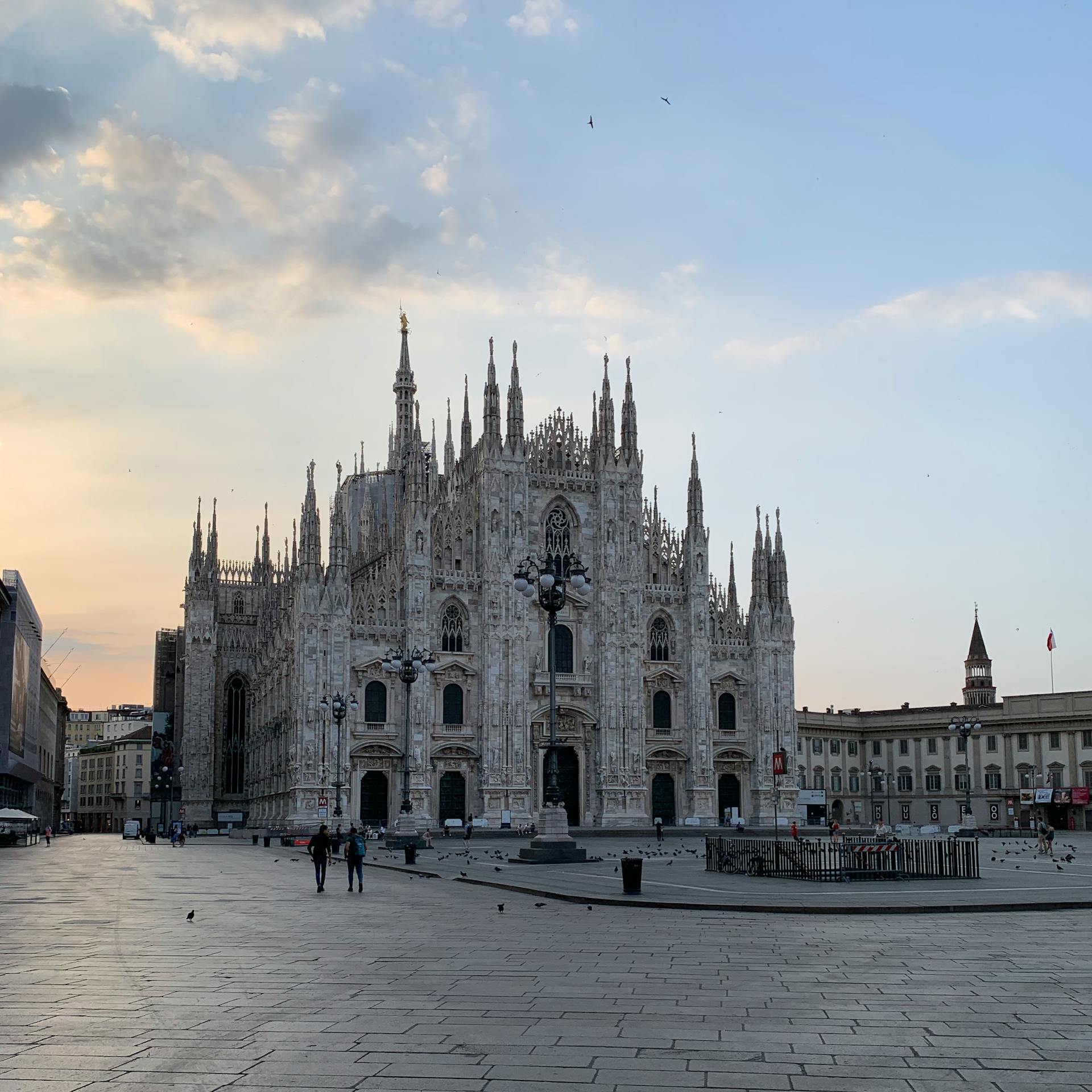

Duomo di Milano: Architecture That Refused to End
Duomo di Milano is not a building.
It is a process stretched across nearly six centuries, a record of a city that deliberately ignored the limits of its era, its material, and its own patience.
Construction began in 1386 with an almost irrational ambition: to erect one of Europe’s largest Gothic cathedrals almost entirely in marble—a material expensive, heavy, and structurally unforgiving. Instead of compromise, Milan chose escalation. Each generation of architects added new layers of stone, detail, and reinforcement, transforming the project into something closer to a stone-based survival strategy than a conventional church.
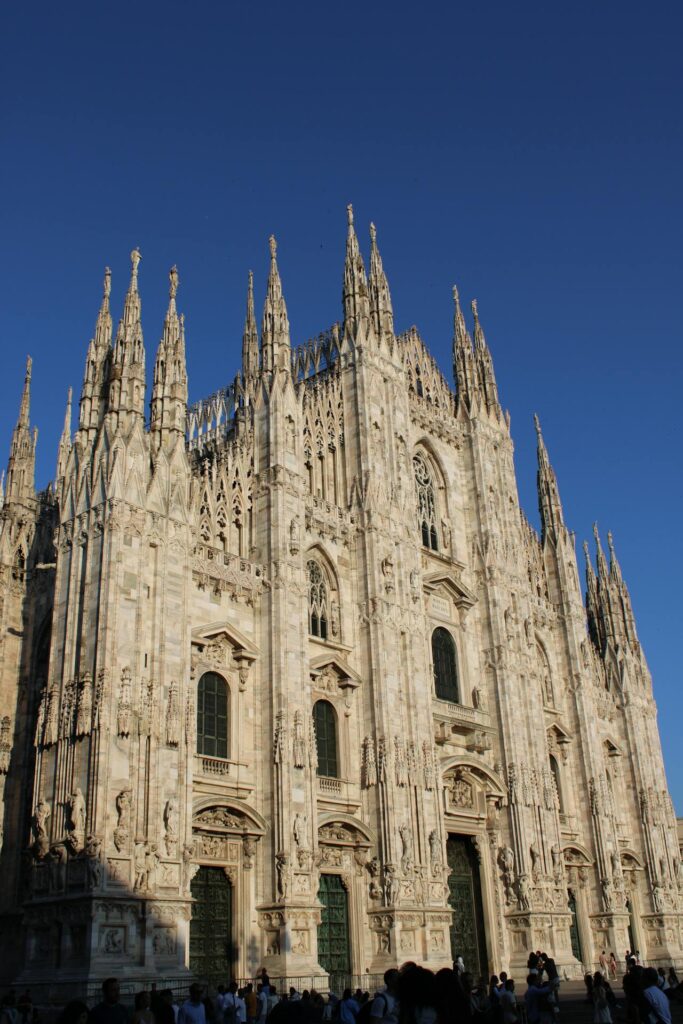
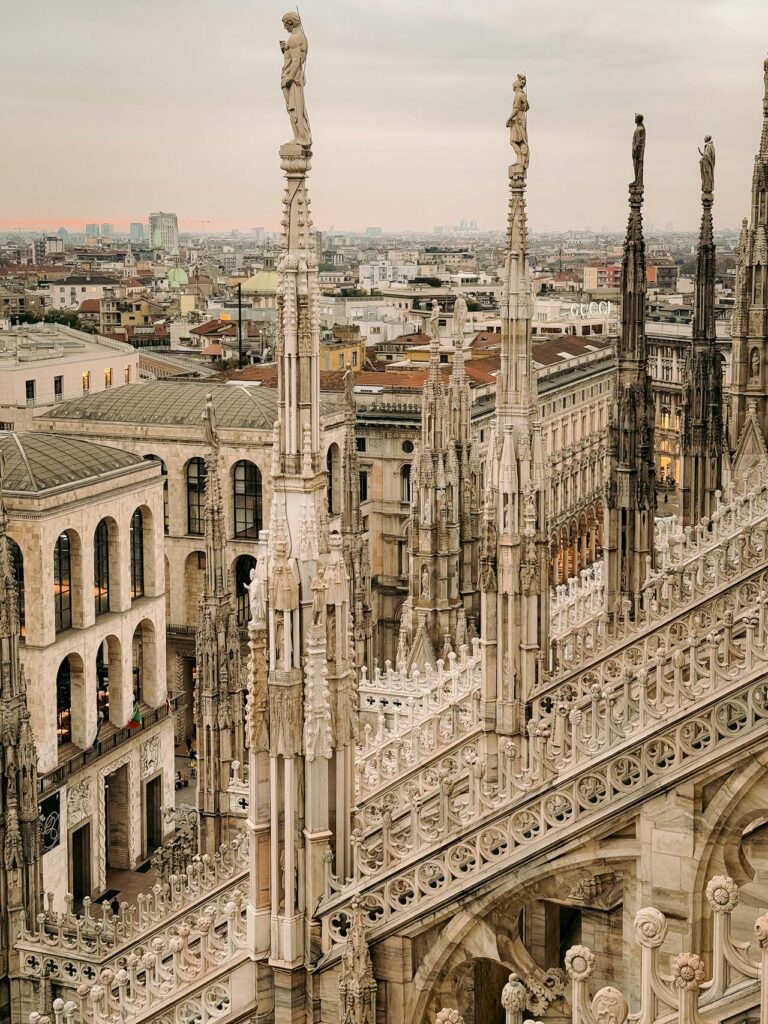
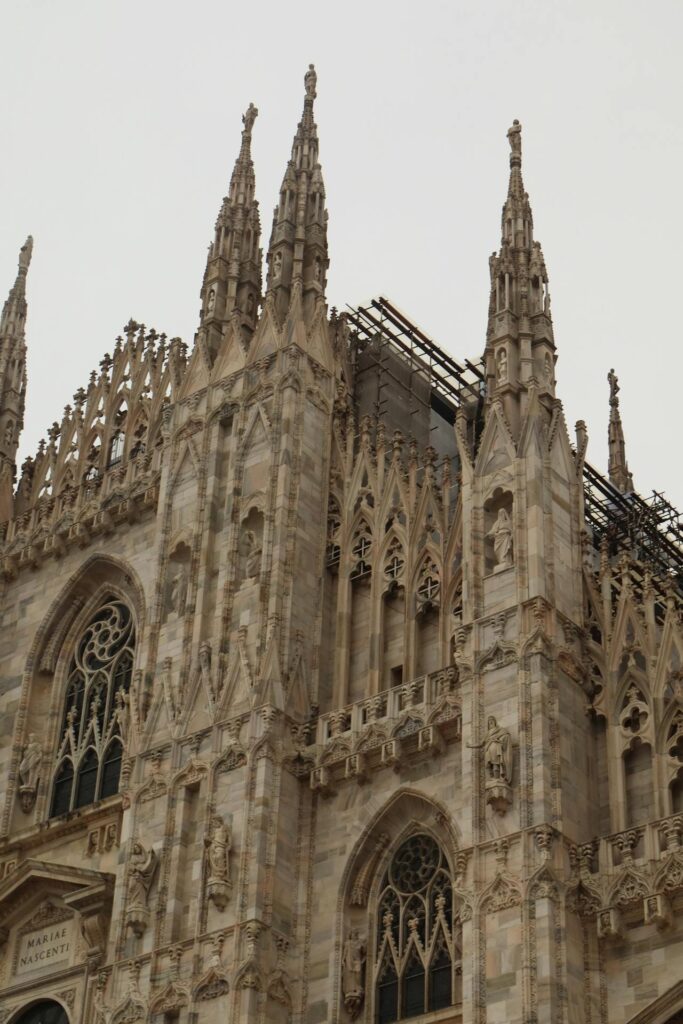
Duomo does not pursue the lightness typical of Gothic architecture. It pursues permanence through excess. The forest of interior piers, the hundreds of spires, and the thousands of sculptural elements are not decoration—they are structural insurance. This is architecture that anticipates error and compensates for it in advance.
The final form is not the product of a single style or a single century. It is a building that evolved alongside advances in engineering, politics, and construction technology, while remaining obsessively faithful to one idea: stone as proof of power. Duomo di Milano stands today not because it was perfectly designed, but because for nearly 600 years it was continuously reinforced.
Duomo di Milano in Numbers
579 years
The total duration of construction, spanning from the laying of the first stone in 1386 to the final door installation in 1965
11 700 m²
The total internal floor area, making it one of the largest churches in the world
158 m
The external length of the cathedral
93 m
The width of the transept (the “arms” of the cross-shaped floor plan)
108,5 m
The total height to the tip of the Madonnina statue
3 400
The total number of sculptures decorating the building (more than any other cathedral in the world)
135
The number of forest-like pinnacles crowning the roof
52
Massive internal pillars/columns, each representing the weeks of the year
24,5 m
The height of each of the 52 internal columns
325 000 t
The estimated total weight of the Candoglia marble and masonry
55
Number of stained-glass windows – Some of which are among the largest and oldest in existence
15 800
Number of pipes – The size of the cathedral’s organ, the largest in Italy and second-largest in Europe
4,16 m
The exact height of the golden Madonnina statue
251
The number of stairs you must climb to reach the rooftop terraces
40 000
The maximum theoretical capacity of the cathedral’s interior
78
The number of chief architects and engineers officially recorded in the annals over six centuries
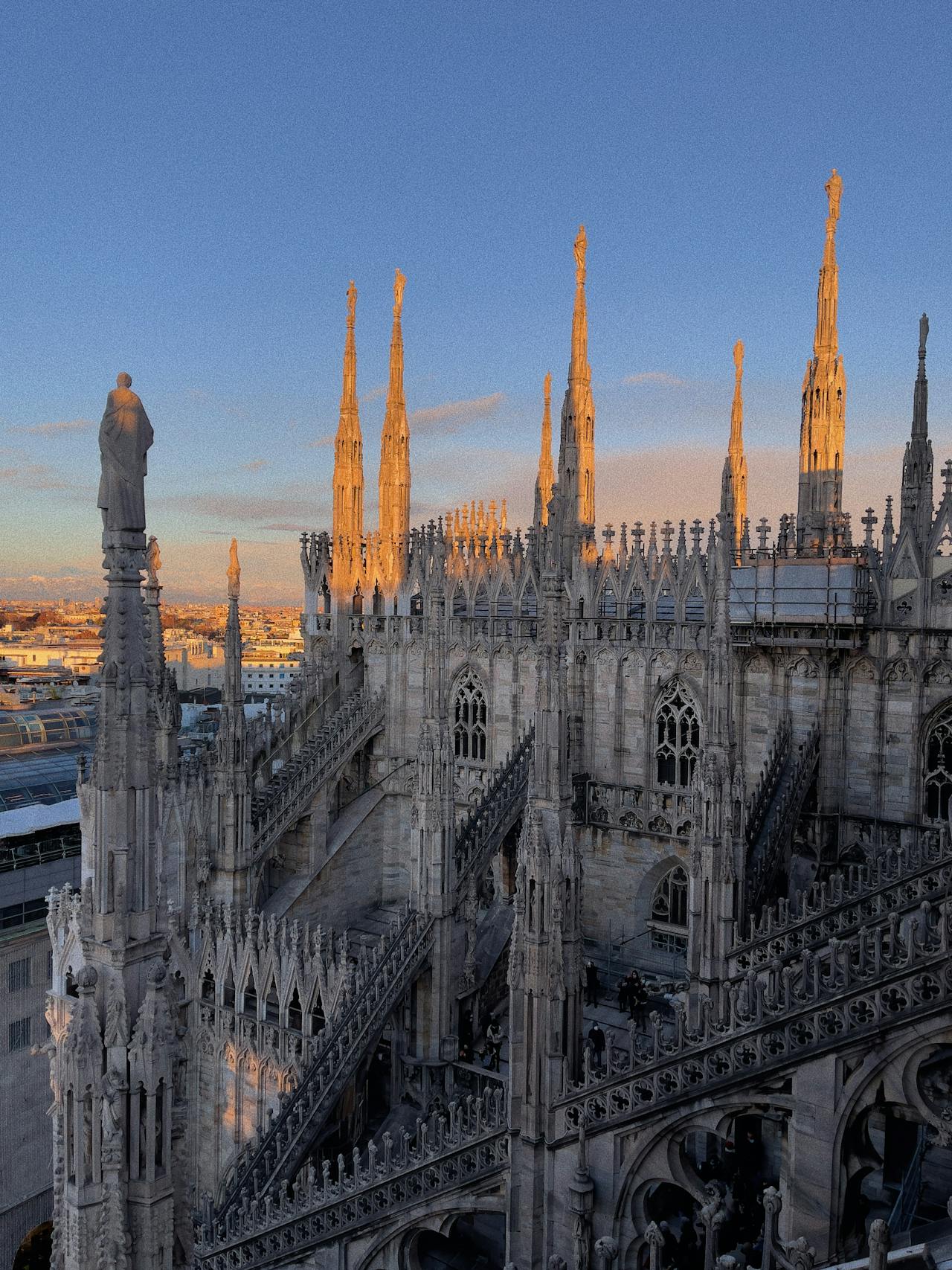
What’s most intriguing about this building isn’t its Gothic detail, but the structural audacity of its masonry skeleton. The Duomo operates as a high-mass distribution system, where 52 colossal pillars and 135 spires function as a rigid counterweight mechanism. This marble exoskeleton manages the immense lateral thrusts of its 45-metre vaults, pushing the limits of gravity-based engineering long before the advent of structural steel.
Duomo di Milano — structural and engineering logic
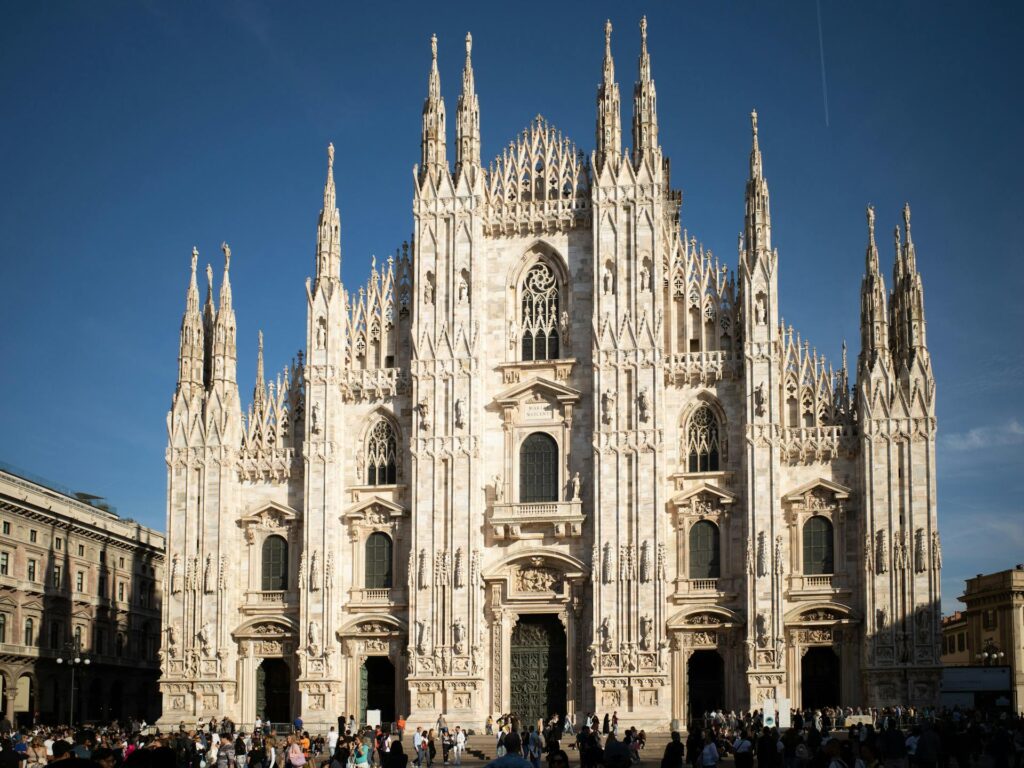
Duomo di Milano is an extreme case within Gothic architecture because its structural logic is based on mass rather than reduction. With an overall length of nearly 158 metres and a transept width of 93 metres, the cathedral was conceived as a five-aisled basilica in which the loads of the vaults are transferred through 52 massive piers, each exceeding 3 metres in diameter. This approach is closer to infrastructural engineering than to conventional Gothic lightness. The 45-metre height of the main nave required an unusually dense structural grid, sacrificing slenderness in favour of long-term stability.
Material choice defined the project’s engineering challenges. The cathedral is almost entirely clad in Candoglia marble—a heavy, brittle stone that demands precision and continuous maintenance. The estimated total mass of the structure reaches several hundred thousand tonnes, a critical factor given Milan’s alluvial soil conditions. As a result, Duomo was never a “calculate once and build” structure. Its foundations, piers, and buttressing systems were adjusted over centuries through empirical observation of settlement and structural behaviour.
The vaulting and roof system form a second layer of complexity. The 135 spires, together with hundreds of pinnacles and ribs, are not purely symbolic; they act as stabilising weights that counteract the horizontal thrust of the vaults. The roof, covering approximately 8,000 m², functions as a stone technical platform rather than a simple enclosure. It integrates structural elements, drainage systems, and sculptural components into a single engineered surface—one of the most functionally sophisticated roofs in the history of sacred architecture.
The interior is supported by a substantial technical infrastructure often overlooked in aesthetic narratives. The system of 55 monumental stained-glass windows required stone and metal frameworks capable of carrying significant loads without deforming the glazing. The cathedral’s organ system—comprising over 15,000 pipes—is among the largest in Europe and is structurally integrated into the masonry itself. Duomo di Milano is therefore not merely an architectural masterpiece, but a multi-century engineering experiment, sustained by redundancy, excess material, and continuous technical correction.
Duomo di Milano — an architecture financed over centuries
Duomo di Milano was never financed as a single project. It functioned as a permanent economic system, designed to outlive political regimes, artistic fashions, and construction techniques. From the very beginning in 1386, the cathedral’s scale exceeded what a single generation—or a single budget—could absorb. As a result, its construction relied on continuity rather than completion.
The financial backbone of the project was the Veneranda Fabbrica del Duomo, an institution created specifically to manage funding, procurement, and long-term maintenance. Unlike typical medieval building committees, the Fabbrica operated as a quasi-corporate entity, controlling quarries, transportation infrastructure, and labour contracts. The Candoglia marble was granted tax exemptions, allowing it to be transported to Milan without tolls—an early example of a supply chain optimised through political privilege rather than cost efficiency.
Spending was not linear. Periods of intense investment—often driven by political ambition, religious pressure, or symbolic deadlines—were followed by decades of minimal intervention. Financial resources were allocated strategically: structural elements and load-bearing systems were prioritised, while ornamental programs were deferred until surplus capital became available. This explains why large portions of the façade and sculptural program date from the nineteenth century rather than the Middle Ages.
By the modern era, Duomo had effectively become a financially autonomous monument. Income from donations, state support, and later tourism was reinvested directly into conservation and completion works. Unlike many historic cathedrals that reached a “finished” state and then decayed, Duomo remained in a constant cycle of expenditure. Its survival is not the result of a single act of patronage, but of an economic model based on redundancy, institutional memory, and the assumption that the building would never be fully paid for—only continuously sustained.
Trivia
Napoleon’s Expedited Finish
Napoleon Bonaparte was so eager to be crowned King of Italy that he ordered the completion of the facade in 1805. He promised to pay for the remaining work, although the French treasury never actually fully reimbursed the costs. This political intervention accelerated a project that had been stagnant for centuries.
An Exclusive Marble Monopoly
The cathedral holds the exclusive rights to the Candoglia quarry, a privilege granted by Gian Galeazzo Visconti in 1387. This specific pink-hued marble is reserved solely for the construction and continuous restoration of the Duomo. No other building in the world can legally use this material for its own construction.
The Pre-Liberty Statue
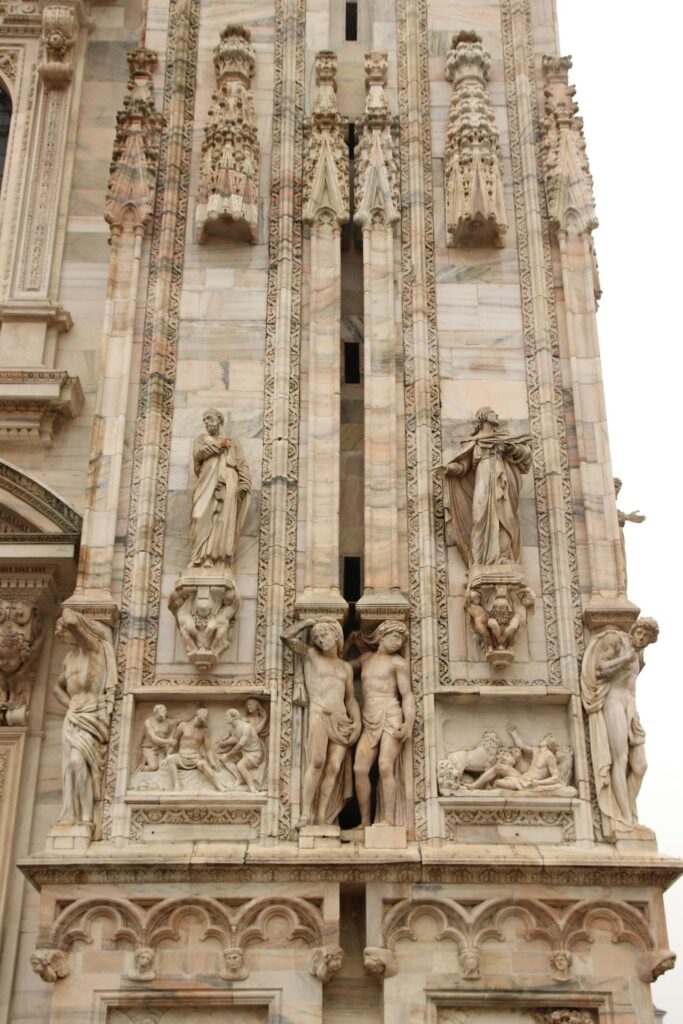
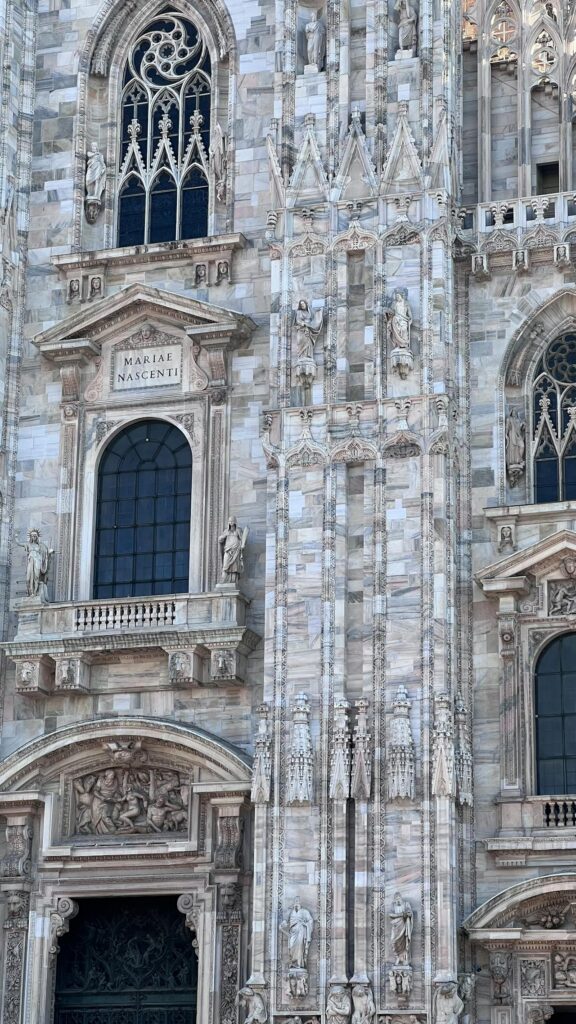
On the facade, you can find a sculpture titled La Legge Nuova (The New Law), carved by Camillo Pacetti in 1810. It bears a striking resemblance to New York’s Statue of Liberty, right down to the torch and the crown. Remarkably, this Italian version was completed over 70 years before its American counterpart.
A Musical Giant
The cathedral houses the largest pipe organ in Italy and one of the most complex in the world. It features a staggering 15,800 pipes that are controlled by a massive five-keyboard console. The sound is so powerful that it requires a specialized team of technicians to maintain its mechanical and acoustic integrity.
The Holy Nail Relic
High above the main altar, a small red light marks the location of a Holy Nail, allegedly from the True Cross. Once a year, the Archbishop of Milan is hoisted up to retrieve it using a 17th-century wooden elevator shaped like a cloud. This ritual, known as the Rito della Nivola, has been a tradition for over 400 years.
The Rooftop Terrace
Unlike most cathedrals where the roof is inaccessible, the Duomo features a massive 8,000 m² walkable terrace. It allows visitors to wander through the forest of 135 spires and observe the marble details up close. On clear days, the view extends past the city skyline to the snow-capped Italian Alps.
The Zodiac Meridian
A long brass line embedded in the floor near the entrance functions as a massive sundial known as a meridiana. A single beam of light enters through a hole in the roof to strike the line at solar noon. The beam accurately points to the corresponding zodiac sign engraved in the marble based on the time of year.
Tax-Free Logistics
During the Middle Ages, marble blocks for the cathedral were marked with the letters A.U.F. (Ad Usum Fabricae—For the Use of the Factory). This label allowed the transport boats to bypass all canal tolls and taxes across the Lombardy region. This practice gave birth to the Milanese expression “a ufo,” meaning to get something for free.
Battle Scars on the Doors
The massive bronze doors at the entrance still bear visible shrapnel scars and dents from Allied bombings during World War II. During the restoration process, the city decided to leave these marks untouched as a historical testimony to the conflict. They serve as a grim contrast to the intricate biblical scenes depicted on the panels.
The 108-Metre Limit
For centuries, no building in Milan was permitted to be taller than the Madonnina statue on top of the Duomo. When the Pirelli Tower was built to 127 metres, a small replica of the statue was placed on its roof to maintain tradition. Even today, the tallest skyscrapers in Milan often carry a replica to respect this symbolic height hierarchy.
Gothic Gargoyles
The exterior is drained by 96 gargoyles that double as terrifying stone guardians. These figures were designed not just for water management, but to symbolize the “unclean” spirits being forced out of the sacred space. They represent a wide array of mythological beasts, dragons, and distorted human faces.
Sporty Sculptures
Among the thousands of traditional religious figures, you can find unexpected modern carvings like tennis rackets and boxing gloves. These were added during 20th-century restorations to represent the era’s culture and the sculptor’s creative freedom. Specifically, one statue honors the famous Italian boxer Primo Carnera.
The Weight of Gold
The golden Madonnina statue stands over 4 metres tall and is made of gilded copper plates. Despite its delicate appearance from the ground, the internal support structure and plates weigh nearly one ton. It has remained the spiritual protector and most recognizable symbol of Milan since its installation in 1774.
Absence of Bell Towers
Most Gothic cathedrals are defined by two massive symmetrical bell towers on their western facade. The Duomo di Milano breaks this rule, as it was designed without any prominent external campanile. Instead, the bells are cleverly tucked away within the gaps between the internal spires and arches.
The Ancient Underworld
Beneath the cathedral floor lies the Archaeological Area, containing the remains of a 4th-century baptistery. This is the exact site where Saint Augustine was baptized by Saint Ambrose in the year 387. Visitors can still see the octagonal foundations of the ancient structure preserved under the modern nave.
The Eternal Construction
The building’s history is so long that it inspired the local phrase “Longo come la fabbrica del Duomo.” This expression is used by Italians to describe any task that seems to take forever to complete. Even though construction officially “ended” in 1965, a dedicated team of stonemasons works daily to replace weathered marble.