
Petronas Twin Towers — 452 Metres of Symmetry, Steel and National Ambition
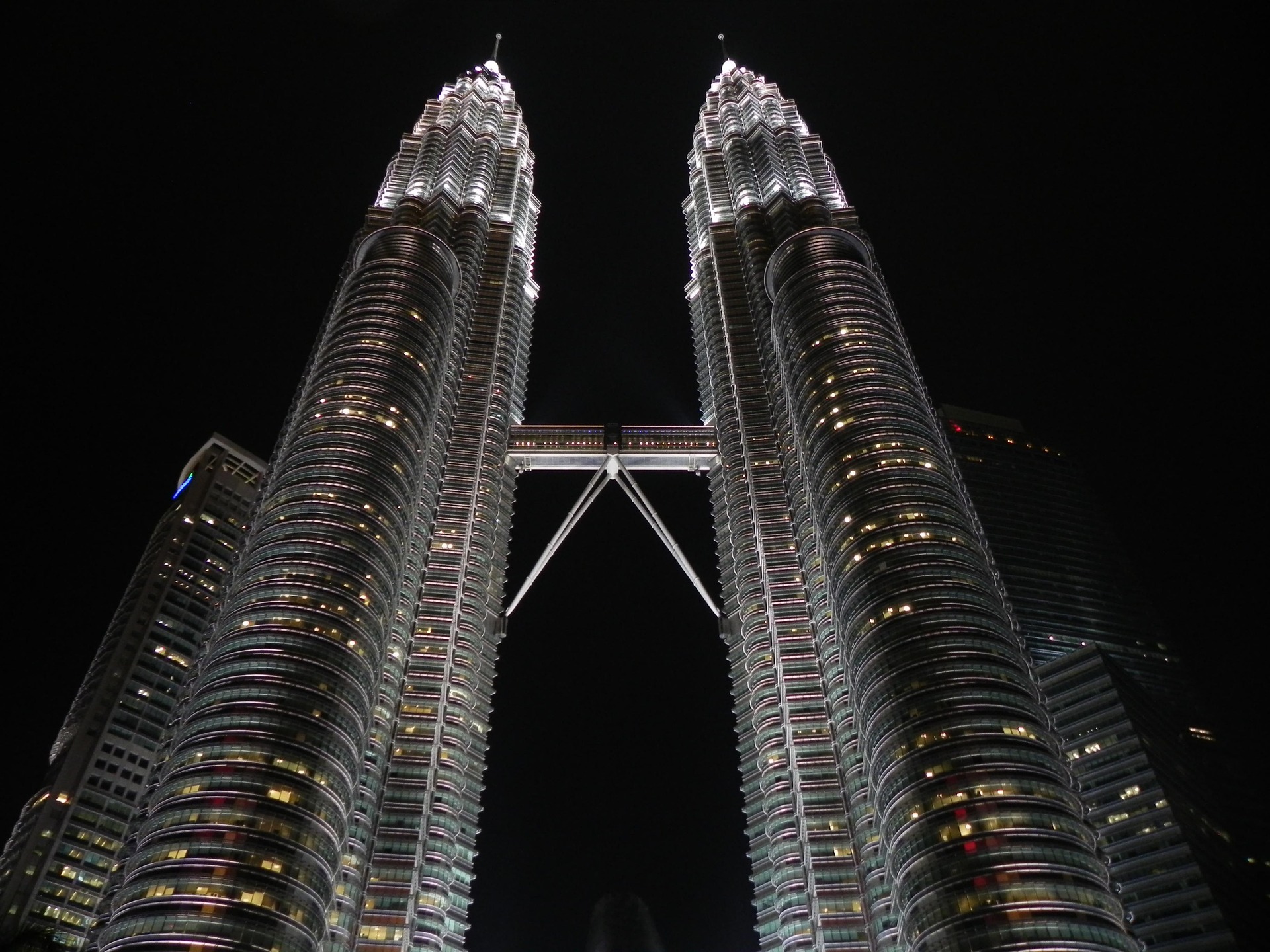
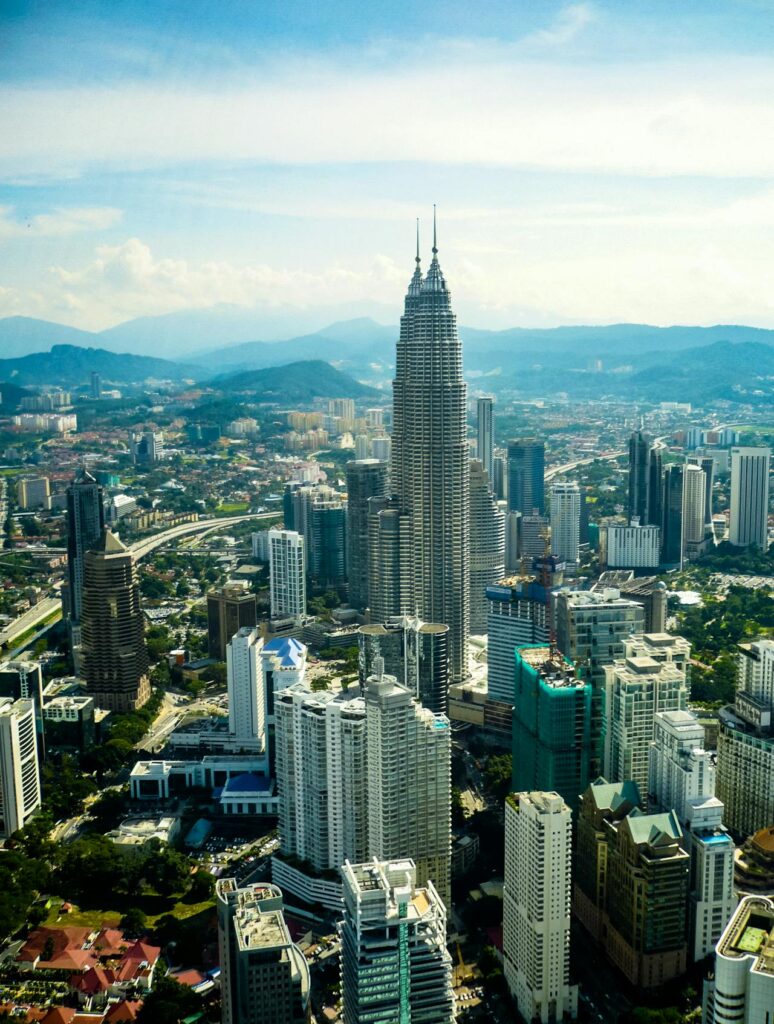
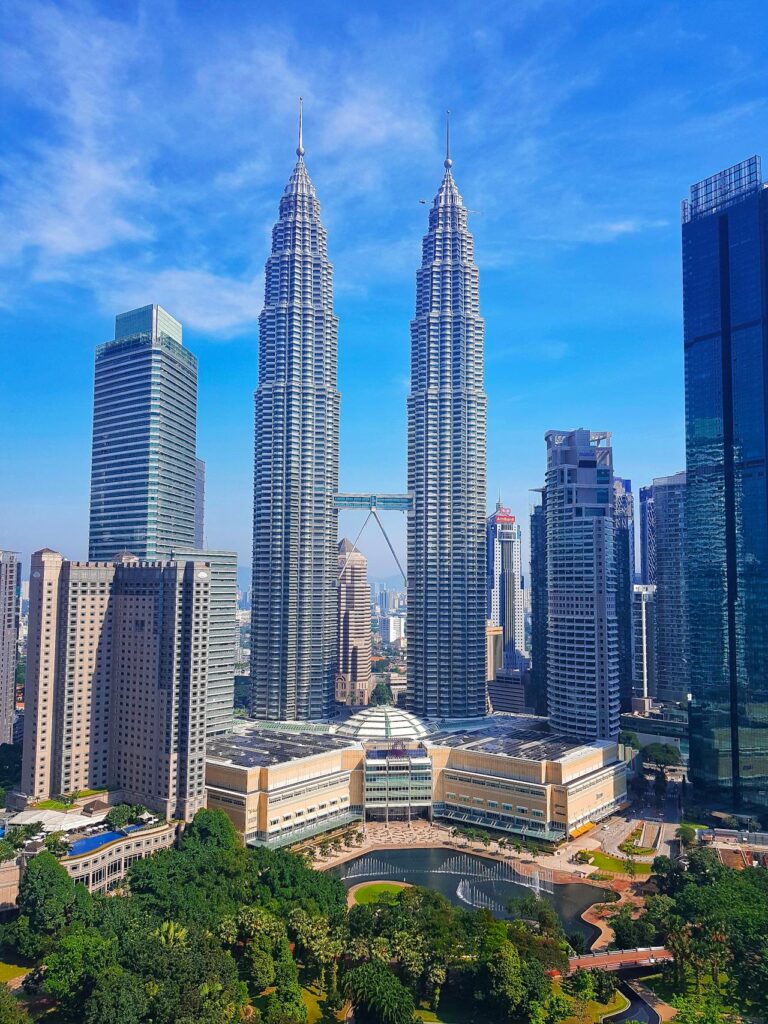
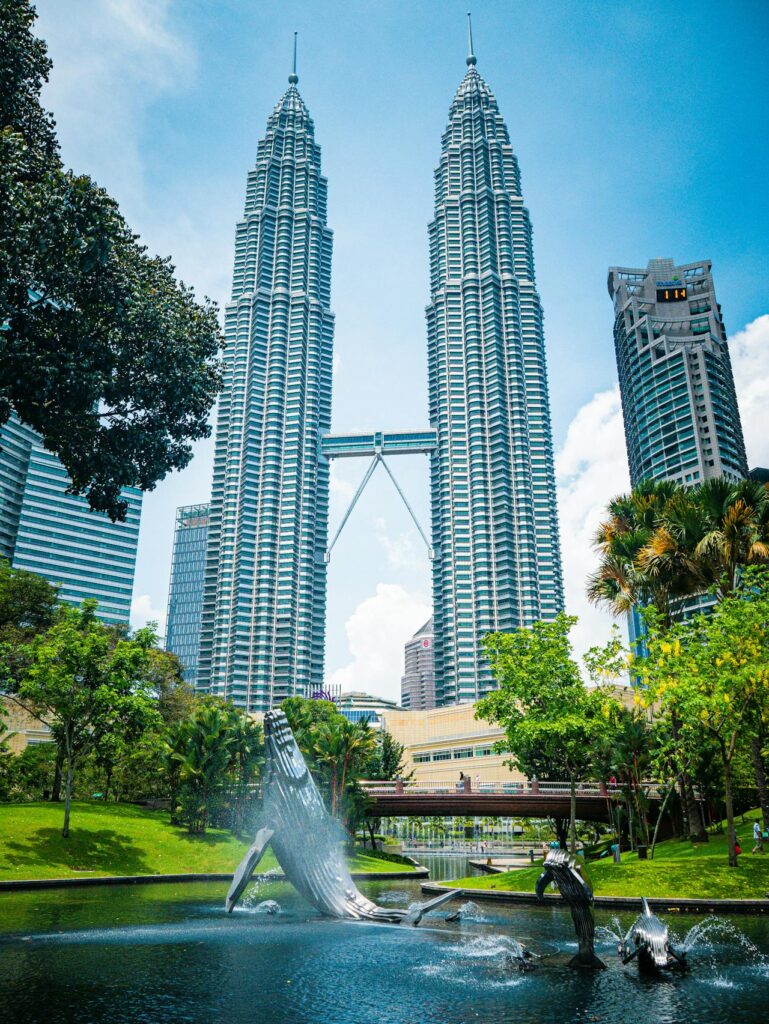
When the Petronas Twin Towers were completed in 1998, they did more than break records — they reshaped the global architectural hierarchy. Rising 452 metres above Kuala Lumpur, the twin structures overtook Chicago’s Sears Tower (now Willis Tower) and became the tallest buildings in the world at the time. For the first time in modern skyscraper history, the symbolic center of vertical ambition shifted from the United States to Southeast Asia.
But height alone does not explain their impact.
The towers were conceived during Malaysia’s rapid economic expansion of the 1990s — a period of aggressive industrialization, infrastructure growth and global positioning. Commissioned by the national oil and gas company Petronas, the project was designed to signal financial strength, technological capability and cultural identity. This was not merely a headquarters. It was a statement of sovereignty expressed in steel and reinforced concrete.
Architecturally, the towers draw directly from Islamic geometric principles. Their floor plan is based on an eight-pointed star formed by intersecting squares — a symbolic reference to unity, harmony and order. This geometry is not decorative; it defines the structural grid, façade rhythm and spatial organization. The result is a skyscraper that merges cultural symbolism with high-performance engineering.
Structurally, the decision to use high-strength reinforced concrete instead of steel — unusual for supertall buildings at the time — was driven by both material availability and performance considerations. The towers rise from some of the deepest foundations ever built for a skyscraper, anchoring the structure into Kuala Lumpur’s challenging limestone bedrock. Above ground, the two towers are connected by a double-deck skybridge suspended at levels 41 and 42 — not rigidly fixed, but engineered to slide to accommodate wind-induced movement.
Petronas Twin Towers are not simply twin vertical forms.
They represent the moment when architecture became a geopolitical tool — when skyline became strategy.
Petronas Twin Towers in Numbers
451.9 m
The total height to the tip of the spires. They held the title of „World’s Tallest Building” from 1998 to 2004
88
The number of stories above ground in each tower
$1.6 billion
The estimated total construction cost of the complex
170 m
The height at which the Skybridge is suspended, making it the highest two-story bridge in the world
41st & 42nd
The specific levels connected by the Skybridge
58.4 m
The total length of the bridge connecting the two structure
160 000 m³
The volume of high-strength concrete used. Concrete was chosen over steel to reduce costs and utilize local materials
36 910 t
The amount of structural steel used, primarily for the floor beams and the spires
114 m
The depth of the foundations. At the time of construction, these were the deepest pile foundations in the world
104
The number of massive friction piles supporting each tower, driven deep into the earth
83 500 m²
The total area of stainless steel panels used on the facade to give the towers their iconic „shimmer.”
55 000
The number of individual glass panes used to create the sun-reflecting facade
370 m
The height of the main Observation Deck located on the 86th floor
60 m
The distance the towers were moved from their original planned location after discovering the site sat on the edge of a limestone cliff
25 mm
The amount Tower 2 leaned off-center at the 72nd floor during construction. Engineers corrected it by leaning the next 16 floors 20mm back the other way
29
The number of high-speed elevators in each tower, designed to carry passengers to two floors simultaneously
Key questions
1. Why were the towers built with concrete instead of a steel frame?
This was a strategic economic and engineering choice. Malaysia had a robust domestic cement industry but lacked large-scale steel production, meaning steel would have to be imported at a massive cost. Furthermore, concrete is twice as effective at dampening vibrations as steel. Because the towers are so heavy, they provide a much stiffer and more stable environment for occupants, significantly reducing the „sway” felt during high winds.
2. How does the Skybridge handle the independent movement of two separate towers?
The Skybridge is designed as a „floating” structure. It is not fixed to the towers; instead, it rests on giant expansion joints and a complex bolt system. The bridge can slide in and out of each tower by up to 25–30 cm (approx. 12 inches). This allows the two buildings to „dance” independently in the wind while the bridge remains safely supported by its two 51-meter long diagonal „legs” (the V-shape) which are pinned at the 29th floor.
3. What makes the foundations of these towers „the deepest in the world”?
To prevent uneven settling, the towers were moved 60 meters from their original planned spot and placed on a massive „floating” pile foundation. Engineers drove 104 concrete friction piles for each tower to a record-breaking depth of 114 meters (374 ft). These piles don’t just sit on the bottom; they use the „skin friction” of the soil along their entire length to hold the building up. This forest of piles is capped by a 4.6-meter (15 ft) thick solid concrete raft.
The architectural logic of the Petronas Twin Towers lies in its material density and geometric friction. By utilizing 160,000 m³ of high-strength concrete—doubling the weight of steel-frame equivalents—the towers achieve a colossal stability that defies their slender profile. The iconic Skybridge acts as a structural 'valve,’ floating on expansion joints to accommodate up to 30 cm of independent sway, transforming a high-altitude connection into a dynamic masterclass in differential movement engineering.
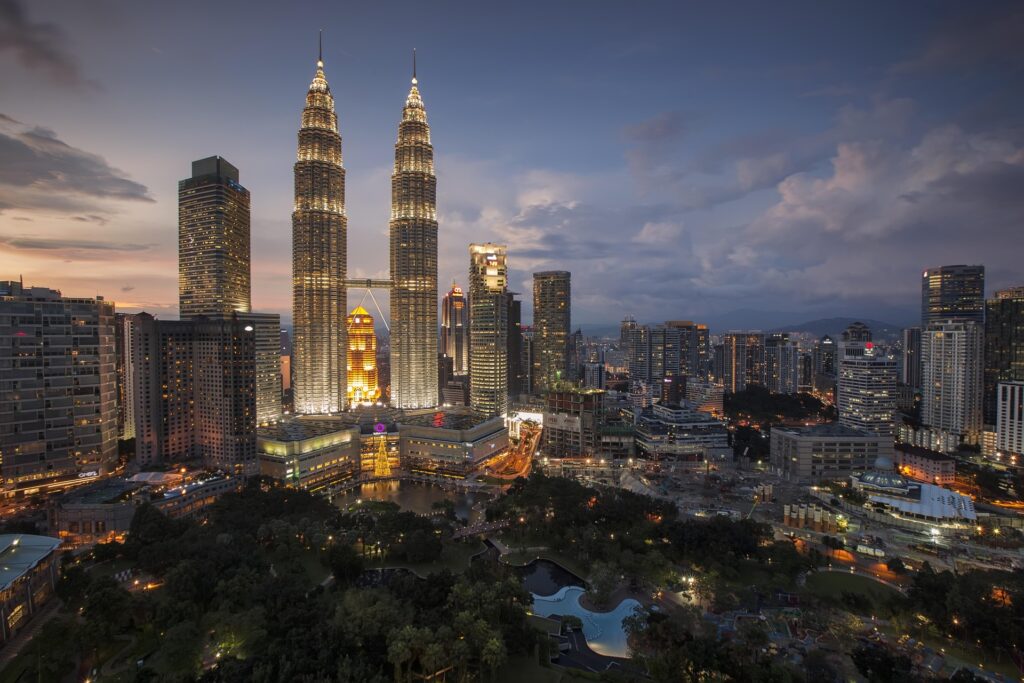
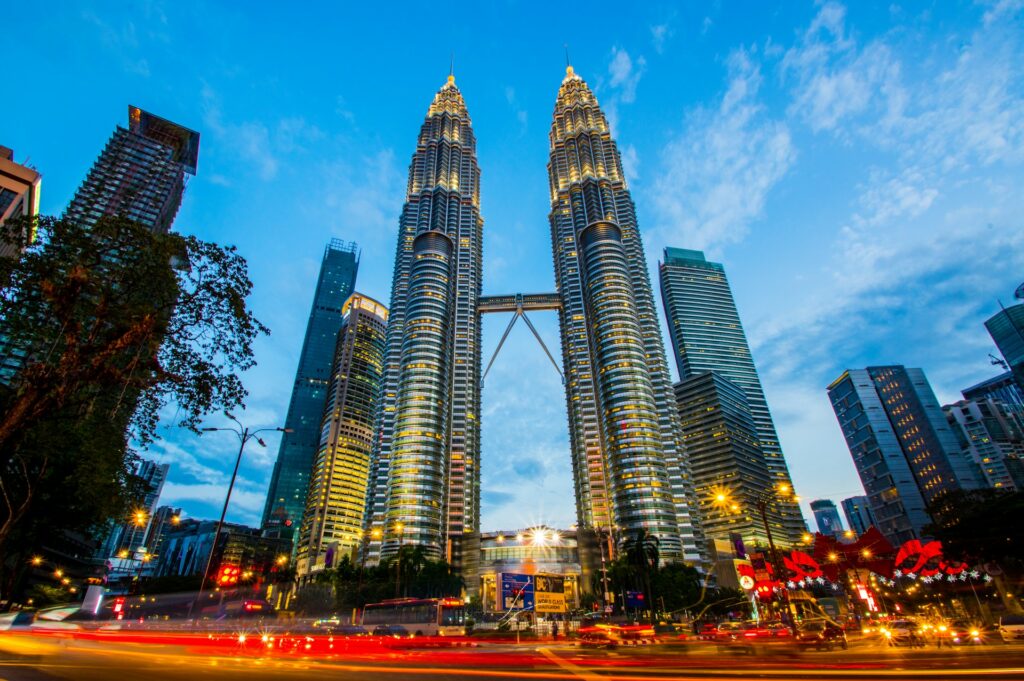
The Structural Logic of Symmetry: High-Strength Concrete and Differential Movement in the Petronas Twin Towers
The engineering brilliance of the Petronas Twin Towers transcends their former status as the world’s tallest buildings, residing instead in a radical departure from the Western paradigm of steel-frame construction in favor of high-strength reinforced concrete. The decision to utilize approximately 160,000 cubic meters of concrete was a strategic response to both local economic conditions and the fundamental need for structural mass. These towers are nearly twice as heavy as comparable steel structures, a characteristic that serves as a formidable engineering advantage in high-rise design. This colossal self-weight acts as a natural dampening system, increasing structural stiffness and drastically reducing perceptible sway during high-velocity wind events, effectively eliminating the need for the costly tuned mass dampers often found in lighter skyscrapers.
The foundations of the towers represent a hidden masterpiece of civil engineering, necessitated by a treacherous geological subsurface. The site sits on the edge of a limestone cliff, which presented an extreme risk of differential settlement and structural failure. To mitigate this, engineers designed a friction pile system driven to a record-breaking depth of 114 meters. These 104 concrete piles per tower do not merely sit on bedrock; they support the structure’s weight through „skin friction” along their massive surface area in contact with the soil. This „forest of piles” is capped by a 4.6-meter-thick solid concrete raft, creating a unified, floating base that allows these slender towers to maintain vertical stability on unstable ground.
The complex geometry of the facade, rooted in the Islamic Rub el Hizb symbol, serves a function far beyond religious aesthetics. The sixteen-lobed floor plan creates a multi-faceted volume that is exceptionally efficient from an aerodynamic perspective. The numerous setbacks and angular shifts in the facade act as wind-flow disruptors, preventing the organized formation of low-pressure vortices behind the building. This phenomenon, known as vortex shedding, is a primary cause of dangerous oscillations in tall structures. By mechanically „fragmenting” the wind across thousands of stainless steel and glass panels, the Petronas Towers neutralize natural forces before they can induce resonance within the structure.
Perhaps the most sophisticated logical component of the complex is the double-decker Skybridge, suspended 170 meters above the ground. From a structural dynamics standpoint, this bridge is a completely independent entity functioning as a flexible safety valve. Because each tower oscillates at a different frequency and in different directions, a rigid connection would have led to mutual structural destruction. Consequently, the Skybridge rests on a system of spherical bearings and sliding joints that allow it to „float” within the tower portals. This capacity to accommodate differential movement of up to 30 centimeters ensures that the bridge is not merely a pedestrian walkway, but an advanced mechanical device managing the kinetic energy of the dual-tower system.
The Capital of Ambition: The Financial Engineering and ROI of the KLCC Project
The construction of the Petronas Twin Towers was a high-stakes geopolitical investment with a budget of $1.6 billion USD in the mid-1990s (equivalent to over $3.2 billion USD in 2026 dollars). This investment was not merely a vanity project but a precise mechanism of urban arbitrage. By transforming 100 acres (40 hectares) of a former colonial racecourse into the KLCC district, the Malaysian government created real estate value from thin air. Land values in the immediate vicinity surged from a few hundred dollars to over $2,000 per square foot, generating immediate equity for the developer exceeding $5 billion USD across the entire master-planned district.
From an operational standpoint, the towers serve as the core of the KLCC Real Estate Investment Trust (KLCC REIT), which maintains a market capitalization of approximately 15-18 billion MYR (approx. $4 billion USD). The structures offer 4 million square feet of Grade-A office space, with the state-owned oil giant Petronas as the anchor tenant, ensuring a nearly 100% occupancy rate. This is complemented by the Suria KLCC mall at the base, a 1.5 million-square-foot retail powerhouse that attracts over 45 million visitors annually. With premium ground-floor rents reaching $50–$70 per square foot, the complex remains one of the highest-yielding retail assets in Southeast Asia.
The project’s financial success was also rooted in an „import substitution” strategy that protected Malaysia’s trade balance. Choosing high-strength concrete over steel avoided the import of roughly 80,000 tons of structural steel, saving the country over $200 million USD in foreign exchange at the time. Instead of transferring capital to foreign mills, 60% of the construction budget was reinvested into the domestic cement industry and a workforce of 7,000 laborers at its peak. This decision not only lowered logistical costs but acted as a state-funded technological incubator, advancing the capabilities of local contractors by decades within a six-year window.
While direct tourism revenue is a smaller percentage of the total ROI, it is vital for offsetting massive operational overheads. With a daily capacity limited to 1,200–1,700 visitors and average ticket prices around $22–$25 USD, the 86th-floor Observation Deck and Skybridge generate an estimated $12–$15 million USD in annual ticket sales. However, this figure is dwarfed by the „halo effect” the towers exert on Malaysia’s global brand. As a free marketing tool with worldwide reach, the towers’ silhouette attracts billions in Foreign Direct Investment (FDI), proving that on a macroeconomic scale, an architectural icon is an asset with the highest form of liquidity.
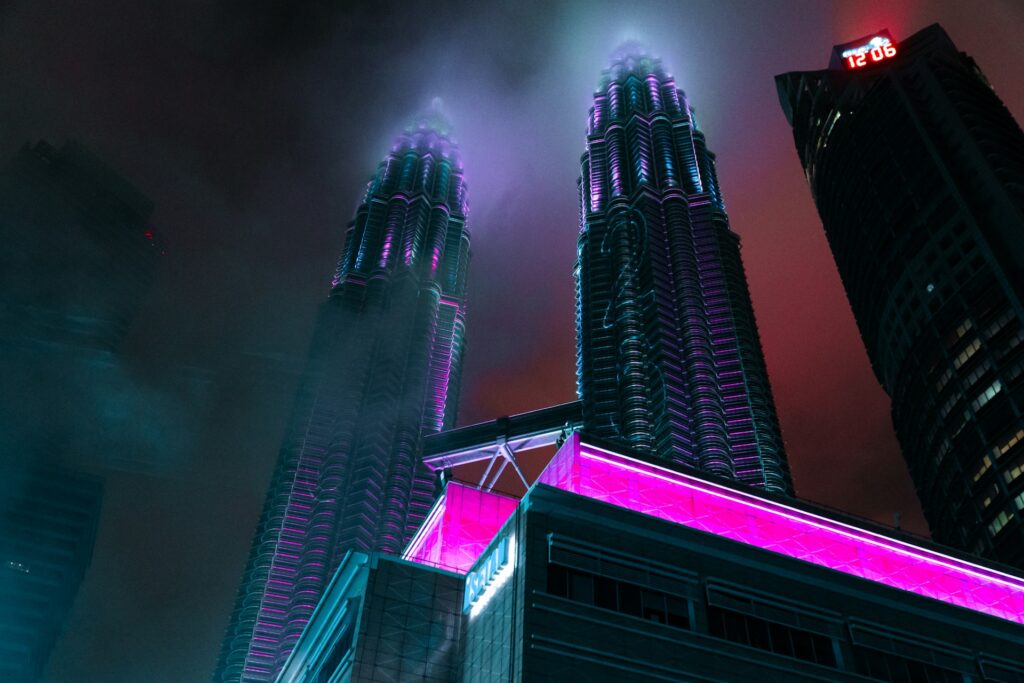
Trivia
The Deepest Foundation on Earth
The towers are built on a geological „cliff” where the ground transitions from hard limestone to soft soil. To ensure stability, engineers drove 104 concrete piles under each tower to a record depth of 114 meters. This massive „forest of piles” allows the buildings to stand securely on a floating friction foundation.
A Cultural Geometry
The 88-story towers were designed based on the Islamic Rub el Hizb symbol, consisting of two overlapping squares. This geometric foundation creates an eight-pointed star, representing harmony and stability in Islamic culture. Architect César Pelli further refined the shape by adding semicircular lobes to increase office floor space and soften the silhouette.
The World’s Highest Two-Story Bridge
Connecting the towers at the 41st and 42nd floors, the Skybridge sits 170 meters above the ground. It is the highest double-decker bridge of its kind in the world and serves as a vital fire escape route. Interestingly, the bridge is not bolted to the towers but is designed to slide in and out to accommodate independent building sway.
Stainless Steel Shimmer
The exterior of the towers is clad in 83,500 square meters of stainless steel panels. These panels were specifically designed to reflect the tropical sunlight of Kuala Lumpur, giving the towers a brilliant metallic glow. The facade also includes 55,000 glass panels that are treated to filter out heat and UV rays.
A Battle of Two Construction Crews
To speed up the process and ensure a deadline, the two towers were built by two different international consortia. Tower 1 was constructed by the Japanese Hazama Corporation, while Tower 2 was handled by the South Korean Samsung C&T. This led to a famous unofficial race to see which team would finish their tower first.
Correcting a Lean Mid-Air
During the construction of Tower 2, engineers discovered the structure was leaning 25 millimeters off-center at the 72nd floor. To fix this, the remaining 16 floors were deliberately slanted 20 millimeters in the opposite direction. This subtle correction brought the pinnacle back into perfect vertical alignment.
The Power of High-Strength Concrete
Unlike many skyscrapers of the 1990s that used steel frames, the Petronas Towers are primarily made of reinforced concrete. This choice was made to utilize local Malaysian materials and reduce the massive costs of importing structural steel. The resulting concrete is twice as heavy as steel, providing the towers with exceptional stability against wind vibrations.
Two Different Construction Teams
Each tower was built by a different international consortium. One was led by a Japanese group, the other by a South Korean group. This competitive setup accelerated construction and ensured schedule discipline.
A Masterpiece of Vertical Logistics
The buildings feature 29 double-decker elevators in each tower that can carry passengers to two floors simultaneously. This system was revolutionary at the time, allowing for higher passenger capacity without increasing the number of elevator shafts. These elevators can travel at speeds of up to 7 meters per second, reaching the top floors in about 90 seconds.
The Spire Completion Secret
The 73-meter-tall spires were not built on top of the towers but were assembled inside the structure. Once completed, they were jacked up into place over several days as a single piece. Each spire contains its own lighting system and a specialized maintenance ball for aircraft warning lights.
An Interior Inspired by Weaving
The interior designs of the towers reflect traditional Malaysian handicrafts and „songket” weaving. Much of the lobby flooring and wall panels utilize patterns found in local basketry and traditional timber carvings. This ensures that while the exterior is modern and futuristic, the interior remains deeply rooted in Malaysian heritage.
Protecting the Skybridge
Because the towers are independent, they move separately in response to wind and seismic activity. The Skybridge rests on a complex system of spherical bearings and „centering bolts” to manage this movement. Without this flexible engineering, the bridge would crack or snap under the pressure of the towers’ natural dance.