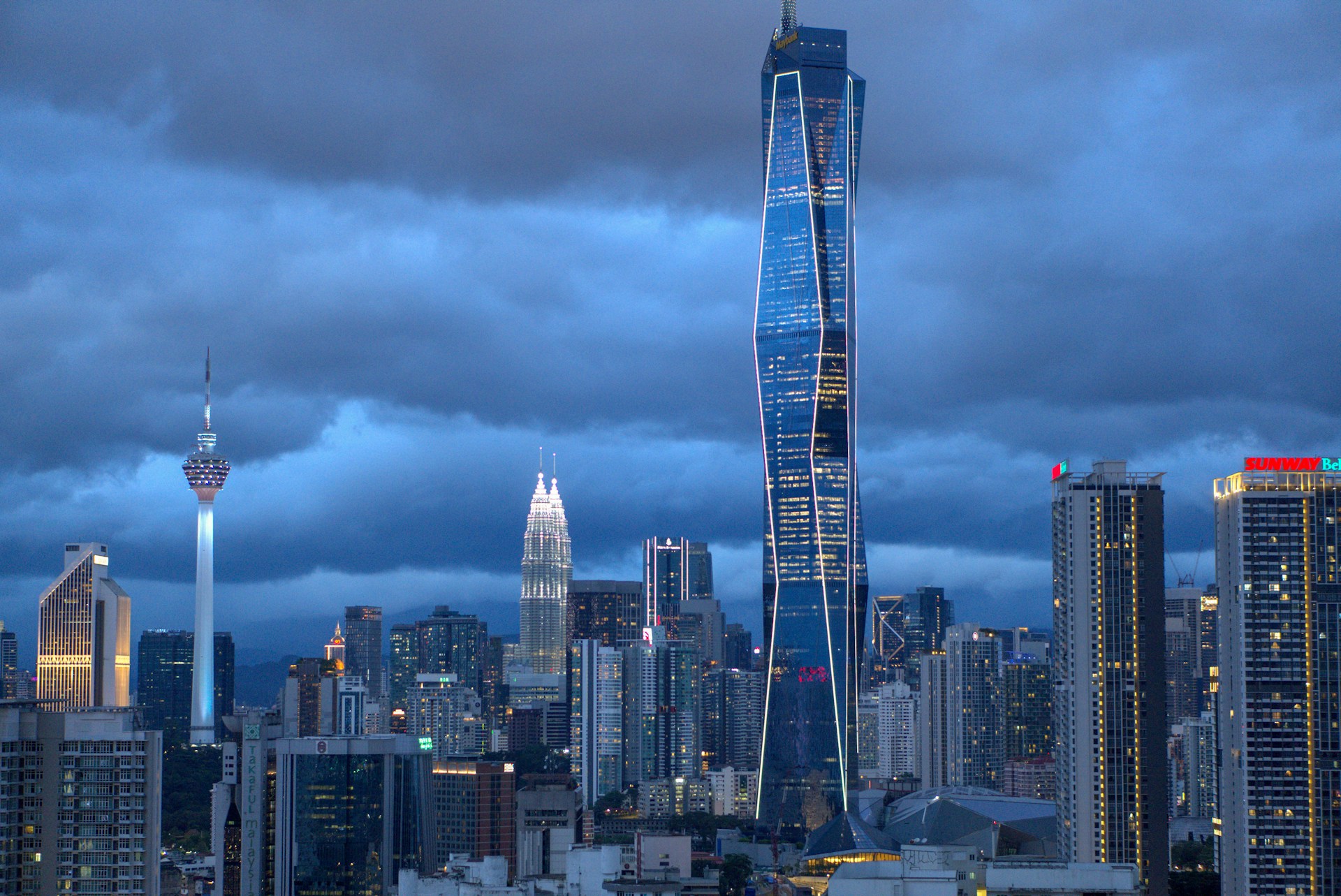

Merdeka 118 — Control at the Edge of Height
Merdeka 118 was not designed to be a “beautiful” addition to a skyline. It was conceived as a boundary project — a test of how far the relationship between height, slenderness, and structural control can be pushed under real conditions: monsoon winds, seismic uncertainty, and a tropical climate. This is architecture where every number is a decision, not a caption added after completion.
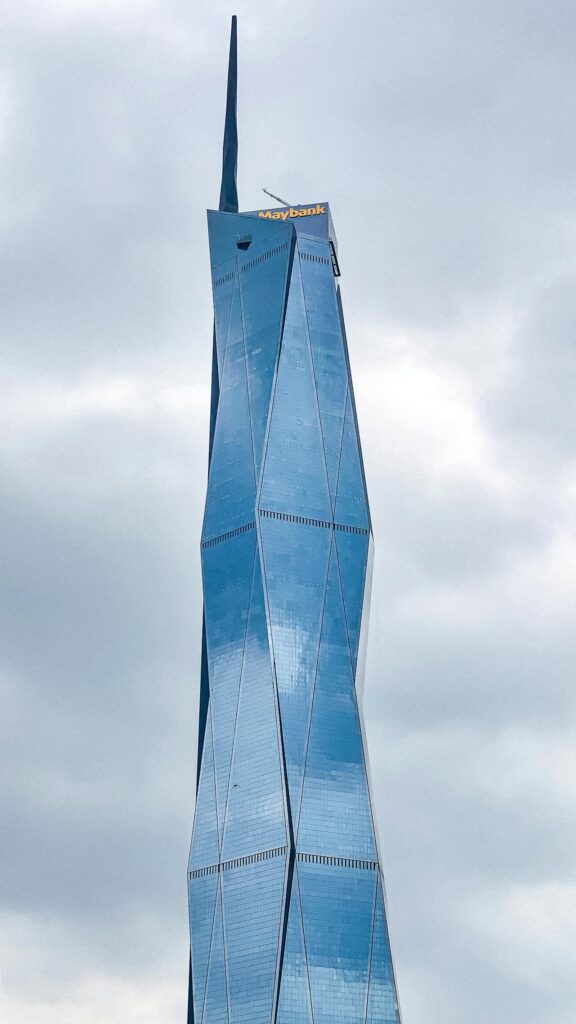
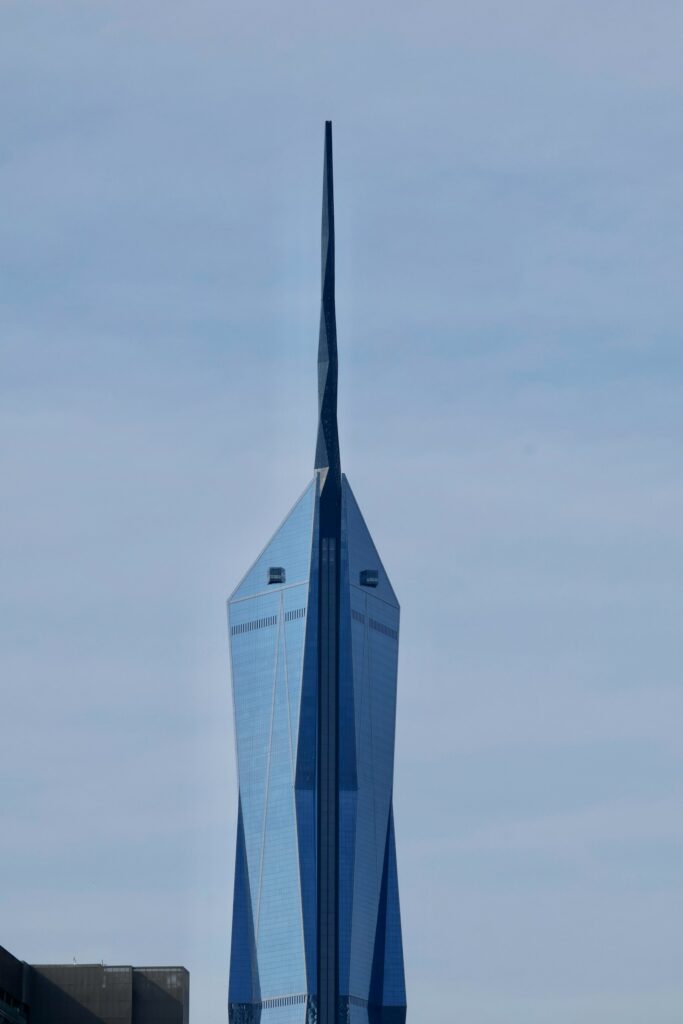
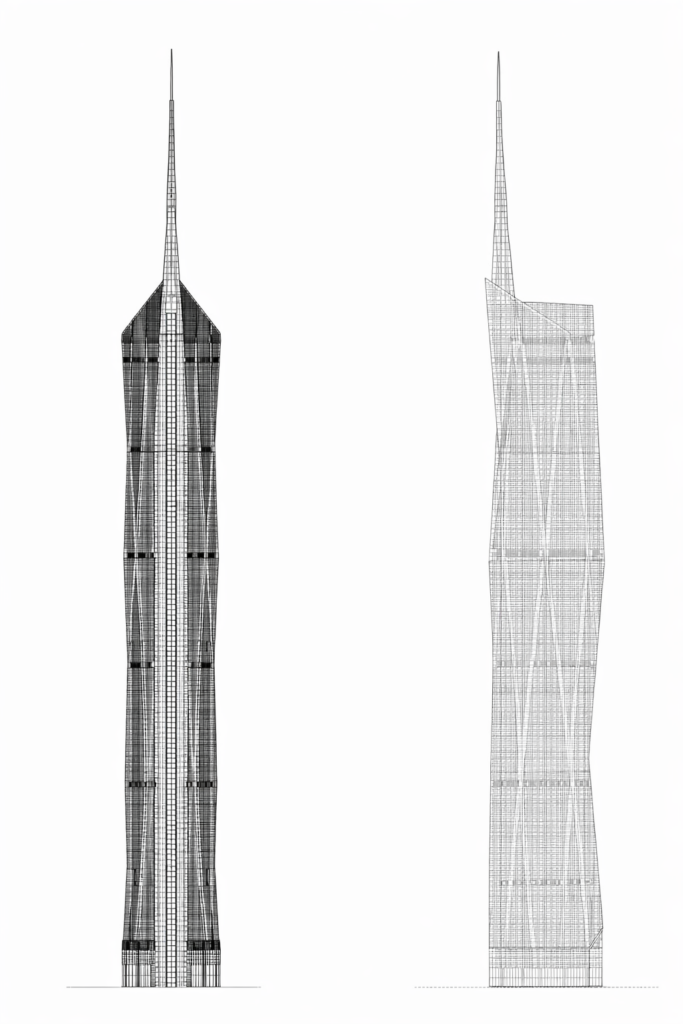
At 678.9 metres, there is no room for the usual tall-building compromises: excess mass, an overly flexible core, or a façade treated as packaging. Here, the logic is inverted. Form is a direct consequence of load, and symbolism emerges from geometry rather than being applied through narrative. The sharp, crystalline silhouette may read as a frozen gesture, but in reality it is an active engineering system, constantly responding to forces invisible to the naked eye.
What truly separates Merdeka 118 from other supertall towers is the absence of spectacle for its own sake. There is no single structural “trick” and no headline number meant to overshadow everything else. Instead, the project operates as a coherent system: core, outriggers, façade, and spire designed as one organism. Every floor, every fold in the envelope, and every metre of height exists for a reason — or it does not exist at all.
The tower is also a record of national ambition, but not in the form of a monument. Its position beside Stadium Merdeka — the site where Malaysia declared independence — gives it symbolic weight without requiring explanation. Freedom here has been translated into metres, forces, and construction tolerances.
This article will not frame Merdeka 118 as an “icon.” Instead, it looks beneath the surface to examine how this tower stands at all, how much each design decision weighs, and where architecture ends and pure engineering begins. Merdeka 118 is not a story about height. It is a story about control at the extreme.
Merdeka 118 in Numbers
678.9 m
The official structural height, making it the second-tallest building in the world
118
The number of above-ground floors (giving the tower its name)
160 m
The height of the spire alone, which is taller than many city skyscraper
1 100 t
The approximate weight of the steel spire crowning the tower
2nd
Its current global rank among the tallest buildings, surpassed only by the Burj Khalifa
292 000 m²
Total Gross Floor Area (GFA) of the tower itself
18 144
The exact number of glass panels that make up the crystalline facade
114 000 m²
The total surface area of the glass facade
87
The number of elevators installed within the main tower
10 m/s
The maximum speed of the fastest passenger and service elevators
400 000 m³
The total volume of concrete used throughout the entire complex
137
The number of reinforced concrete piles driven deep into the ground for the foundation
18 134 t
The mass of reinforcement steel used just in the foundation raft
500 m
The height of the highest observation point, „The View at 118”
252
The number of luxury guest rooms and suites in the Park Hyatt Kuala Lumpur
5 bln RM
Total investment cost in local currency (approx. $1.2 billion USD)
Merdeka 118 : Key Questions Answered
What is the height of Merdeka 118?
Merdeka 118 is 678.9 metres tall, making it the second-tallest building in the world, surpassed only by Burj Khalifa.
How many floors does Merdeka 118 have?
The tower has 118 above-ground floors and 5 basement levels, which is also the origin of its name.
What is Merdeka 118 used for?
It combines offices, observation decks, and the Park Hyatt Kuala Lumpur hotel, forming a mixed-use supertall complex in the heart of Kuala Lumpur.
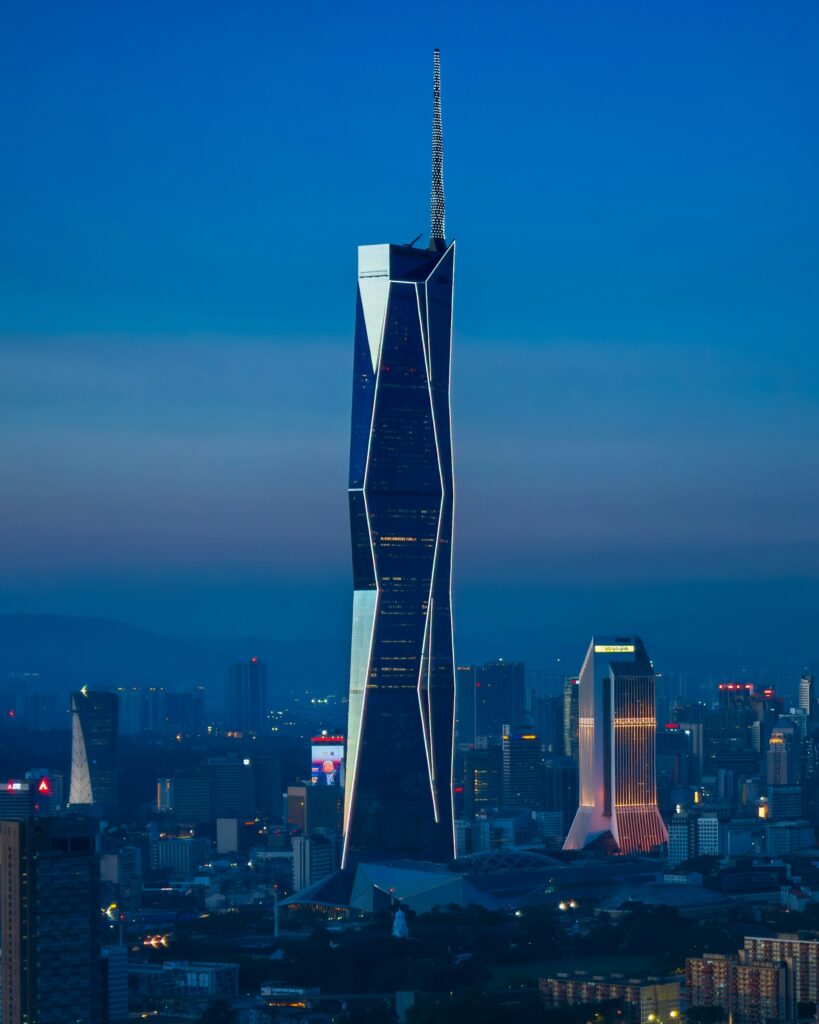
Rather than stacking floors upward, Merdeka 118 narrows, folds, and fractures its geometry as it climbs, reducing vortex shedding and redistributing lateral forces along the height of the structure. The result is not a skyline object, but a precision instrument—one that translates national symbolism into measurable performance, and redefines how far slenderness, height, and environmental forces can be negotiated within contemporary supertall architecture.
Structural Control at 678.9 Metres — Engineering Merdeka 118
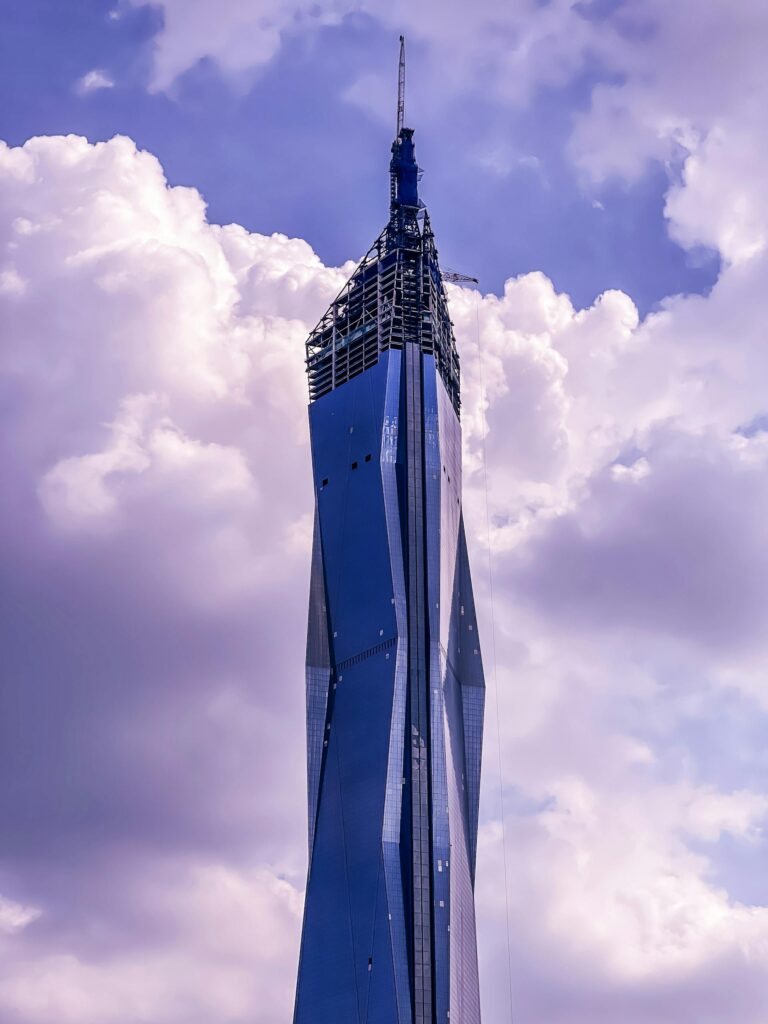
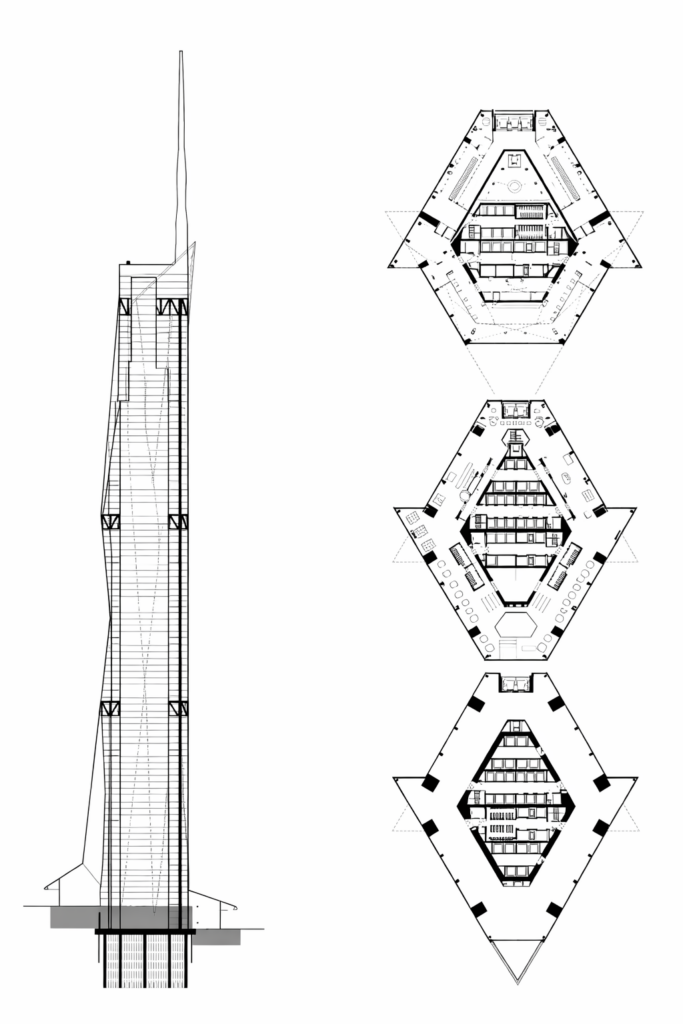
Merdeka 118 is engineered around a reinforced concrete core that acts as the building’s primary structural spine. Rising to approximately 518 metres (roof height), the core provides torsional stiffness for a tower that reaches 678.9 metres in total height. At this scale, gravity loads are no longer the dominant challenge — lateral forces from wind govern the design. The structure therefore relies on a high-strength concrete system, with concrete grades exceeding C80/95 in the lower levels to limit core deformation and long-term creep.
To control lateral movement, the tower employs a multi-level outrigger and belt truss system, mechanically linking the central core to perimeter mega-columns at several strategic heights. These outrigger levels significantly reduce overturning moments and limit peak accelerations under wind loading to within human comfort thresholds. With 118 above-ground floors, the structural grid tightens progressively as the building rises, matching the tapering geometry and reducing mass where stiffness demand is lower.
The foundation system reflects the extreme vertical loads generated by a supertall of this magnitude. Merdeka 118 is supported by a deep piled foundation system, with piles extending up to 60 metres into the ground to reach competent strata. Above the piles sits a monolithic reinforced concrete raft, approximately 4 metres thick, designed to evenly distribute axial forces from the core and mega-columns. This combination allows the tower to safely transmit loads measured in hundreds of thousands of tonnes into the subsoil while controlling differential settlement.
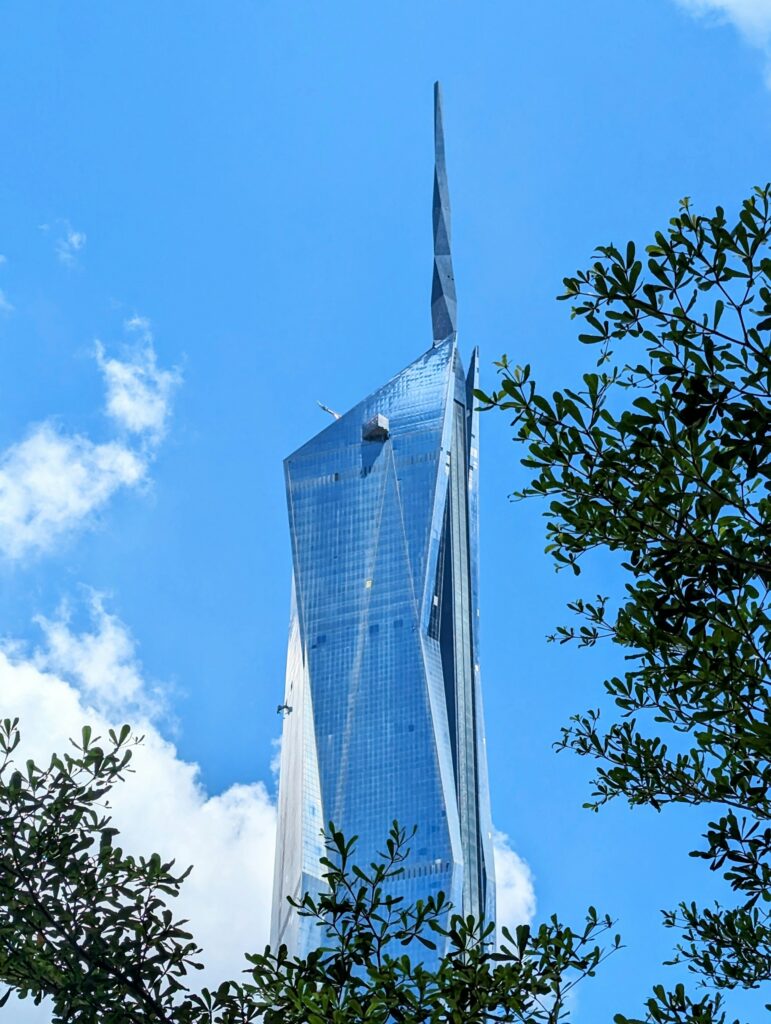
Equally critical is the relationship between structure and envelope. The crystalline façade, composed of over 18,000 glass panels and covering roughly 114,000 m², is not a passive skin. Its geometry contributes to aerodynamic performance by disrupting vortex shedding along the height of the tower. In this sense, Merdeka 118 operates as a single integrated system — where structure, form, and façade are numerically calibrated to manage wind, weight, and movement at the limits of contemporary high-rise engineering.
The Economics of Vertical Extremes
Merdeka 118 is not only an engineering project but a large-scale financial instrument embedded in the urban economy of Kuala Lumpur. The total investment cost is estimated at RM 5 billion (≈ USD 1.1–1.2 billion), placing it among the most expensive single-tower developments ever built in Southeast Asia. At this level, cost efficiency is no longer measured per square metre alone, but per metre of height, where each additional vertical increment compounds structural, logistical, and material expenses.
With a Gross Floor Area of roughly 292,000 m², the tower integrates offices, observation decks, and the 252-room Park Hyatt Kuala Lumpur, allowing revenue to be diversified across multiple market segments. Premium office floors at extreme heights command higher rents, while the observation decks—positioned above 500 metres—introduce a high-margin, tourism-driven income stream. This mixed-use strategy reduces financial risk by avoiding dependence on a single revenue source.
Construction economics were strongly influenced by time and material intensity. High-strength concrete, deep foundations, and a complex façade system increased upfront capital expenditure, but were necessary to control long-term operational costs such as structural maintenance and wind-induced fatigue. The façade alone, covering approximately 114,000 m², represents a significant investment in precision manufacturing, installation logistics, and lifecycle performance under tropical conditions.
At an urban scale, Merdeka 118 functions as a catalyst project rather than a standalone asset. Its proximity to Stadium Merdeka anchors it within a broader regeneration zone, where land values, infrastructure upgrades, and commercial activity compound the original RM 5 billion investment. Economically, the tower is less about immediate return and more about long-term capital positioning, using extreme height as leverage to concentrate value vertically rather than horizontally.
Trivia
Symbolic Gesture
The building’s design was inspired by the silhouette of Malaysia’s first Prime Minister, Tunku Abdul Rahman. The tower’s shape and spire mimic his raised hand during the 1957 declaration of independence. This historic event gave the skyscraper its name „Merdeka,” which translates to „Independence.”
Global Silver Medalist
Merdeka 118 officially holds the title of the second-tallest building on the planet. It surpassed China’s Shanghai Tower, trailing only the iconic Burj Khalifa in Dubai. It currently stands as the tallest structure in all of Southeast Asia.
Diamond Facade
The tower’s glass skin is composed of thousands of triangular panels of varying shapes. They create a striking, crystalline structure that glitters in the sun like a polished gemstone. This design is meant to symbolize Malaysia’s rich and diverse cultural heritage.
Record-Breaking Spire
The spire alone stands at a massive 160 meters, making it one of the tallest of its kind in the world. It was constructed from high-grade steel, and its installation was a monumental logistical feat. Without this element, the building would lose its record-breaking status in structural height rankings.
Foundation Deep as a River
To support such immense weight, engineers drove 137 massive reinforced concrete piles into the earth. They reach depths of 60 meters, which is equivalent to the height of a 20-story residential block. This ensures the structure remains stable even on Kuala Lumpur’s challenging limestone ground.
Armored Base
The main foundation raft is an impressive 4 meters thick. It required a record-breaking amount of concrete and over 18,000 tons of reinforcement steel to build. It is one of the most massive foundations ever designed for a single building.
Elevator Speed
Inside Merdeka 118, some of the world’s fastest elevators operate at speeds of up to 10 m/s. Passengers can reach the top of the tower in less than one minute. These elevators use advanced energy recovery systems, aligning with the project’s green philosophy.
Triple Platinum Status
The building is the first in Malaysia to receive a triple Platinum rating for sustainable construction. This represents the highest standards in LEED, GBI, and GreenRE certifications. The project sets a new global benchmark for eco-friendly skyscrapers.
View from the Clouds
The highest observation point, „The View at 118,” is located at a height of approximately 500 meters. It is the highest observation deck in the region, offering a 360-degree panorama of Kuala Lumpur. On clear days, visibility extends dozens of kilometers beyond the city limits.
Luxury Park Hyatt
The top 17 floors of the building are occupied by the prestigious Park Hyatt Kuala Lumpur. Guests can enjoy 252 luxury rooms with direct views over the rooftops of neighboring skyscrapers. It is one of the highest hotels in the world, offering a truly unique experience.
Massive Floor Area
The total floor area of the complex is nearly 292,000 square meters. This is equivalent to fitting over 40 full-sized football pitches onto a single plot of land. The building integrates offices, a hotel, a shopping mall, and public spaces.
Wind Resistance
The slender silhouette of Merdeka 118 underwent rigorous testing in wind tunnels. A specialized structure featuring three levels of massive belt trusses limits the building’s sway during storms. This ensures total comfort for those on the highest floors.
Solar Powered
The tip of the spire is equipped with modern photovoltaic panels. They generate clean energy used to supplement the lighting of the building’s common areas. This is a crucial element in the strategy to reduce the entire facility’s carbon footprint.
118 Mall Experience
At the base of the tower lies a seven-story retail podium covered by a magnificent glass dome. It offers hundreds of shops, restaurants, and recreational spaces for both locals and tourists. The project blends modern retail with proximity to Malaysia’s historic stadiums.
Vertical Precision
Despite its asymmetrical shape and height, the building had to be constructed with millimeter precision. Engineers utilized GPS systems and lasers to monitor the vertical alignment of the core at every stage. Any deviation could have affected elevator performance and structural safety.
The 1957 Pattern
While the entire facade consists of over 18,100 glass panels, a specific pattern was woven into the design. Exactly 1,957 panels are arranged to form a unique motif commemorating the year of Malaysia’s independence. It is a subtle mathematical detail that turns architecture into a lesson in national history.