
The Gothic Heart of Siena: Il Palazzo Pubblico
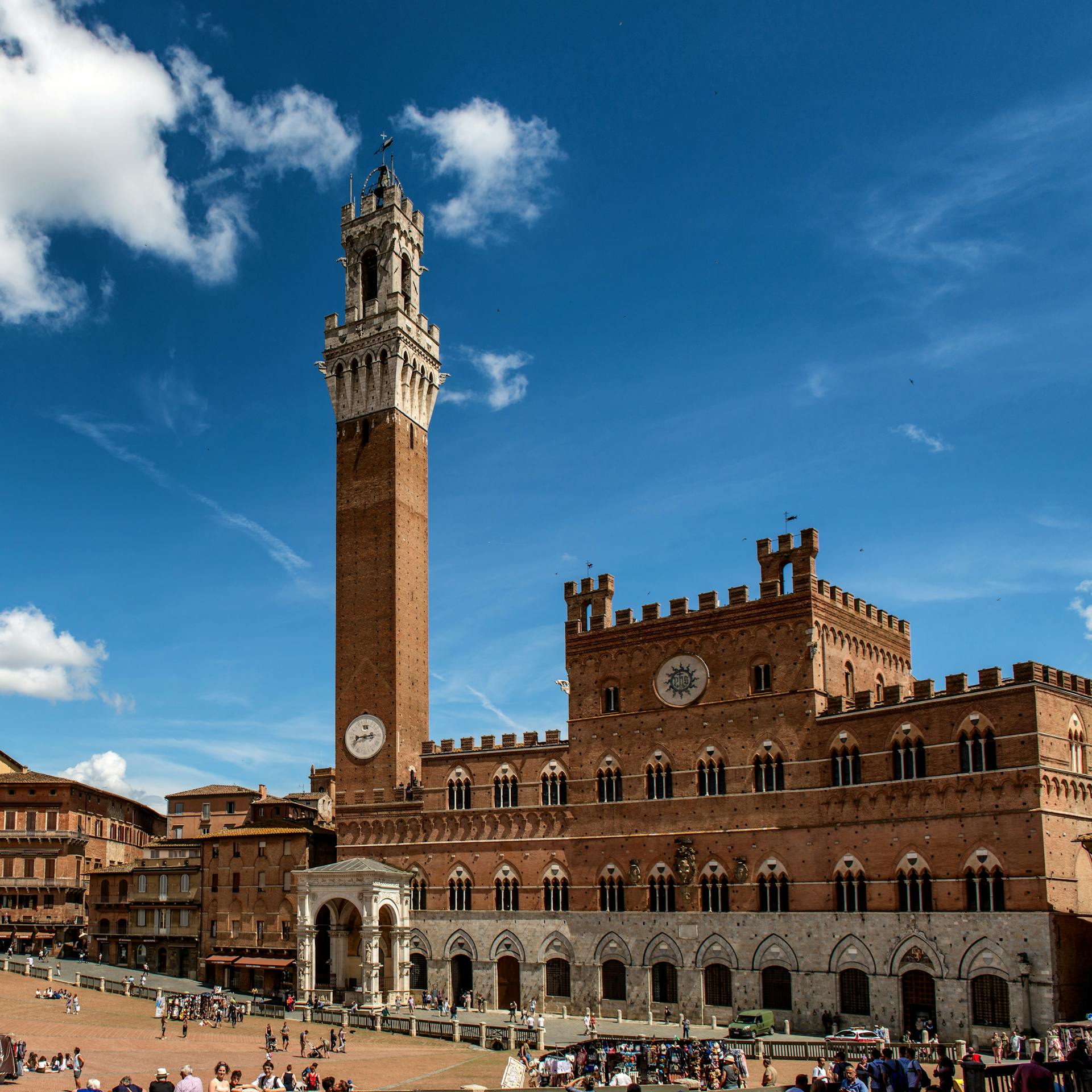
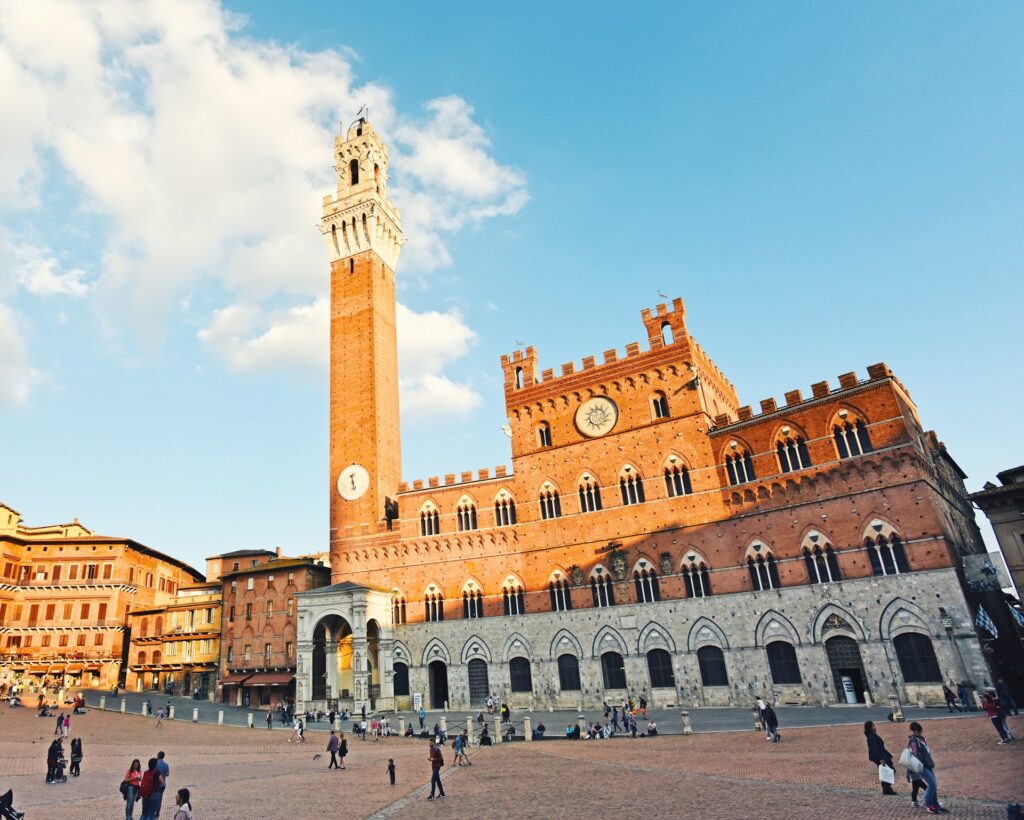
The Palazzo Pubblico is not a palace in the classic sense of government. It is a building designed as a tool for city government—subordinated to numbers, proportions, and public space. Built in the late 13th century as the seat of Siena’s republican government, it has become one of the most distinctive examples of secular civic architecture in Europe.
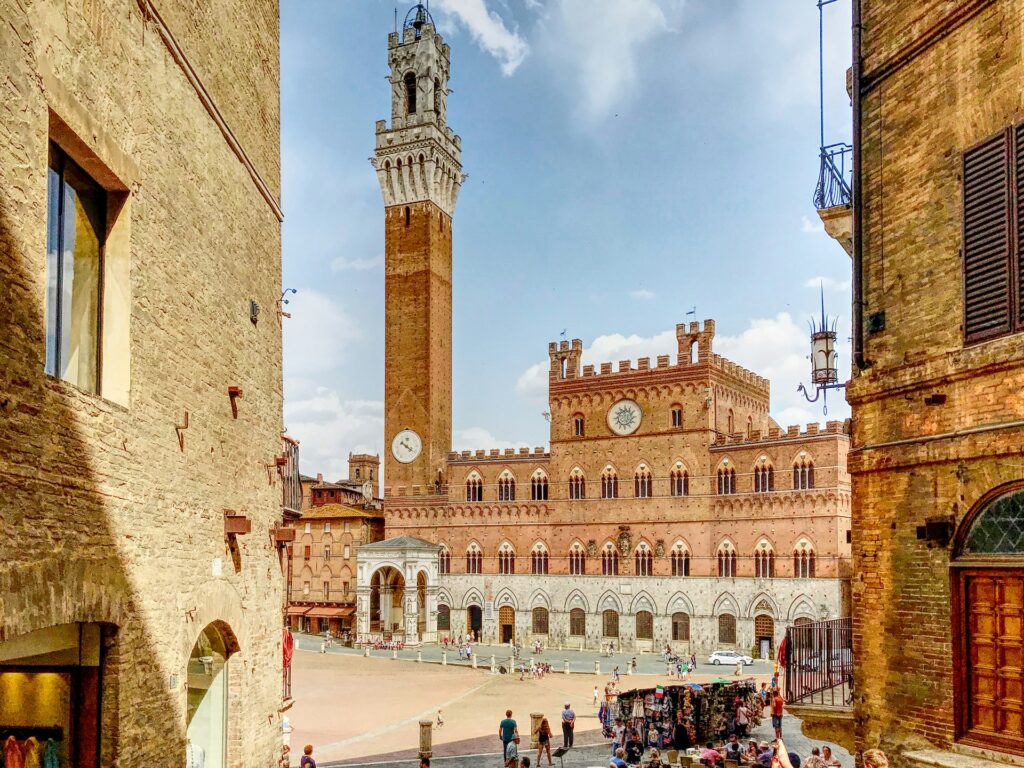
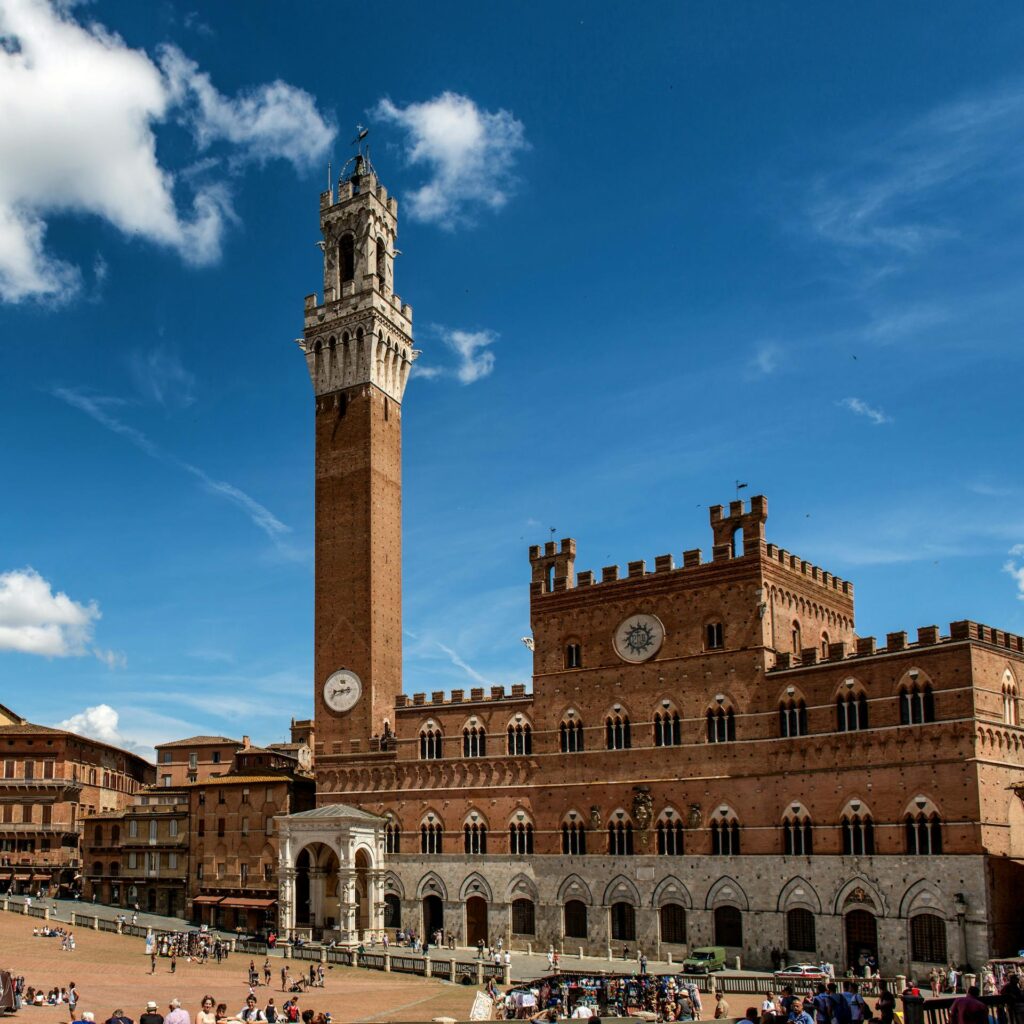
Its form is closely aligned with the geometry of the Piazza del Campo. The concave façade is not an aesthetic gesture, but a precise response to the shape of the square, which served as the city’s forum. This allows the building not to dominate the space but to co-create it, reinforcing a sense of order and community.
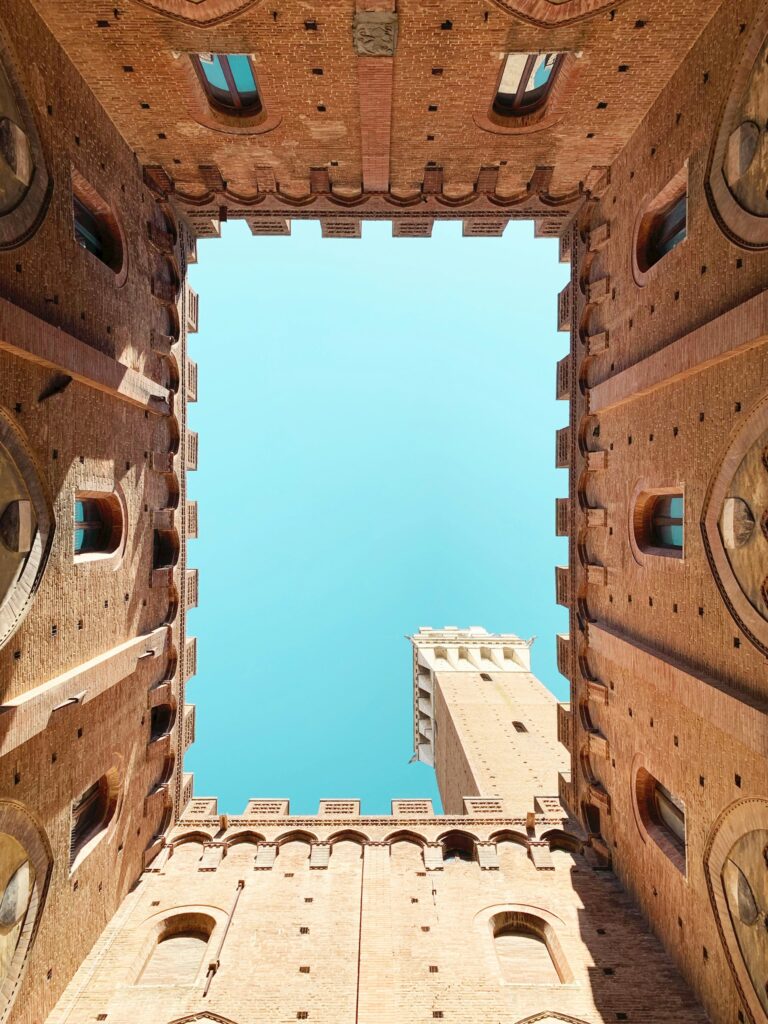
The architecture of the Palazzo Pubblico is based on stark contrast: the massive, human-scale brick body is juxtaposed with the tall, slender Torre del Mangia, which serves as a symbolic dominant feature. At the time of its construction, it was intended to equal the height of Siena Cathedral, demonstrating the balance between secular and ecclesiastical authority. This numerical relationship—width, height, and rhythm of the façade—clearly separates the authority of the institution from its representation.
Il Palazzo Pubblico in Numbers
A building that governs through numbers rather than monumentality – we measure the geometry, scale, and effort behind Palazzo Pubblico.
102 m
Height of Torre del Mangia
9
Number of members of the government
1297
The year the construction of the palace began
400
number of steps in Torre del Mangia
~8 000 m²
Estimated usable area
~55 m
Width of the front facade
6 764 kg
mass of the “Campanone” bell
7 m × 7 m
base of the tower
What’s most intriguing about this building isn’t just its height, but the way its concave façade „embraces” the public space. The building doesn’t stand next to the square; it defines it, creating an organic unity with Siena’s urban fabric, making it one of the most beautifully designed medieval urban developments in the world.
Trivia
A Race for Height
The Torre del Mangia tower is exactly the same height as the bell tower of Siena’s cathedral (Duomo). This was no accident – the secular governments wanted to declare that the state and the Church had equal status and authority in Siena.
The first bell ringer „strike”
The tower’s name comes from the first bell ringer, Giovanni di Balduccio, who was nicknamed „Mangiaguadagni” (Eater of Wages). The reason? He spent all his wages eating at Sienese taverns. The city finally replaced it with a clockwork mechanism in 1360.
„Good and Bad Government” in Numbers
Ambrogio Lorenzetti’s frescoes inside the palace span over 14 linear meters. Interestingly, they are considered one of the first examples of purely secular art in modern history – on such a vast surface, there is not a single saint or biblical scene.
The mathematical harmony of the square
The palace’s façade is concave just enough to form a meeting point for the nine lines marked on the cobblestones of Piazza del Campo. These lines symbolize the Council of Nine (Il Nove), and the entire square functions as a giant architectural funnel, gathering people in front of the seat of power.
Building standards from 1297
Siena’s authorities issued a decree that all private homes around the square must have windows that matched the style of the Palazzo Pubblico. This was one of the first urban planning regulations in Europe to enforce visual coherence across the entire complex.
Shelter from the plague
The Torre del Mangia was completed in 1348—the very year the Black Death (plague) struck Siena, killing between 30% and 50% of the population. Construction, however, continued uninterrupted, serving as a symbol of hope and continuity of power during the cataclysm.
Votive chapel (Cappella di Piazza)
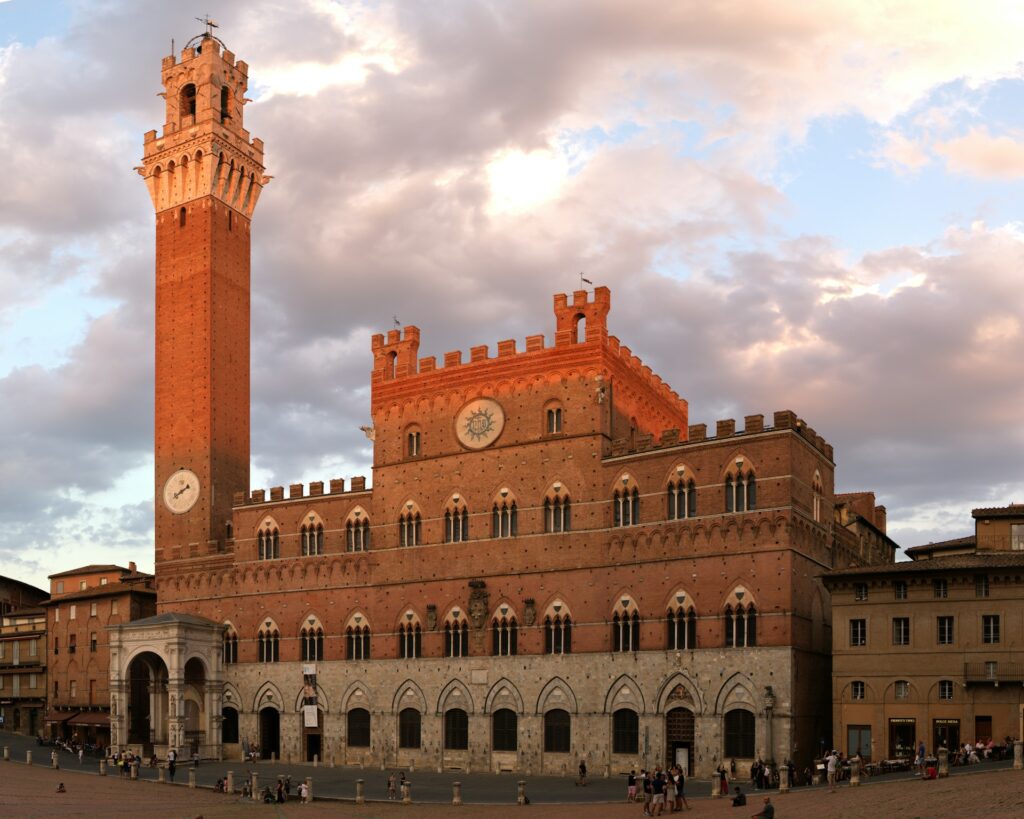
The stone loggia at the base of the tower was added in 1352 as a thank-you from the surviving residents for the end of the plague. It is the only white marble element, contrasting starkly with the red brick of the rest of the building.
Brick was an ideological choice, not just an economic one.
In Siena, brick became a symbol of the city’s identity – a cheaper and more „civic” material than stone, associated with feudal and ecclesiastical power.